Endoscopic Discectomy Clears Massive Migrated Lumbar Disc Without Open Surgery, Case Report
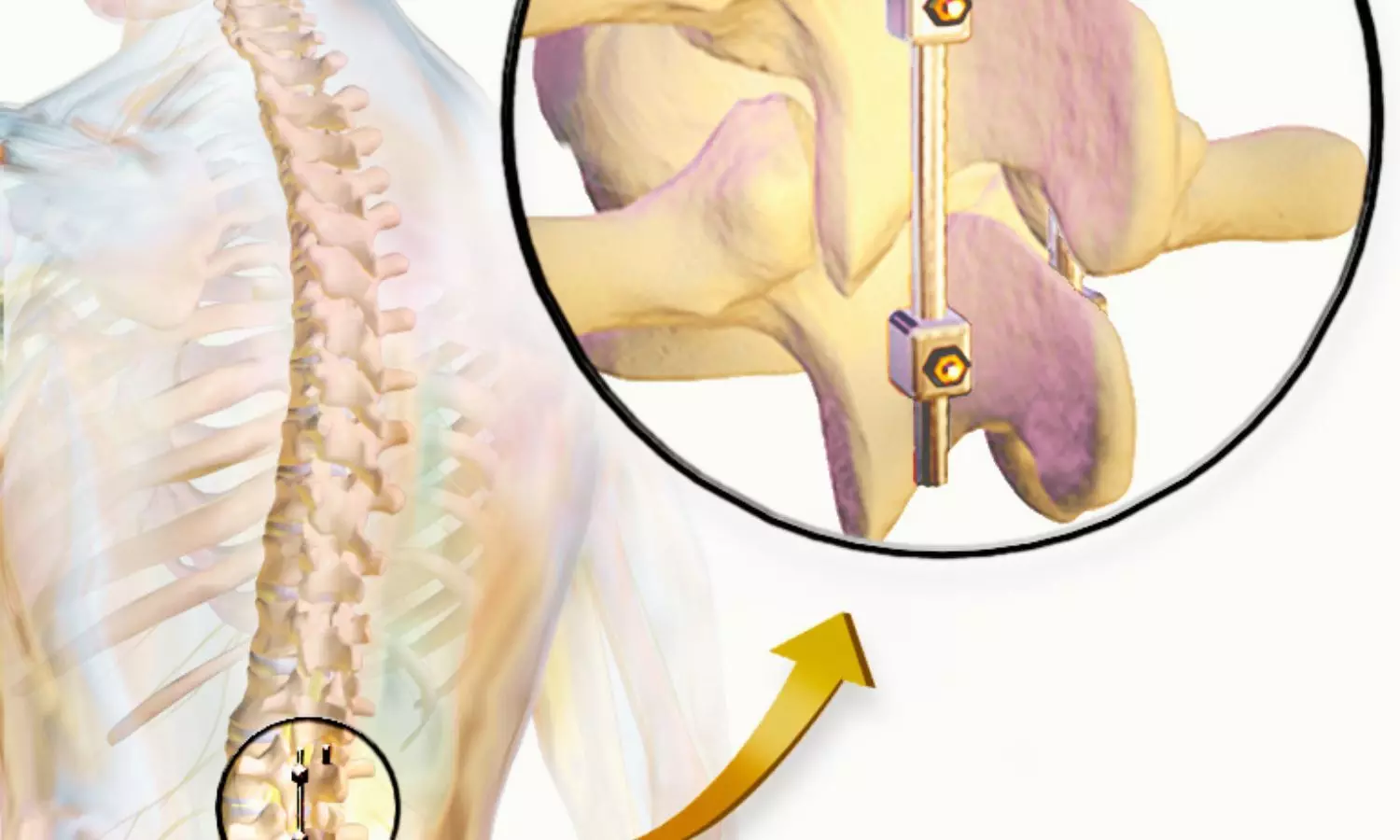


A recent case report demonstrates that a minimally invasive interlaminar endoscopic discectomy can successfully clear an exceptionally massive, deeply migrated disc fragment causing severe spinal canal blockage. This approach provides rapid, complete decompression without the extensive trauma of traditional open surgery.
These findings of the case report were published in the Indian Journal of Pain by Dr. Sushil Kumar Jaiswal and colleagues.
A 40-year-old man presented with 12 months of lumbar pain radiating into his left lower limb, accompanied by left leg weakness, foot numbness, and perineal sensory loss. Neurological evaluation demonstrated Grade 4/5 motor power in plantar flexion and the extensor hallucis longus, intact ankle reflexes, and normal sphincter continence. Baseline assessments documented severe disability, with an Oswestry Disability Index of 78, a Visual Analog Scale pain score of 8/10, and a Brief Pain Inventory score of 9/10.
Lumbar MRI revealed an exceptionally large extruded disc fragment at the lumbosacral junction with L5 sacralization, which had migrated deep caudally beyond the lower pedicle boundary—well past standard Zone H limits—causing marked thecal sac effacement and near-total spinal canal obstruction. To circumvent high-riding pelvic bony barriers preventing transforaminal access and avoid the tissue trauma of open laminectomy, surgeons performed an interlaminar endoscopic decompression under epidural analgesia and conscious sedation for real-time neural monitoring. Operating through an 8 mm incision with an 8.0 mm cannula along a steep downward trajectory, selective flavectomy and targeted bone undercutting expanded the corridor while preserving spinal stability, enabling piecemeal extraction of the massive 8.5 cm × 2.0 cm × 1.0 cm fragment followed by radiofrequency annular sealing. Postoperative imaging verified complete thecal sac re-expansion, and the patient ambulated within four hours and was discharged on day one with motor strength restored to Grade 5/5 and pain easing to 2/10. At three-month follow-up, the disability index fell to 12 with minimal residual pain (1/10), and the patient resumed daily activities at three weeks and desk employment by four weeks without radiculopathy or complications.
Implications for Clinicians
Standard interlaminar endoscopic platforms can safely manage unusually large, high-grade migrated fragments when paired with conscious sedation, neuromonitoring, and precise corridor optimization. Rigorous trajectory planning and anatomical awareness remain essential before attempting minimally invasive decompression for severe canal compromise.
Reference
Jaiswal, S. K., Agarwal, A., Singh, C., Yadav, V., & Singh, S. (2026). Percutaneous endoscopic interlaminar lumbar discectomy for a far inferiorly migrated massive lumbosacral disc fragment (8.5 cm) causing near-complete canal occupancy. Indian Journal of Pain, 40, 122–129.