Thrombectomy Boosts Functional Independence in Medium-Vessel Strokes, finds study
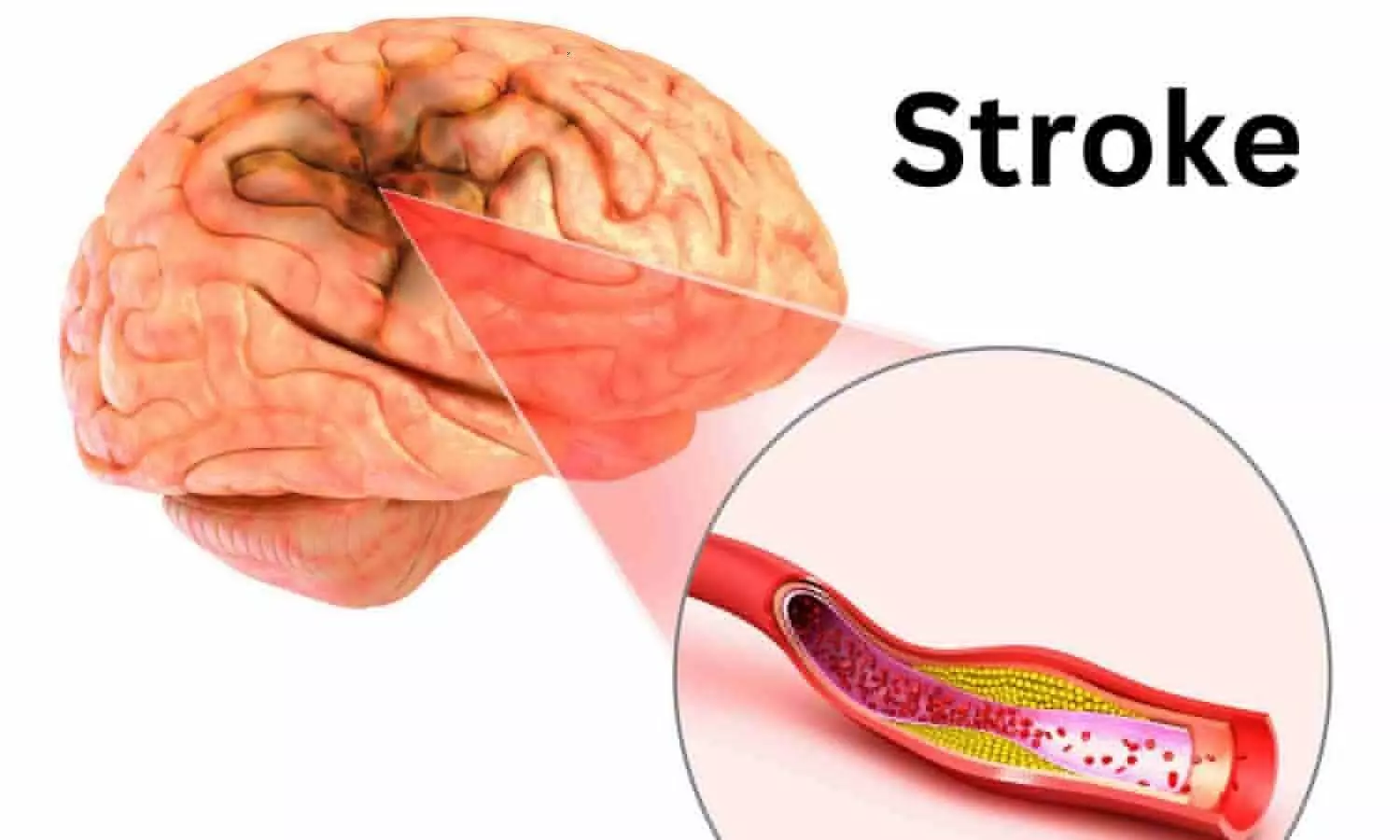


A multicenter randomized controlled trial has shown that endovascular thrombectomy is associated with an increased probability of attaining 90-day functional independence in cases of acute ischemic stroke resulting from a medium vessel occlusion (MeVO) and having moderate to severe neurologic impairment, but it is associated with a greater probability of experiencing symptomatic intracranial hemorrhage. The study was published in The New England Journal of Medicine by Wei Hu and colleagues.
In order to conduct a systematic investigation of the safety and effectiveness of mechanical treatment in such patients, researchers carried out an open-label randomized controlled trial with blinded outcome evaluation among 48 stroke centers in China. The recruited subjects were adult patients admitted within 24 hours of stroke onset with moderate to severe neurological deficit measured as NIHSS greater than or equal to 6. All recruited subjects had angiographically documented ischemic strokes confined only to medium cerebral vessels and were randomized in a 1:1 manner into two groups to receive either mechanical thrombectomy plus best medical treatment or best medical treatment alone as a control arm.
Originally, the pre-specified primary outcome measure was functional disability assessed using the full shift of mRS at 90 days; but due to a statistical breach of proportional-odds assumption, the secondary outcome, namely, the measure of functional independence, as measured by mRS 0, 1, or 2 at 90 days, was used as the primary endpoint.
Key findings:
- All 563 patients were effectively assessed, with 280 receiving active thrombectomy and 283 receiving medical management.
- The composite sample consisted of patients aged 71 years on average, with a median NIHSS score at baseline being 10 (the full range was 3-36), and women accounting for 42.8% of the whole sample, whereas baseline intravenous thrombolysis was administered to 36.6% of all patients.
- At the 90-day mark, the share of patients with functional independence (mRS 0–2) was significantly higher among those who underwent thrombectomy (58.6%) compared to those who received only medical management (46.6%), with an adjusted rate ratio being 1.24 (95% confidence interval, 1.07 to 1.44; p = 0.004).
- The rate of severe symptomatic intracranial hemorrhage was more than double in the intervention group (4.7%) compared to the control one (2.2%).
- Finally, the 90-day mortality rate did not differ substantially in the two patient samples, being 11.1% and 10.2%, respectively.
The current randomized controlled trial clearly shows that in cases of acute ischemic stroke owing to medium vessel occlusion and moderate to severe deficits, endovascular thrombectomy offers greater chances of attaining functional independence in the long run than conventional medical therapy. In demonstrating a statistically significant increase of 12% in the odds of functional independence, these findings serve as a strong case for redefining the traditional indications for mechanical thrombectomy beyond large vessels. However, the markedly increased likelihood of developing symptoms of intracranial hemorrhage is an important caveat, as neurointerventionalists must be reminded that such distal thrombectomies demand great accuracy.
Reference:
Hu, W., Jing, X., Chen, Z., Zheng, J., Yi, T., Zheng, T., Li, Z., Liu, J., Cui, T., Wen, J., Feng, G., Song, C., Yang, L., Jiang, S., Tong, L., Jiang, C., Ruan, Z., Zhou, ˒peiyang, Wang, S., … Nogueira, R. G. (2026). Endovascular treatment of medium-vessel-occlusion strokes. The New England Journal of Medicine, 394(19), 1894–1904. https://doi.org/10.1056/nejmoa2514120