NEET: HC allows student to retain medical seat, quashes NTA re-exam result withholding over mobile phone allegation in cancelled test
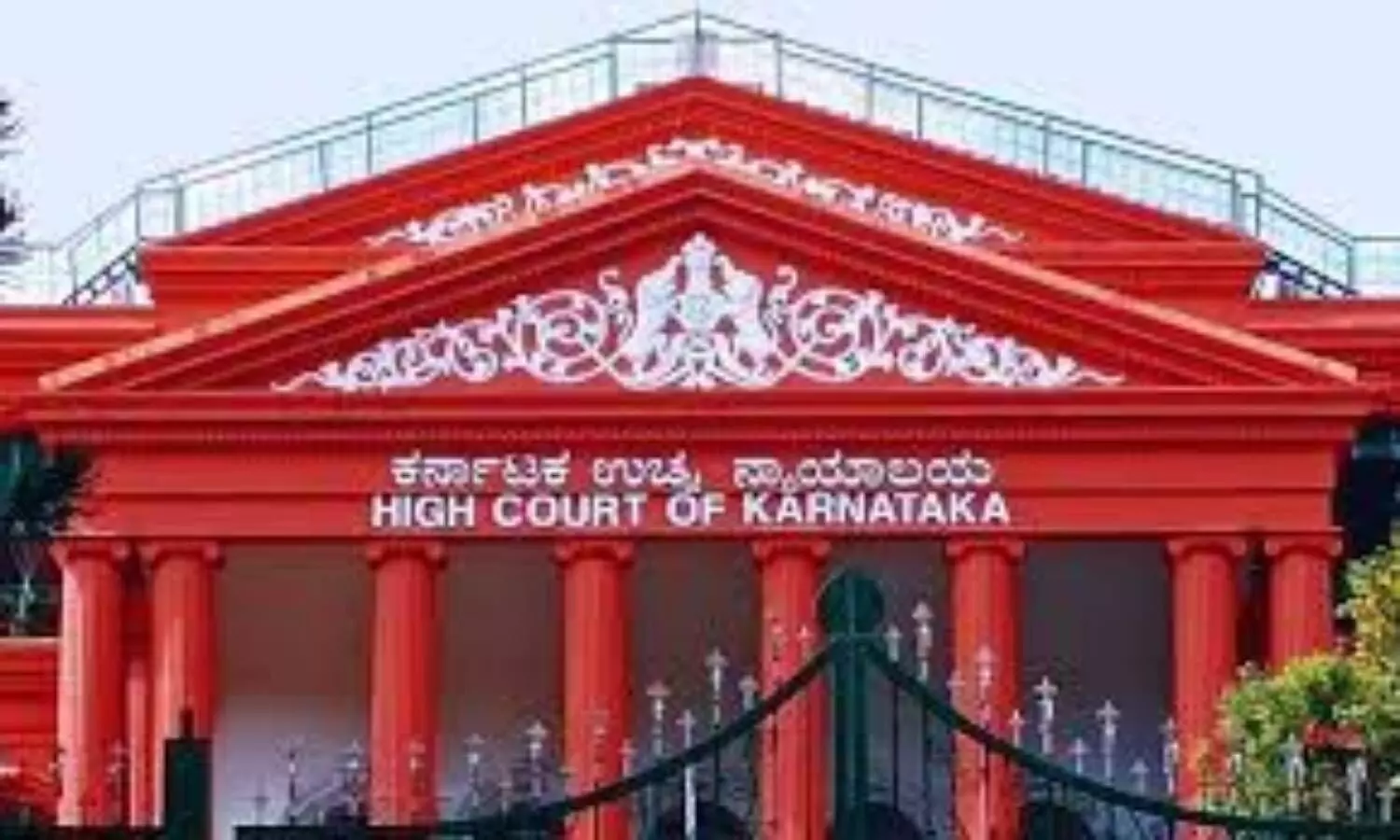


Bengaluru: Granting relief to a medical aspirant, the Karnataka High Court recently quashed the National Testing Agency's decision to withhold her NEET (UG) 2026 re-examination result over an allegation that she had carried a mobile phone into the earlier exam that was later cancelled.
Even though the Dharwad bench of HC noted that the examination discipline is sacrosanct, it observed, "The examination in which the alleged infraction occurred was itself scrapped. Its results were rendered inconsequential. No academic advantage flowing from that examination has been carried forward to the benefit of the petitioner. The petitioner thereafter appeared in a fresh examination, competed with other aspirants and emerged with high merit. No allegation of malpractice in the subsequent examination is placed against her. Therefore, the examination that was scrapped cannot be resurrected merely to eclipse the merit earned in the examination that survived."
"A cancelled examination may remain a matter of history; it cannot, without sufficient legal justification, be permitted to become a perpetual impediment to a student's future," held the HC bench.
With this observation, the HC bench quashed the show cause notice dated 17.06.2026 issued against the petitioner, the score card dated 16.07.2026, indicating the remark that 'RESULT WITHHELD/R/W' and sustained the seat secured by the petitioner on the basis of the merit in the re-examination.
"Respondent No.1– National Testing Agency is directed to issue the marks card / score card of the petitioner without any observation of her result being withheld or cancelled," ordered the High Court bench comprising Justices M. Nagaprasanna and Hema Kulkarni.
Case History:
The petitioner appeared in NEET UG 2026, conducted on 03.05.2026. However, the examination was cancelled, and a fresh test was conducted later on 21.06.2026. The petitioner, like every other eligible aspirant, was issued a fresh admit card bearing a different roll number, entitling her to participate in the reexamination.
However, after around three days of issuance of the fresh admit card, a show cause notice was issued to the petitioner on 17.06.2026, alleging that the petitioner had carried a mobile phone into the examination premises during the earlier examination conducted on 03.05.2026.
The petitioner, armed with a valid admit card and possessing the requisite eligibility, appeared in the re-examination conducted on 21.06.2026 and later, on 25.06.2026, an Unfair Means Committee, set up to examine the alleged irregularities and illegalities that had marred the scrapped examinaion, was convened. After conclusion of the proceedings before the Committee, the results of the re-examination was declared on 16.07.2026. However, the petitioner's results were withheld on the strength of the allegation pertaining to the earlier, cancelled examination.
Allegedly, despite submitting several representations, no relief was granted to the petitioner. Therefore, she filed the plea before the High Court, seeking relief.
The counsel for the petitioner argued that unfair means must be understood in the context of the unfair advantage that a candidate seeks to secure over others in a competitive examination. An unfair means allegation, according to him, must bear a rational nexus to the examination in which an unfair advantage is alleged to have been obtained. Where the examination itself has been cancelled in its entirety, the question of the petitioner deriving any advantage in marks or stealing a march over other candidates in that examination would pale into insignificance, argued the petitioner's counsel.
Further, the counsel submitted that even the least of the penalties contemplated under the Information Bulletin cannot be imposed mechanically, without a determination of culpability in accordance with law. He would further argue that the withholding of the petitioner's result, is itself a unilateral and ex parte exercise, undertaken without a reasoned determination of the allegation or its consequences.
On the other hand, the Additional Solicitor General of India, appearing for the National Testing Agency (NTA), referred to the Information Bulletin for NEET UG 2026, particularly the provisions defining unfair means, and submitted that the prohibition against carrying a mobile phone into the examination premises is categorical and admits of no exception.
The very act of carrying a prohibited electronic device, according to him, constitutes an unfair means practice, irrespective of whether the candidate is ultimately shown to have derived any actual advantage therefrom. The prohibition, he would contend, is intended to preserve the purity, integrity and credibility of an examination in which lakhs of aspiring students compete for a limited number of medical seats.
Further, the ASG argued that the consequences prescribed for resorting to unfair means cannot be diluted merely because the petitioner has subsequently performed well in the re-examination. According to him, the least of the penalties contemplated under the governing framework is withholding of the result, and the petitioner cannot seek immunity from the consequences of her conduct by placing reliance upon her subsequent academic performance. Merit, however commendable, cannot become a shield against the operation of the rules governing examination discipline, argued the ASG.
Observations by the High Court:
While considering the matter, the HC bench took note of the timeline of events regarding the NEET UG 2026 examination- the initial examination, the consequent cancellation and the re-examination conducted by NTA. It also took note of the mails sent to the petitioner by NTA, the admit card issued to her for re-examination, the typographical error in the show-cause notice dated 17.06.2026, the decision of the Unfair Means Committee, the withholding of the petitioner's result, the representation submitted by the petitioner and other details related to the case.
Referring to the petitioner's representation submitted to the authorities, the HC bench observed, "The anguish expressed in the representation is not difficult to comprehend. For an aspiring medical student, the declaration of an examination result is not a mere administrative formality. It is the culmination of years of preparation and the gateway to a professional career."
The Court noted that, by a communication dated 28.07.2026, the NTA itself the petitioner's performance in the re-examination, revealing that she had scored 570 in the re-test.
At the outset, the HC bench observed, "The merit secured by the petitioner in the re-examination is an independently ascertainable fact. Whether that merit could be denied recognition on account of the allegation relating to the earlier examination is the legal controversy."
Earlier, granting an interim relief to the petitioner, the HC bench on 08.09.2026 had allowed her to participate in the counselling process, clarifying that such participation would be subject to the final outcome of the petition. The bench noted that based on the interim order, the petitioner secured a seat purely on merit at the Belagavi Institute of Medical Sciences and has since commenced pursuing medical education.
While adjudicating whether the petitioner could keep her seat, the HC bench observed that the authority, on the one hand, permitted the petitioner to enter the portals of a fresh examination and, on the other, sought to pursue an allegation arising out of an examination that had already been extinguished for the purpose of determining merit.
The bench noted that the issue in this case was whether a student, who has demonstrated her academic excellence by securing high marks in a duly conducted re-examination and has, on the strength of such merit, earned a seat in the prestigious Belagavi Institute of Medical Sciences, should be made to suffer the forfeiture of her academic future on account of an alleged infraction committed during an earlier examination which itself stood cancelled, scrapped and consigned to oblivion?
Before deciding on the matter, the bench took note of the object and philosophy underlying the NEET exam and noted that the examination is not an end in itself, but an institutional mechanism designed to identify merit, preserve academic excellence, secure uniformity in standards and ensure that admission to the noble profession of medicine is governed not by privilege, patronage or pecuniary prowess, but by demonstrated intellectual ability.
"The primacy of merit in medical admissions is neither a matter of administrative convenience nor a principle of recent vintage. It has received the imprimatur of the Apex Court in a catena of judgments," observed the HC, while referring to the Supreme Court order in the case of Siddhant Mahajan vs State of Rajasthan.
"In the afore-quoted judgment, the Apex Court, while considering the object of NEET and the inviolability of merit in admissions to medical courses, has unequivocally declared that admissions must be founded upon NEET merit and that the examination serves the twin purposes of maintaining excellence in medical education and ensuring a level playing field for every aspiring medical student," noted the Karnataka HC bench.
Further, relying on the judgment in the case of Christian Medical College Vellore Association vs. Union of India, the HC bench observed, "The recognition of merit is thus not merely an academic imperative; it is an essential component of constitutional governance in the realm of professional education."
"The elucidation of law by the Apex Court in the aforequoted judgment would unmistakably reveal that merit is the soul of the NEET examination; fairness is its foundation; and excellence is its ultimate destination. The regulatory framework is conceived to protect these principles, not to defeat them. The rules governing an examination undoubtedly command obedience, but their application must remain faithful to the purpose for which the examination itself has been conceived," it further noted.
The bench held that an examination designed to discover merit cannot, by an unduly mechanical application of its disciplinary provisions, become the very instrument for destroying merit, particularly when the alleged infraction pertains to an examination which has ceased to possess any legal or academic efficacy. "It is against this constitutional and legal backdrop that the case of the petitioner must be considered," it held.
It was observed by the HC bench that the NTA seeks to cast a shadow over this achievement, not on the allegation of any malpractice in the re-examination which earned her the seat, but on the premise that the petitioner had carried a mobile phone into the examination premises during the earlier examination — an examination which, by the subsequent decision of the very same Agency, stood cancelled and scrapped. The distinction is fundamental. It is not a distinction without a difference, held the Court.
The bench noted that while submitting her explanation to the show cause notice, the petitioner categorically asserted that the mobile phone was carried inadvertently, owing to the anxiety and stress attendant upon an examination of such magnitude. The explanation is one of an unintentional lapse and not of a calculated endeavour to secure an unfair advantage, it observed.
At the outset, the bench held,
"It must be remembered that the mere possession of a mobile phone, though capable of constituting a breach of examination instructions, cannot, without regard to the governing rules and attendant circumstances, invariably be equated with the actual use of unfair means to secure an undeserved academic advantage. A breach of discipline and the procurement of merit by deception are not necessarily synonymous."
"The Court is conscious that examination discipline is sacrosanct. The sanctity of a competitive examination cannot be compromised at the altar of misplaced sympathy. A candidate who deliberately resorts to unfair means, manipulates the examination process or secures a rank through dishonest practices cannot seek shelter under the umbrella of equity. Merit obtained by malpractice is no merit in the eye of law. But, the case at hand presents an entirely different picture," the Court observed, further noting that the examination in which the alleged infraction happened was scrapped.
"Had the petitioner repeated the alleged conduct in the re-examination, or had her present ranking been shown to be the product of unfair means, the matter would have stood on an entirely different footing. No indulgence could then have been claimed merely on the strength of a high score. But those are not the facts obtaining in the case at hand....Rules are framed to secure fairness, not to become instruments of disproportionate forfeiture. Discipline is intended to protect merit, not to punish excellence for its own sake," held the Court.
"The object of NEET is to discover merit. The object of examination discipline is to preserve the integrity of that discovery. Neither object can be permitted to defeat the other by an application divorced from the peculiar circumstances of the case," the bench observed.
It was observed by the Court that the petitioner earned her seat through merit and commenced the pursuit of medical examination. "To now uproot her from that pursuit, on the sole premise of an explained infraction in an examination which no longer forms the foundation of her admission, would, in the circumstances of the case, amount to allowing the consequence to overwhelm the cause," held the bench.
Besides, the bench also concluded that a seat in the medical college is not merely an admission to an academic institution, but it is the culmination of years of preparation, perseverance, sacrifice and aspiration. For a young student, it represents the threshold of a profession dedicated to the preservation of human life.
The Court held that while an examination authority must be vigilant against malpractice, vigilance cannot degenerate into rigidity that defeats the very purpose of the examination.
"Merit must never become a shield for malpractice; but an allegation of malpractice must equally not become a sword to destroy independently established merit without sufficient justification," observed the HC bench.
"Merit is not a matter of charity; it is the reward of perseverance, discipline, dedication and relentless pursuit of excellence. More so, in a competitive examination for admission to a medical course, where lakhs of aspiring students compete for a handful of coveted seats, merit assumes significance far beyond mere numerical achievement. A meritorious student carries not merely the marks secured in an examination, but the toil of countless sleepless nights, the sacrifices of formative years and the cherished aspiration of entering the noble profession of medicine. To deny such a student the fruits of demonstrated merit on the altar of procedural technicalities or inconsequential trivialities would be to permit form to triumph over substance and arbitrariness to eclipse excellence. The doors of medical education must undoubtedly remain guarded against unfair means and undeserving claims, but those very doors cannot be slammed upon genuine merit without compelling justification founded in law. Merit must be nurtured, not neutralised; excellence must be encouraged, not extinguished. A system that sacrifices genuine merit at the altar of technical rigidity does not merely wrong a student; it does disservice to the larger public interest, for society itself is the ultimate beneficiary of a meritorious doctor," it further held, while granting relief to the petitioner.
To view the order, click on the link below:
https://medicaldialogues.in/pdf_upload/2026/11/20/karnataka-hc-order-484367.pdf
Also Read: NEET UG Paper Leak Row: Delhi Court Orders Framing of Charges Against 14 Accused