NEET reforms: NTA must be institutionalised, rules Supreme Court, seeks timeline from Centre
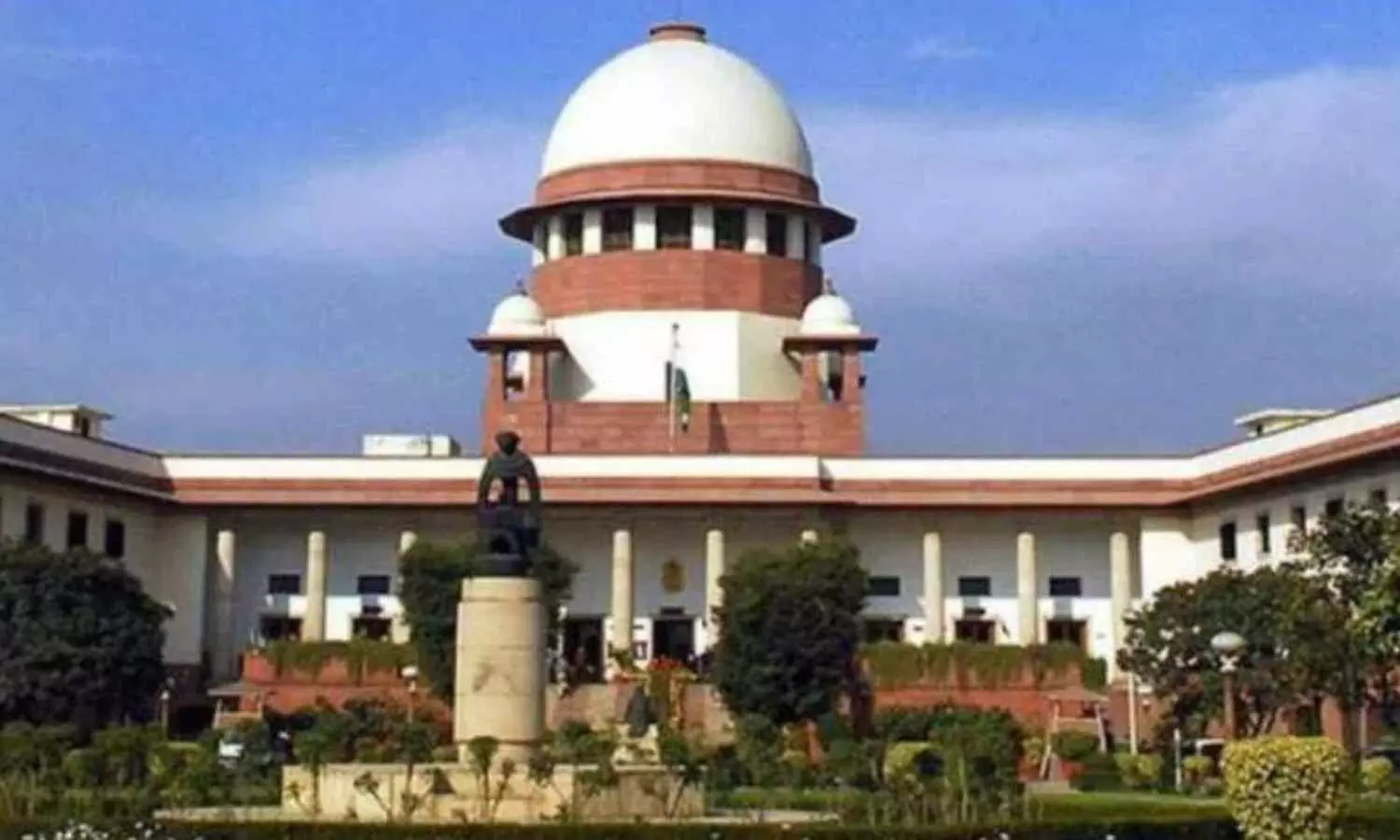


New Delhi: Observing the need to institutionalise the reforms in NEET exams, the Supreme Court directed the National Testing Agency to inform it about the steps taken to implement the recommendations of the expert committee headed by former ISRO chairman K Radhakrishnan, as improved by the expert committee headed by Nandan Nilakeni.
While seeking response, the Bench comprising Justice PS Narasimha and Justice Alok Aradhe directed the Union government to submit the affidavit within three weeks, along with indicative timelines for implementing the remaining recommendations.
After dictating the order, Justice Narasimha reiterated the bench's primary concern,
"This court is concerned about institutionalisation of the National Testing Agency with all necessary infrastructure, manpower and other Technological capabilities. The biggest problem is that if you don't institutionalise, experienced persons get transferred. Then the whole experience goes. It must flow down to the next level and the next level so that they could pick up from the seniors. Institutional memory does not depend on individuals."
The court was hearing a batch of petitions, including one filed by Advocate Tanvi Dubey on behalf of the Federation of All India Medical Association (FAIMA) and Advocate Charu Mathur and Ritu Raniwal on behalf of the United Doctors Front (UDF), seeking fundamental and long-term reforms in the national examination system following the NEET-UG 2026 paper-leak controversy.
"In our suggestions, we wrote that the Radhakrishnan Committee had suggested in 2024 itself that there should be a transition to a computer-based model. Despite that, this transition has not happened yet and is still under consideration. That is a very big question because it clearly states that the risk factor is very high during the storage and transportation of physical papers," Advocate Dubey said.
Advocate Satyam Singh Rajput, representing petitioners including RJD MP Sudhakar Singh, said the petitioners had earlier pointed out 17 loopholes and made 17 suggestions regarding the Centre's affidavit. "Today, acknowledging those suggestions, the court addressed the loopholes in the affidavit because the affidavit they filed did not follow most of the recommendations made by the Radhakrishnan Committee," Rajput told ANI.
"The court focused more on finding a permanent solution. It shouldn't be that you keep bringing one committee after another while the problems remain the same," he said.
The seven-member Radhakrishnan Committee was set up by the Ministry of Education in the wake of the NEET-UG paper leak to make recommendations on reforms in the examination process, improvement in data security protocols and the structure and functioning of the National Testing Agency (NTA). The government had also set up a high-powered task force led by Infosys co-founder Nilekani for structural reforms in NEET exams.
Security arrangements
During the hearing, the court expressed serious concern that examination reforms cannot remain a collection of ad hoc procedures and changing arrangements, but must be institutionalised through a dedicated, scientifically equipped and professionally staffed examination body.
Solicitor General Tushar Mehta explained the safeguards currently being followed by the NTA to prevent question-paper leaks and other forms of malpractice. He said the system in place was, in his assessment, "foolproof", while acknowledging that human intervention always carries the possibility of error.
The Court then questioned the Union Government regarding the actual creation of the required infrastructure, manpower, cybersecurity and technological capabilities within NTA, including the implementation of the proposed specialised verticals.
Taking the Court through the latest affidavit filed by the Centre, Solicitor General Tushar Mehta explained the various stages involved in the preparation and distribution of question papers. He said that several moderators prepare questions, after which another group selects questions to prepare four question papers. The NTA Director General then selects two papers, which are sent in sealed covers to separate printing presses.
Explaining the printing process, he said the printing presses are monitored through CCTV surveillance and CISF security and the question papers are transported in specially secured containers, with vehicles fitted with GPS tracking. The storage of the question papers in strong rooms is also videographed, with officials including bank managers, NTA representatives and city coordinators signing the relevant records.
On the day of the examination, the sealed boxes are then opened under videography and in the presence of two students before the question-paper packets are distributed to classrooms.
However, Justice Narasimha observed that many of these safeguards had already been examined by the Radhakrishnan Committee. The Bench made it clear that the issue was not simply whether safeguards existed for a particular examination, but whether those safeguards had been institutionalised in a durable structure.
On this, Justice Narasimha said, as quoted by Live Law, "All this was already under the purview of the Radhakrishnan Committee. We have gone through these systems which are being developed over a period of time. After another new person comes, new methods."
Highlighting that the centre's affidavit needed to address what had actually been implemented based on the committee's recommendations, Justice Narasimha remarked, "This is why the committee has suggested that these are things that need to be institutionalised. What is the body, how many officers are there, where is the office situated, how much staff and security? These are the matters with which we are seriously concerned."
The Bench indicated that simply developing increasingly sophisticated procedures for an individual examination would not adequately address the issue unless the reforms are institutionalised.
"These integrity [issues] are not for us to see. You will have to entrust [them] to a body which is scientifically [equipped] and also dedicated," Justice Narasimha said.
Justice Narasimha referred to the need to train personnel not merely for conducting one examination but for handling examinations in the years to come.
"You have to train and prepare the personnel for times to come, not just for one examination... candidate-friendly arrangements, grievance mechanism, strengthening physical and intellectual capacity. This is the most important," the judge said.
Justice Narasimha said the NTA must have secure office premises, confidential operations and a proper institutional structure to handle key functions such as cybersecurity, testing infrastructure and research. He noted that the committee had recommended 16 verticals for the testing system, within the testing system, including functions relating to testing centres, a General Manager, central network operations, candidate experience and information security.
The Bench questioned whether the required infrastructure and manpower for these verticals had actually been put in place. Justice Narasimha observed that the committee had specifically recommended creating the necessary infrastructure for each of these functions, noting that the government had only recently begun employing more personnel.
In response, Solicitor General Tushar Mehta said that advertisements had been issued for recruitment to the required posts.
Manpower appointment
After this, Justice Narasimha specifically sought details about the appointment of senior officials, including additional joint secretary-level officers, IT directors and joint directors. He also asked whether these officials had been appointed and taken charge and whether the NTA had separate premises for its expanded functions.
“You provided a Director General. There are two additional... joint secretary levels and IT directors and joint directors. How many of them have been appointed? Have they taken charge? Is there a separate premises? This is what we want to know by way of a regular affidavit,” the judge said.
The court also questioned whether the NTA had a dedicated department for digital infrastructure and whether full-time officers had been appointed for testing infrastructure and research and development.
Responding to this, Mehta said that the government was in the process of hiring.
Bench cites UPSC example
During the hearing, the Bench also referred to UPSC as an example of an institution that has developed institutional memory and expertise through continuous professional functioning.
The Hon'ble Court further emphasised that institutional memory cannot depend upon individuals alone and that expertise must be transferred from one generation of officers to the next.
Citing UPSC as an example of how an examination-conducting body develops institutional expertise over time, Justice Narasimha said, "Take UPSC for example. Over a period of time regularly they were conducting exam after exam and they have collected institutional memory and expertise because it happened over a period of time. The body which is entrusted in conducting the exam, ensures that it also upgrades itself and becomes a vibrant institution like that."
Data security
The Bench also questioned the NTA's digital infrastructure and data security, particularly the storage of sensitive examination data. Justice Narasimha asked whether the agency had a sovereign database and what software infrastructure was being developed for this purpose.
In response, Mehta told the Court that the database was "in contemplation".
Stressing the need for secure storage of question papers, Justice Narasimha said, "Then the security of your question papers. Where are you going to store? Storage is a big issue. So you need to develop that infrastructure and database ready."
On this, Mehta told the court that the government had accepted the Radhakrishnan Committee's recommendations “in toto.” He said that some recommendations had already been implemented and that the government would place before the court the progress made on the remaining measures.
The Solicitor General also informed the Bench that advertisements had been issued for posts including Technology Officer, Chief Finance Officer and General Manager, among other positions.
The Bench also sought details about the NTA’s existing premises and whether it had adequate infrastructure and manpower.
In response to this, Mehta said that the NTA was setting up its own technology team with support from the National Informatics Centre (NIC), onboarding professional teams and working towards the use of indigenous AI models for translation of question papers.
On the issue of translation, Mehta said the question bank of around 500 questions is translated into 13 languages. He clarified that the NTA was not presently relying on AI for the translation process and that the translations were done manually. However, he acknowledged that human involvement meant there could be a possibility of a breach. "There was a breach and the people who were involved are arrested," Mehta told the court.
After taking note of the development, the court directed the Secretary concerned to file an affidavit detailing the steps taken to implement the recommendations of the Radhakrishnan Committee, as reflected and further developed by the Nandan Nilekani Committee.
"This court is concerned about institutionalisation of the National Testing Agency with all necessary infrastructure, manpower and other Technological capabilities. We are informed that the committee which has been constituted has considered various recommendations for reforms, focusing on leveraging advance technology like AI and blockchain to strengthen the security and integrity of the examination. We direct the Secretary to file an affidavit indicating and detailing the steps that have been taken to implement the suggestions made by the Radhakrishnan committee as reflected and nuanced by the Nandan Nilekani committee. Affidavit with the indicative timelines to be filed within 3 weeks," the court said in conclusion.
UDF submits comprehensive recommendations
In compliance with the directions and observations of the Hon'ble Court, UDF placed comprehensive suggestions before the Court covering the entire examination lifecycle — pre-examination, conduct of examination and post-examination.
The recommendations include:
1. Replacement of NTA with a Statutory National Examination Authority established through an Act of Parliament.
2. A permanent and professionally trained examination cadre with expertise in cybersecurity, psychometrics, examination administration, digital forensics, logistics and data security.
3. End-to-end security of question-paper creation, vetting, encryption, printing, storage and transportation. Officer-wise and digitally auditable chain of custody for every stage of question-paper handling.
4. A time-bound transition towards secure computer-based/computer-assisted testing, with robust cybersecurity safeguards.
5. Secure digital transmission and controlled printing of examination papers to minimise vulnerable physical transportation.
6. Scientifically validated multi-session/multi-stage examination mechanisms wherever appropriate.
State and District-level Examination Security Committees.
7. Mandatory certification and periodic security audit of examination centres.
8. CCTV, biometric authentication and secure candidate verification.
9. Independent cybersecurity, forensic and psychometric audits.
10. A dedicated 24×7 National Examination Security & Incident Response mechanism.
11. Stronger accountability for paper setters, vetters, authorised personnel and service providers having confidential access to examination material.
12. Transparent grievance redressal and protection of students from consequences arising out of institutional failures.
13. A time-bound public implementation dashboard and annual accountability to Parliament.
Commenting on this, Dr Lakshya Mittal, Chairperson, UDF told Medical Dialogues, "These recommendations have been framed not merely as additional SOPs, but as a permanent institutional framework capable of protecting the integrity of NEET-UG and all other high-stakes national examinations. The problem is institutional, not technological. UDF has consistently maintained that repeated paper leaks cannot be prevented merely by adding CCTV cameras, GPS tracking, sealed boxes or deploying security personnel after every controversy. UDF therefore reiterates that ad hoc measures cannot become a permanent solution. Students need implementation, not merely recommendations."