Only Supreme court can relax medical admission deadlines, not High Courts: Madras HC
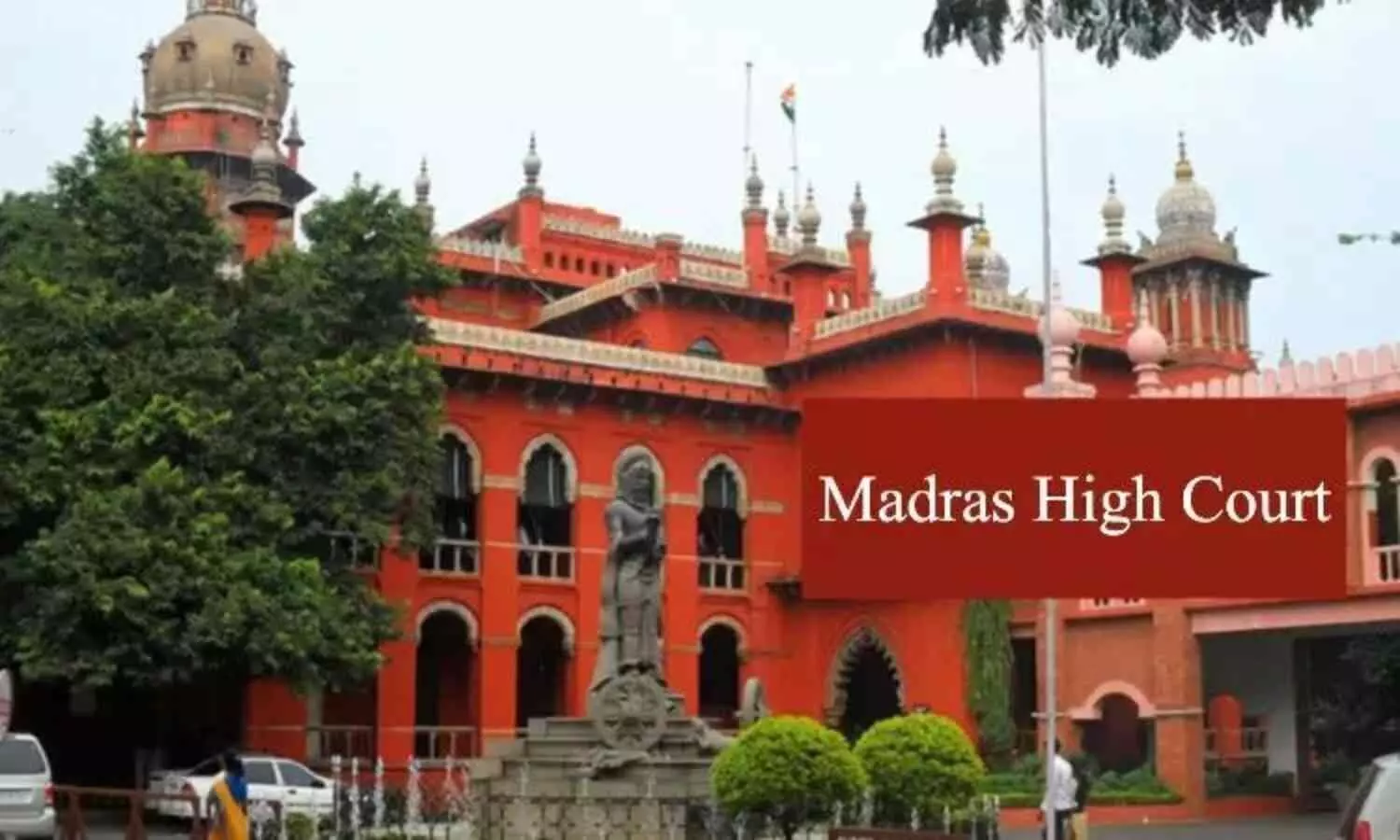
Madras High Court


Chennai: Pointing out that high courts cannot relax medical admission timelines after the deadline expires but only supreme court has the authority to carve out exceptions in certain cases, the Madras High Court has held that High Courts do not have the power to order fresh counselling once the cut-off date for admissions is over even if seats remain vacant due to arbitrary inaction on the part of the officials concerned or on account of any other reason.
Setting aside the September 18, 2025 order of a single judge, which had directed the central medical counselling committee to conduct a mop-up round to fill vacant super specialty seats in Tamil Nadu despite the admission deadline having ended on August 31, 2025, the Division Bench comprising Chief Justice Manindra Mohan Shrivastava and Justice G. Arul Murugan observed that such a direction could not have been issued, especially when the Supreme Court had clearly stated in unequivocal terms that its direction should not be cited as a precedent.
The bench allowed a writ appeal filed by the Union Ministry of Health and Family Welfare. The bench agreed with Additional Solicitor General A.R.L. Sundaresan that no such direction could have been issued after the cut-off date.
“If that be the observation of the apex court, we are of the view that, irrespective of whether the seats remain unfilled on account of arbitrary inaction on the part of the official respondents or not, once the last date of admission, i.e. August 31, 2025 was over, the writ petitioners could not be granted relief by this court and the writ petition was liable to be dismissed," said the bench.
Also read- Madras HC upholds appointment of Unani Professor, dismisses petition
As per latest media report by The Hindu, the matter arose after three doctors holding postgraduate degrees had approached the single bench high court claiming that several valuable super speciality seats remained vacant in Tamil Nadu. They argued that poor coordination between central and State authorities led to these vacancies and sought a direction for a special mop-up counselling round.
Subsequently, the single judge had accepted their plea and ordered counselling beyond the prescribed deadline.
Questioning the judgment, the division Bench relied on the Supreme Court’s ruling in Ashish Ranjan v. Union of India, which had clearly held that medical admission regulations, which lay down strict timelines for holding various rounds of counselling and making the admissions, bear the imprimatur (authoritative approval) of the top court regulations.
Referring to this, the Chief Justice observed that regardless of whether seats remained unfilled due to arbitrary inaction by authorities or any other reason, courts cannot grant relief once the final date of admission is over.
Though the single judge had relied upon an order passed by the Supreme Court in Kevin Joy and others versus Government of India (2023) wherein the top court had permitted conduct of counselling and admission even beyond the cut-off date, the Division Bench said, in that case, the top court had also made it clear in unequivocal terms its direction should not be cited as a precedent.
The Division Bench agreed with the Union government’s submission that allowing counselling beyond the deadline would open a "Pandora’s box." It stressed that only the Supreme Court, and not High Courts, can carve out exceptions to admission schedules in rare cases.
On the contention of the three doctors that the High Court too, under Article 226 (writ jurisdiction) of the Constitution, could pass orders to prevent aribitrariness and illegalities, the Chief Justice said, it was beyond any pale of dispute that the founding fathers of the Constitution placed no limitation or fetters on the powers of the High Court under Article 226, except self imposed limitations.
"The arm of the High Court is long enough to reach injustice wherever it is found. Further, the court, as sentinal on the qui vive (lookout) is to mete out justice in given facts... However, the schedule of counselling and the last date of admission is prescribed by way of regulations, which have the force of law. In any case, if any illegality in the process of counselling and admission is found, it could be corrected by the writ court, provided the last date of admission is not over," the Bench wrote.
Concluding the matter, the Bench said, "In those cases where the last date of admission is over, it is faitaccompli and in view of order passed by the apex court in various cases, referred supra, the party has to be left to work out the remedy by approaching the apex court."
Also read- HC upholds Tamil Nadu homeopathy registration renewal process