Private medical colleges cannot be forced to match Govt MBBS fees: SC junks EWS candidate's plea
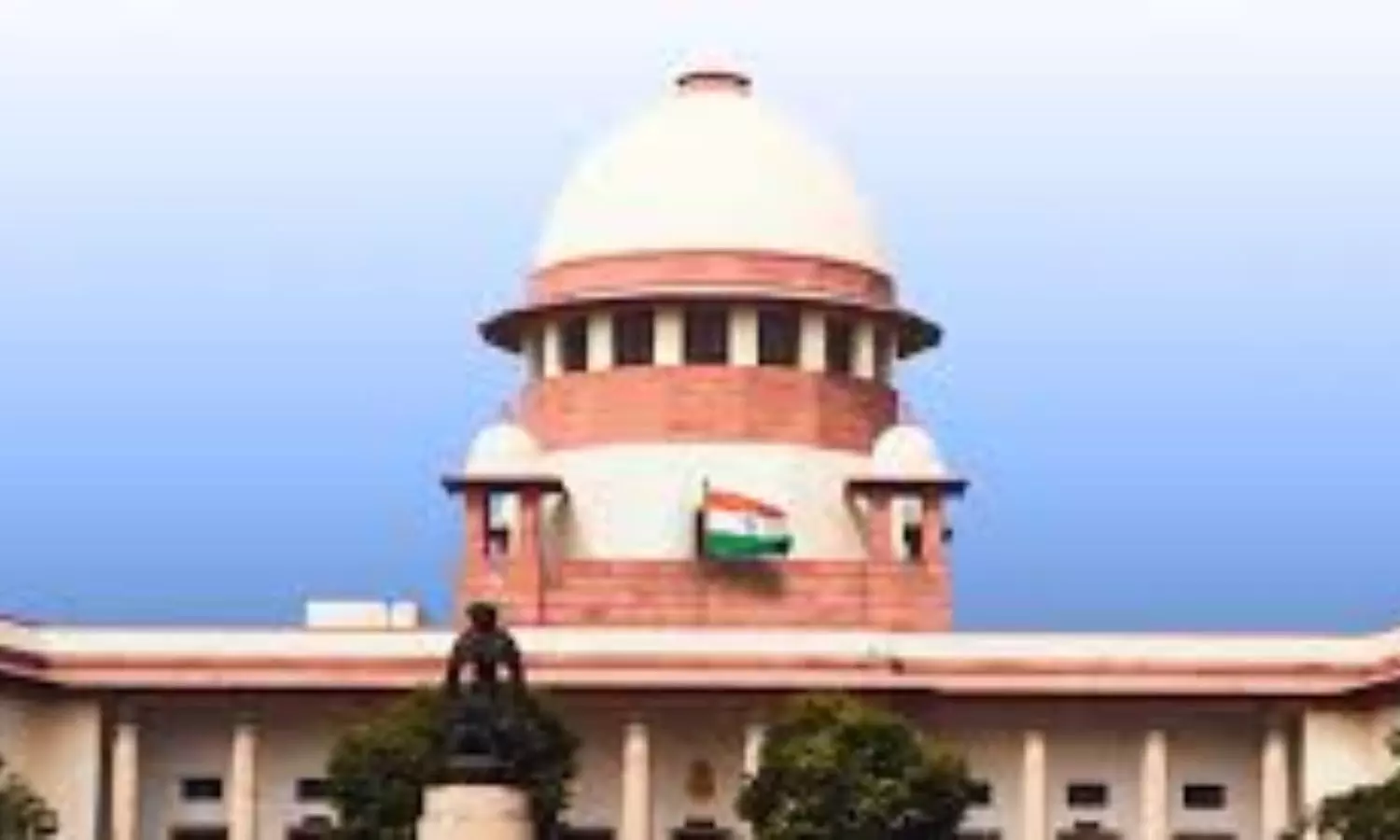
Supreme Court of India


New Delhi: The Supreme Court recently dismissed a petition filed by an Economically Weaker Section (EWS) candidate who sought a reduction in private medical college fees and requested that they be brought on par with fees charged by government medical colleges, citing his financial background and the fact that he was allotted a general seat despite applying under the EWS category.
On this, the division bench comprising Justices B.V. Nagarathna and Joymalya Bagchi observed that private medical colleges function as self-financing institutions and cannot be compelled to charge the same fees as government colleges, which receive financial support from the state. The court advised the petitioner to avail a scholarship or any subvention scheme.
During the hearing, the petitioner argued that it was unfair for private medical colleges in Rajasthan to charge annual tuition fees of up to Rs 25 lakh when the income limit for EWS eligibility is Rs 8 lakh per year.
In response, Justice Nagarathna remarked, as quoted by Live Law, "Those who have, will pay...this one person cannot say that it is exorbitant in the private institution, make it on par with the govt institution."
Addressing the petitioner's claim that he could not afford the fees, the Apex court said, "You cannot say private educational institutions shall charge same as government institutions. That cannot be. These are self-financing institutes. For govt ones...they get grant from the state. There is a vital difference. Assistance of private medical colleges to the state in the field of medical education will stop then... We need doctors. If you are unable to pay.. get scholarship.."
The case was filed by a 22-year-old NEET-UG candidate from Rajasthan who belongs to the EWS category. The petitioner had appeared for NEET-UG 2025 and held a valid EWS certificate.
In two counselling rounds, he did not opt for private medical colleges due to their high fee structure (tuition fee ranging from Rs. 18.9 lakhs to Rs. 25 lakhs per annum). For the third round of counselling, he secured an interim order from the Rajasthan High Court to participate under the EWS category and submitted preferences for 73 colleges. Notwithstanding, the counselling board allotted him a general seat in a private medical college.
Aggrieved by this, the petitioner claimed before the High Court that the allotment was arbitrary, especially as EWS seats remained vacant in a college of his preference. He also assailed the fact that EWS candidates were being charged the same high tuition fees as general category candidates.
The petitioner relied on an Office Memorandum dated 03.02.2022 issued by the National Medical Commission, which apparently recommended that fee of 50% seats in private medical colleges and deemed universities should be at par with government medical colleges of the relevant state/UT. He ultimately sought directions for fixation of reasonable and affordable fees for such candidates.
A Single Bench of the High Court had rejected his writ petition. Subsequently, a Division Bench dismissed his appeal, noting that EWS reservation operates only at the point of admission and does not, in the absence of an enforceable statutory provision or binding directive, create any right to concessional fees in private medical colleges.
When the matter was brought before the court today, the court emphasised the difference between government and private medical colleges. Justice Nagarathna observed, "What does TMA Pai say? Self-financing institutions means what? Capitation fee is banned. But that doesn't mean you have to take it at par government college rate."
The bench also expressed concern that forcing private colleges to match government fee structures could affect their functioning.
However, the counsel for the petitioner argued that the private colleges have a benefit of seat increase, which allows seats to be converted to general seats (and profiteering).
On this, the judge said, "Otherwise...all these private institutions...their assistance to the State in the matter of medical education will become nil. They will all close down and diversify. We need doctors in this country"
When the petitioner's counsel argued that economic inequality must be addressed and pointed out that the petitioner could not afford the fees, the judge responded, as quoted by Law Beat, "That is different. Get a scholarship or subvention, or get into a government college."
"You cannot say private educational institutions shall charge same as government institution. That cannot be. These are self-financing institutes. For govt ones...they get grant from the state. There is a vital difference. Assistance of private medical colleges to the state in the field of medical education will stop then... We need doctors. If you are unable to pay.. get scholarship.."
Refusing to interfere with that ruling, the court said, "We don't find reason to intervene with the High Court order. Dismissed. Question of law, if any, is kept open."
Also read- How can reservation be ignored?- SC orders provisional MBBS admission to EWS student