
Long COVID Vision Problems May Be Caused by Persistent Eye Inflammation, suggests study
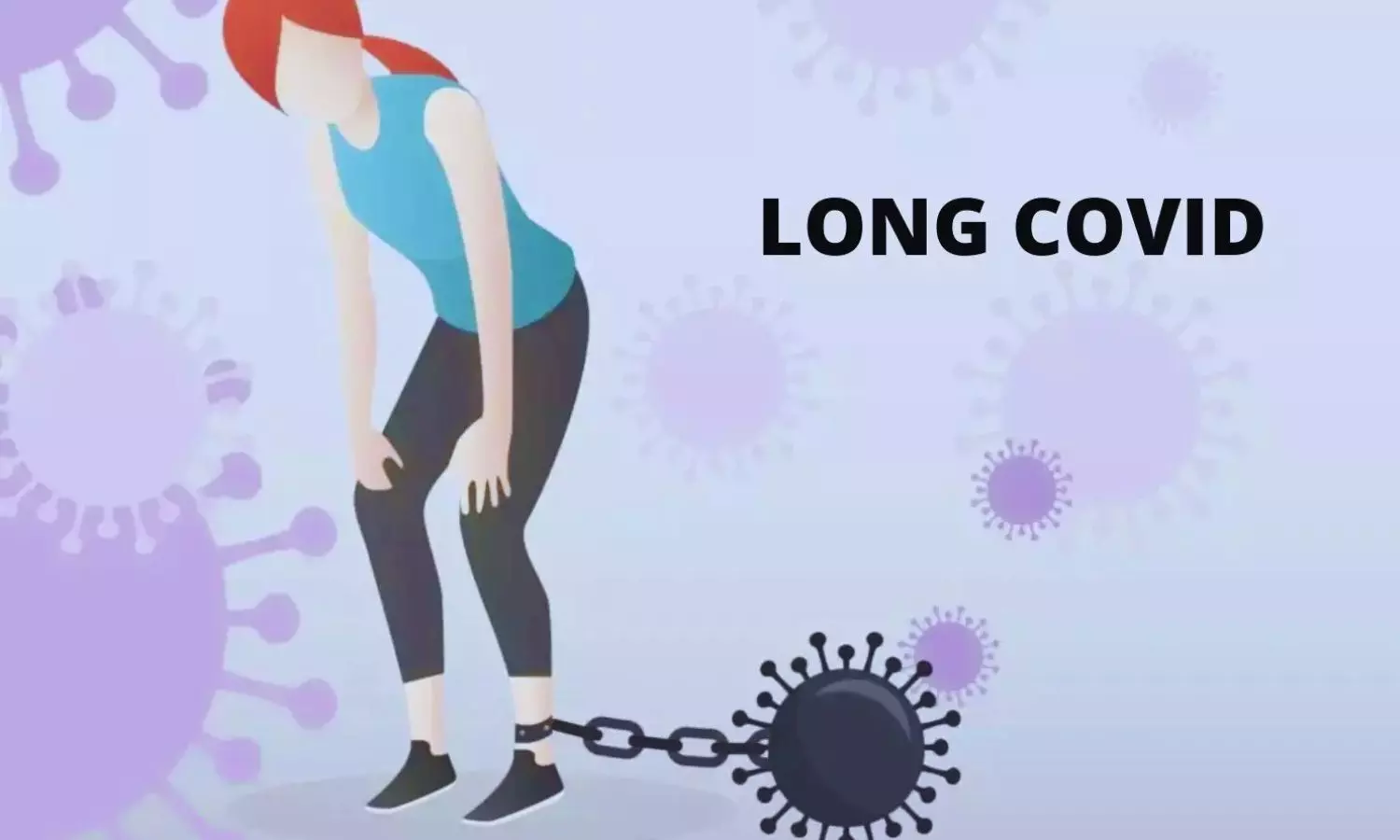


A new study published in the journal of Nature Communications showed that despite benign results on routine eye exams, chronic vision issues with even modest COVID-19 infections may be caused by continuous inflammation and nerve damage in the eyes.
While loss of taste and smell are common COVID-19 symptoms, up to 35% of long-term COVID patients experience persistent ocular symptoms (POS), which disproportionately affect women. These symptoms include eye discomfort, impaired vision, and light sensitivity. The medical treatment of these visual sequelae is now hampered by a lack of diagnostic criteria.
To address this, researchers thoroughly described POS and connected clinical symptoms overlooked by standard examinations with severe visual impairment. The study found important protein biomarkers for T cell-mediated neuroinflammation and ocular neuropathy using tear film proteomics. In the end, researchers created precise diagnostic models to categorize and objectively diagnose POS for use in clinical settings in the future.
Researchers record ocular problems that last from three months to three years after infection using data on symptoms and quality of life, clinical exams, and biofluid proteomics. Significant visual impairment is caused by POS, which is associated with clinical signs that can only be found with specialist tests rather than during standard examinations. Near vision problems, strabismus, diminished autonomic pupillary reflexes, corneal neurodegeneration, and persistent stimulation of ocular surface dendritic/T cells are examples of POS.
This study presented a tear film proteomic profile that is consistent with severe COVID-19, chronic dysregulation of CD4+ T cell regulatory activity, upregulation of ITGB6, NFASC, CTGF, TPSAB1, and CKMT1A-CKMT1B, pupil dysfunction associated with elevated JUN, and dendritic/T cell dysregulation associated with elevated levels of ANGPTL2, SKAP2, and DAPP1.
POS is a crippling syndrome that develops after COVID-19 recovery and is characterized by strabismus, ocular dysautonomia, and peripheral ocular neuropathy. Diagnostic models based on clinical examinations with or without biomarkers predict POS with 77–91% accuracy and link chronic T cell-mediated neuroinflammation to the pathogenesis of POS.
Overall, following recovery from moderate COVID-19 that did not necessitate hospitalization, researchers report and formally identify a collection of chronic, debilitating, and quality-of-life-affecting ocular symptoms. Additionally, they uncover potential diagnostic techniques and biomarkers as well as underlying diseases (strabismus, pupillary dysautonomia, peripheral corneal neuropathy, and neuropathic ocular discomfort) that result from infection.
Source:
Moustardas, P., Setterud, H., Meijer, H., Andersson, G., Roth, J., Dashti, A., Johansson, B., Macedo, A. F., & Lagali, N. (2026). Long-term ocular symptoms following COVID-19 linked to immune dysregulation, dysautonomia and peripheral neuropathy. Nature Communications, 17(1), 5624. https://doi.org/10.1038/s41467-026-74858-4

