15 gynaecologists, doctors, scientists recognised in Stanford University 2026 list of world's top 2% scientists
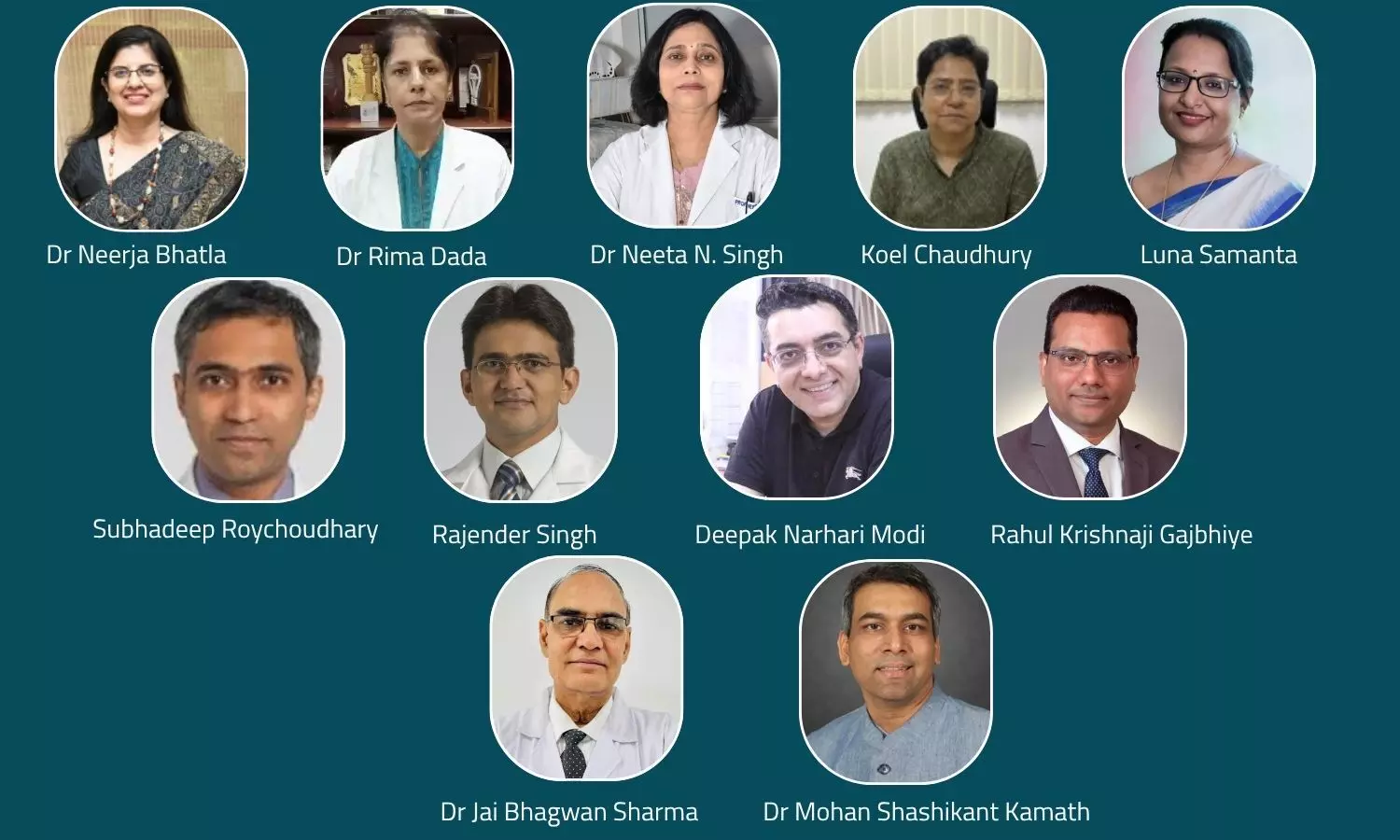


New Delhi: This year, a total of 15 Gynaecologists, doctors, and scientists from India's various prestigious health and medical institutes have been recognised among the world's top 2% of scientists in the prestigious database curated by Professor John P.A. Ioannidis of Stanford University, in collaboration with the Elsevier Data Repository.
Being recognised in Stanford University's top 2% list of scientists acknowledges their pioneering research, clinical achievements, and consistent impact on the field.
The database of Stanford University for the year 2026 of top-cited scientists provides standardised information on citations, h-index, co-authorship-adjusted h-index, citations to papers in different authorship positions, and a composite indicator (c-score). The selection is based on the top 100,000 scientists by c-score (with and without self-citations) or a 2% or above percentile rank in the sub-field.
Altogether, 15 Indian gynaecologists, doctors and scientists have been featured in Stanford University's list for 2026. Their subfield of research is Obstetrics and Reproductive Medicine. Below are their details:
(1) Dr Neerja Bhatla - AIIMS New Delhi:
Dr. Neerja Bhatla is a renowned Indian Gynecologist and Obstetrician, who was conferred the Padma Shri, one of India's highest civilian honours, in 2025 for her contributions to women's healthcare, particularly for the detection, prevention, and management of cervical cancer.
She played a key role in creating resource-based guidelines for cervical cancer screening, management and HPV vaccination. She has worked for the prevention and elimination of cervical cancer for the last 35 years in low-resource settings.
Dr. Bhatla has been recognised as one of the top 2% of scientists worldwide, according to Stanford University's 2026 list. She holds a rank of 65782 in the list based on the composite score excluding self-citations, and 74973 when all citations are included. By the end of 2025, her h-index, excluding self-citations, stands at 15, with altogether 1180 citations for 2025 (excluding self-citations).
Her main field of research is Clinical Medicine; subfield 1 is Obstetrics and Reproductive Medicine, and subfield 2 is Oncology and Carcinogenesis.
In 2025, Dr. Bhatla held a rank of 72432 in Stanford University's list based on the composite score excluding self-citations, and 83240 when all citations were included. By the end of 2024, her h-index, excluding self-citations, stood at 15, with altogether 1056 citations for 2024 (excluding self-citations).
After pursuing her MBBS and post-graduation in Ob-Gyn, she worked as a faculty at the Obstetrics and Gynaecologist department at All India Institute of Medical Sciences (AIIMS), New Delhi. She also worked as the Head of the Gynaecologic Oncology National Cancer Institute, Jhajjar, AIIMS.
Dr Bhatla is a recipient of Dr SK Ghai Bhandari Award by the All India Coordination Committee of the Royal College of Obstetrics and Gynaecology for Best Research Work Presentation, ISCCP Excellence Award by the Indian Society of Colposcopy and Cervical Pathology, Women’s Leadership Conclave Award and more.
After retiring from AIIMS, she continued to lead numerous research projects in India on cervical cancer and prevention, including screening in low-resource settings, HPV epidemiology, trials on affordable HPV testing and vaccines. She became the first Indian to serve as the President of the International Federation of Gynaecology and Obstetrics (FIGO) and led the 2018 revision of FIGO's staging guidelines for cervical cancer.
(2) Shubhadeep Roychoudhury - Assam University:
Subhadeep Roychoudhary is an Assistant Professor at the Department of Life Science and Bioinformatics. His areas of research interest include reproductive biology and human and environmental health. He completed his Master's in Biotechnology from Slovak University of Agriculture in Nitra and Ph.D in the same field from Slovak University of Agriculture in Nitra.
He has been recognised as as one of the top 2% scientists across the world, as per Stanford University's list of 2026. He holds a rank of 88381 in the list based on the composite score excluding self-citations, and 97876 when all citations are included. By the end of 2025, his h-index, excluding self-citations, stands at 16, with altogether 1260 citations for 2025 (excluding self-citations).
In 2025, he held a rank of 109935 in the Stanford list based on the composite score excluding self-citations, and 115682 when all citations were included. By the end of 2025, his h-index, excluding self-citations, stood at 14, with altogether 1028 citations for 2024 (excluding self-citations).
His main field of research is Clinical Medicine; subfield 1 is Obstetrics and Reproductive Medicine, and subfield 2 is Environmental Sciences.
(3) Naina Kumar - MoHFW:
For her research in Obstetrics and Reproductive Medicine, Naina Kumar has been recognised as one of the top 2% scientists across the world, as per Stanford University's list of 2025. She holds a rank of 143230 in the list based on the composite score excluding self-citations, and 163947 when all citations are included. By the end of 2024, his h-index, excluding self-citations, stands at 6, with altogether 234 citations for 2024 (excluding self-citations).
Her main field of research is Clinical Medicine; Subfield 1 is Obstetrics and Reproductive Medicine and subfield 2 is Pediatrics.
In 2025, she held a rank of 149138 in the Stanford list based on the composite score excluding self-citations, and 173695 when all citations were included. By the end of 2024, her h-index, excluding self-citations, stood at 5, with altogether 235 citations for 2024 (excluding self-citations).
(4) Dr Rima Dada - AIIMS New Delhi:
Dr. (Prof.) Rima Dada pursued her MBBS from Maulana Azad Medical College under Delhi University and MD in Anatomy at the University College of Medical Sciences. Later, she completed her Senior Residency and Ph.D. studies in Genetics at AIIMS New Delhi. Thereafter, she she joined AIIMS as an Assistant Professor in the Department of Anatomy.
Her research interests include Genetics of reproductive disorders, ocular disorders and various childhood cancers, lifestyle interventions on markers of aging Yoga in Health promotions and disease prevention.
Prof. Dada is on the editorial board of several national and international journals and she is a member of various scientific bodies. She was conferred with several prestigious national and international awards and has 235 international and national indexed papers and 75 book chapters.
Dr. Dada received the ICMR Shakuntala Amir Chand Prize, GP Talwar Gold Medal & Rashtriya Gaurav Award, ICMR national award - Genetics of Infertility, Young Scientist Award at the 2nd European American Course in Clinical Genetics in Croatia, and many more.
Prof. Dada has been recognised as one of the top 2% scientists worldwide, according to Stanford University's 2026 list. She holds a rank of 147590 in the list based on the composite score excluding self-citations, and 150755 when all citations are included. By the end of 2025, her h-index, excluding self-citations, stands at 11, with altogether 701 citations for 2025 (excluding self-citations).
Her main field of research is Clinical Medicine; subfield 1 is Obstetrics and Reproductive Medicine and subfield 2 is Ophthalmology and Optometry.
In 2025. she held a rank of 140070 in the Stanford University's list based on the composite score excluding self-citations, and 127317 when all citations were included. By the end of 2024, her h-index, excluding self-citations, stood at 10, with altogether 618 citations for 2024 (excluding self-citations).
(5) Satish K Gupta - National Institute of Immunology India:
Satish Kumar Gupta is an Indian immunologist and an Emeritus Scientist at the National Institute of Immunology. He is known for his research in reproductive immunology.
As per Stanford University's list of 2026, Gupta has been recognised as one of the top 2% scientists across the world. He holds a rank of 176423 in the list based on the composite score excluding self-citations, and 179541 when all citations are included. By the end of 2025, his h-index, excluding self-citations, stands at 6, with altogether 270 citations for 2025 (excluding self-citations).
His main field of research is Clinical Medicine; subfield 1 is Obstetrics and Reproductive Medicine, and subfield 1 is Immunology.
Gupta is an elected fellow of all three Indian science academies viz. Indian Academy of Sciences, National Academy of Sciences, India and Indian National Science Academy. The Council of Scientific and Industrial Research, the apex agency of the Government of India for scientific research, awarded him the Shanti Swarup Bhatnagar Prize for Science and Technology, one of the highest Indian science awards for his contributions to Medical Sciences in 1997. Gupta received the Young Scientists Medal of the Indian National Science Academy in 1982 and the Shakuntala Amir Chand Prize of the Indian Council of Medical Research in 1984.
In 2025, Gupta held a rank of 182458 in the Stanford list based on the composite score excluding self-citations, and 208160 when all citations were included. By the end of 2024, his h-index, excluding self-citations, stood at 9, with altogether 263 citations for 2024 (excluding self-citations).
(6) Dr Neeta N. Singh - AIIMS New Delhi:
Dr. Neeta N. Singh is a Gynaecologist, infertility and Reproductive Medicine expert having more than 30 years of experience of managing complex infertility problems. She is a Professor at the Department of Obstetrics and Gynaecology at AIIMS, New Delhi, and has handled more than 6,000 IVF-ICSI cycles, a variety of fertility-enhancing laparoscopic surgeries, and complex oncofertility issues.
Prof. Singh has been recognised as one of the top 2% scientists worldwide, according to Stanford University's 2026 list. She holds a rank of 194452 in the list based on the composite score excluding self-citations, and 223675 when all citations are included. By the end of 2025, her h-index, excluding self-citations, stands at 9, with altogether 375 citations for 2025 (excluding self-citations).
Her main field of research is Clinical Medicine; subfield 1 is Obstetrics and Reproductive Medicine, and subfield 2 is Oncology and Carcinogenesis.
After pursuing her medical education from the premier King Georges Medical University, Lucknow, Prof. Singh received training in infertility & Reproductive Medicine at Columbia University USA, UCL, London (UK) and Leubeck (Germany). She has been recently awarded the Hon. fellowship of Royal College of Obstetricians & Gynaecologists FRCOG (ad eundem) 2024.
She was instrumental in starting the ART Centre at AIIMS New Delhi in 2007 and the part of the team which produced the first IVF baby of AIIMS, New Delhi. She is a prolific researcher beside being an excellent clinician has published more than 200 indexed papers in International & National journals. She is also the member of the guideline committee for ART & Surrogacy at Indian Council of Medical Research (ICMR).
In 2025, Prof. Singh held a rank of 246616 in the Stanford University's list based on the composite score excluding self-citations, and 256725 when all citations were included. By the end of 2024, her h-index, excluding self-citations, stood at 7, with altogether 307 citations for 2024 (excluding self-citations).
(7) Archana Behram Patel - Datta Meghe Institute of Higher Education & Research (Deemed to be University):
Archana Behram Patel, a scientist from Datta Meghe Institute of Higher Education & Research (Deemed to be University), has been recognised as one of the world's top 2% scientists, as per Stanford University's list of 2025. She holds a rank of 237620 based on the composite score excluding self-citations, and 252041 when all citations are included. As of the end of 2024, her h-index, excluding self-citations, is 13, with a total of 814 citations for the year, also excluding self-citations.
Her main field of research is Clinical Medicine; subfield 1 is Obstetrics and Reproductive Medicine, and subfield 2 is Pediatrics.
In 2025, she held a rank of 207069 in the Stanford List based on the composite score excluding self-citations, and 223075 when all citations were included. As of the end of 2024, her h-index, excluding self-citations, was 14, with a total of 780 citations for the year, also excluding self-citations.
(8) Arun Meyyazhagan -Christ University:
Arun Meyyazhagan is a researcher at Christ University, Bangalore. He has been recognised as one of the top 2% scientists across the world, as per the Stanford University's list of 2026 for his research in Obstetrics and Reproductive Medicine. He holds a rank of 245838 in the list based on the composite score excluding self-citations, and 197606 when all citations are included. By the end of 2025, his h-index, excluding self-citations, stands at 13, with altogether 640 citations for 2025 (excluding self-citations).
His main field of research is Clinical Medicine; subfield 1 is Obstetrics and Reproductive Medicine, and subfield 2 is Food Science.
In 2025, he ranked 364072 on the Stanford list based on the composite score excluding self-citations, and 350042 when all citations were included. By the end of 2024, his h-index, excluding self-citations, stood at 10, with altogether 413 citations for 2024 (excluding self-citations).
(9) Rajender Singh -Central Drug Research Institute India:
Rajender Singh, senior principal scientists at Central Drug Research Institute India, has been recognised as one of the top 2% scientists across the world, as per Stanford University's list of 2026. His main field of research is Clinical Medicine; subfield 1 is Obstetrics and Reproductive Medicine and subfield 2 is Oncology and Carcinogenesis.
He holds a rank of 245838 in the list based on the composite score excluding self-citations, and 291406 when all citations are included. By the end of 2025, his h-index, excluding self-citations, stands at 11, with altogether 525 citations for 2025 (excluding self-citations).
(10) Koel Chaudhury -IIT Kharagpur:
Koel Chaudhury, a Professor at the Indian Institute of Technology (IIT), Kharagpur, has been recognised as one of the top 2% scientists across the world, as per Stanford University's list of 2026 for research in Obstetrics and Reproductive Medicine. Chaudhury holds a rank of 259859 in the list based on the composite score excluding self-citations, and 253051 when all citations are included. By the end of 2025, Chaudhury's h-index, excluding self-citations, stands at 11, with altogether 528 citations for 2025 (excluding self-citations).
Chaudhury's main field of research is Clinical Medicine; subfield 1 is Obstetrics and Reproductive Medicine and subfield 2 is Analytical Chemistry.
In 2025, Chaudhury held a rank of 301019 in the list based on the composite score excluding self-citations, and 288950 when all citations were included. By the end of 2024, Chaudhury's h-index, excluding self-citations, stands at 10, with altogether 474 citations for 2024 (excluding self-citations).
Koel Chaudhury's research areas include non-invasive biomarkers and sensors, women's health, respiratory disorders, metabolomics.
(11) Dr Jai Bhagwan Sharma - MohFW:
A prominent gynaecologist, Professor and Unit Head in the Department of Obstetrics and Gynecology at AIIMS, New Delhi, Dr Jai Bhagwan has been recognised as one of the top 2% scientists across the world, as per Stanford University's list of 2026.
He holds a rank of 306772 in the list based on the composite score excluding self-citations, and 346569 when all citations are included. By the end of 2024, his h-index, excluding self-citations, stands at 8, with altogether 401 citations for 2024 (excluding self-citations).
In 2025, Dr. Sharma held a rank of 294636 in the Stanford list based on the composite score excluding self-citations, and 208625 when all citations are included. By the end of 2024, his h-index, excluding self-citations, stood at 7, with altogether 334 citations for 2024 (excluding self-citations).
Dr. Sharma completed his MBBS from Medical College Rohtak, Haryana in 1983 and his MD in Obstetrics and Gynaecology from Medical College Rohtak in 1987. He was awarded the Dr B. C. Roy award by the Hon’ble President of India in 2015 for Research in Obstetrics and Gynecology. About 425 Publications in indexed and non-indexed journals, with 225 in peer-reviewed indexed national and international journals. He had won the Indian Council of Medical Research’s Amrut Mody Unichem Prize for his research work on ‘Anaemia during Pregnancy’.
(12) Deepak Narhari Modi - ICMR-National Institute for Research in Reproductive and Child Health:
Deepak Narhari Modi is a Senior Scientist at the Indian Council of Medical Research (ICMR-NIRWoH), working at the intersection of reproductive biology, infertility, and maternal–fetal health. His research focuses on understanding the molecular and genomic mechanisms that govern implantation, early pregnancy, and male infertility, and translating these insights into clinically and policy-relevant solutions.
His key areas of work include Genetic and molecular determinants of male infertility, endometrial biology, implantation, and early pregnancy loss, AI and genomics in reproductive medicine, evidence-based and ethical use of reproductive technologies, building national datasets and consensus frameworks in ART.
He has been recognised as one of the top 2% scientists across the world, as per Stanford University's list of 2026. Modi holds a rank of 341982 in the list based on the composite score excluding self-citations, and 352295 when all citations are included. By the end of 2025, his h-index, excluding self-citations, stands at 9, with altogether 360 citations for 2025 (excluding self-citations).
Modi's main field of research is Clinical Medicine; subfield 1 is Obstetrics and Reproductive Medicine, and subfield 2 is Endocrinology and Metabolism.
(13) Dr Mohan Shashikant Kamath - CMC Vellore:
A Professor of Reproductive Medicine at the Christian Medical College, Vellore, India, Dr. Mohan S. Kamath has been recognised as one of the top 2% scientists across the world, as per Stanford University's list of 2026. He holds a rank of 357614 in the list based on the composite score excluding self-citations, and 351205 when all citations are included. By the end of 2025, his h-index, excluding self-citations, stands at 8, with altogether 380 citations for 2025 (excluding self-citations).
His main field of research is Clinical Medicine; subfield 1 is Obstetrics and Reproductive Medicine, and subfield 2 is General and Internal Medicine.
Dr. Kamath completed his specialization in Obstetrics and Gynaecology from the Armed Forces Medical College, Pune University in 2003 and later subspecialized in Reproductive Medicine from the Christian Medical College, Vellore in 2008.
He was awarded the Commonwealth fellowship (Reproductive Medicine) from the University of Aberdeen, United Kingdom in 2012. He is currently involved in running the university affiliated post-doctoral fellowship program in Reproductive Medicine. He has a special interest in evidence based medicine and has more than 40 peer reviewed publications.
In 2025, Dr. Kamath held a rank of 317278 in the Stanford University's list based on the composite score excluding self-citations, and 355553 when all citations were included. By the end of 2024, his h-index, excluding self-citations, stood at 8, with altogether 311 citations for 2024 (excluding self-citations).
(14) Rahul Krishnaji Gajbhiye - ICMR-National Institute for Research in Reproductive and Child Health:
A clinician-scientist working at the Indian Council of Medical Research (ICMR) – National Institute for Research in Reproductive Health (NIRRH), Ministry of Health & Family Welfare, Government of India, Rahul Gajbhiye is also a Nodal Officer at the Model Rural Health Research Unit in Maharashtra.
As per the Stanford University's list of 2026, Rahul Gajbhiye has been recognised as one of the top 2% scientists across the world. He holds a rank of 359144 in the list based on the composite score excluding self-citations, and 293257 when all citations are included. By the end of 2025, his h-index, excluding self-citations, stands at 8, with altogether 186 citations for 2025 (excluding self-citations).
His main field of research is Clinical Medicine; subfield 1 is Obstetrics and Reproductive Medicine and subfield 2 is Microbiology.
Gajbhiye is a recipient of prestigious fellowships including the Indian National Science Academy (INSA) Indo-Australia EMCR Fellowship, Burroughs Wellcome Fellowship. Dr Gajbhiye was also a visiting fellow at the Institute for Molecular Bioscience, University of Queensland, Australia. He is an international ambassador for the World Endometriosis Society (WES) and a life member of the Endometriosis Society of India and the Indian Society for Study of Reproduction and Fertility (ISSRF).
He completed his medical school at Dr Panjabrao Deshmukh Memorial Medical College, Amravati, Maharashtra state, India, and obtained a PhD in applied biology at the University of Mumbai, India.
In 2025, he was recognised as one of the top 2% scientists across the world, according to Stanford University's list. He ranked 225887 on the list based on the composite score excluding self-citations, and 244057 when all citations were included. By the end of 2024, his h-index, excluding self-citations, stood at 7, with altogether 175 citations for 2024 (excluding self-citations).
(15) Luna Samanta - Ravenshaw University:
Luna Samanta is a Professor of Zoology at Ravenshaw University and the Coordinator at the Centre of Excellence for Environment and Public Health.
Her research areas include Redox Biology and Disease Biomarkers, and Antioxidant Research and Mechanistic Studies, Natural Product Bioprospecting, and Translational Smart Materials Research.
She has been recognised as one of the top 2% scientists across the world, according to Stanford University's list of 2026. She holds a rank of 368564 on the list based on the composite score excluding self-citations, and 399741 when all citations are included. By the end of 2025, her h-index, excluding self-citations, stands at 8, with altogether 371 citations for 2025 (excluding self-citations).