Doctors Cannot evade bond service after subsidised medical education, Posting delay does not extinguish obligation: Allahabad HC
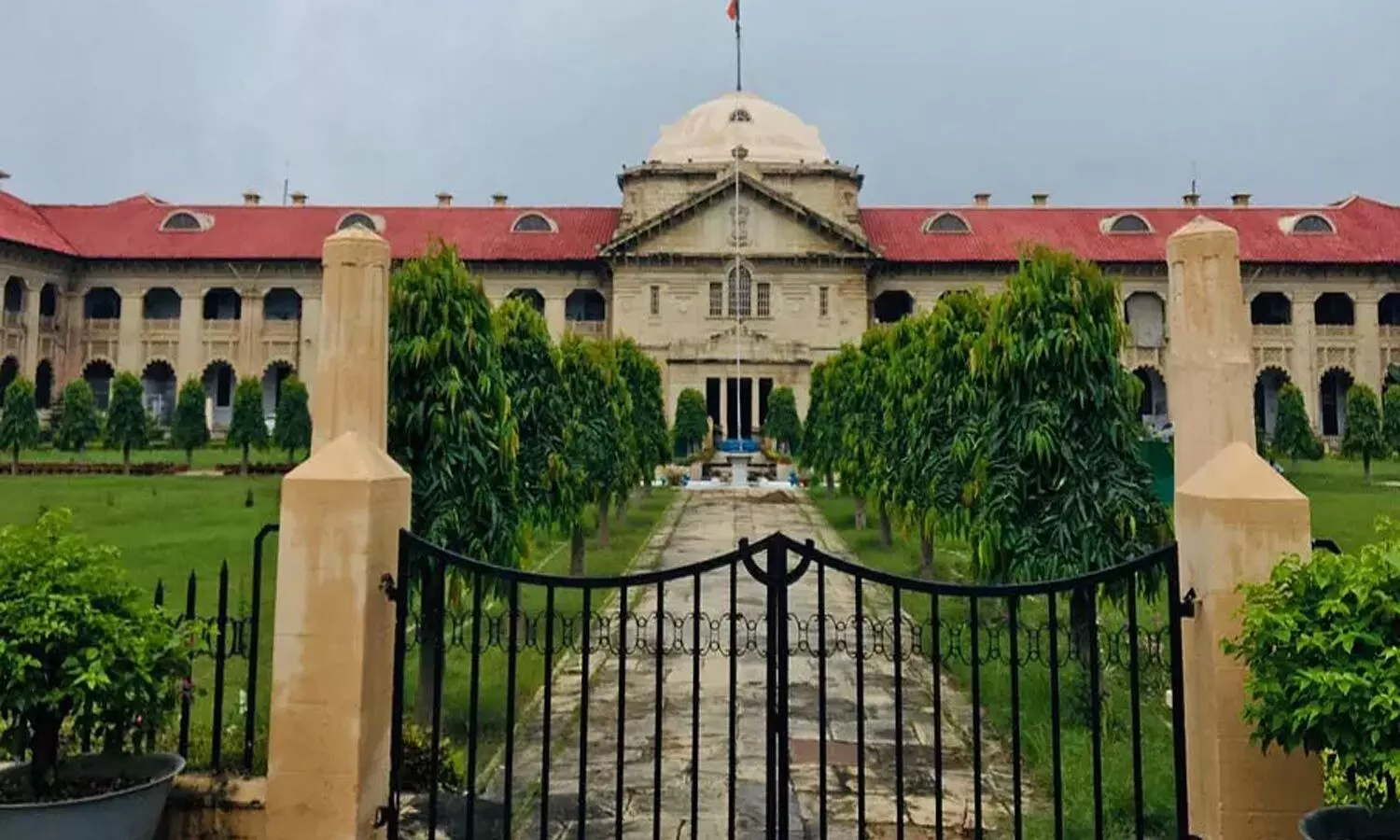


Lucknow: In a recent ruling, a Lucknow bench of the Allahabad High Court clarified that a mere administrative delay in providing a posting would not, by itself, extinguish the bond obligation. Further, a bench of Justice Shekhar B Saraf and Justice Abdhesh Kumar Chaudhary in Lucknow held that the doctors who pursue postgraduate medical education at government institutions at subsidised rates cannot evade the mandatory government service bond attached to their admission.
It was observed by the HC bench that the requirement of two years of compulsory government service was intended to ensure the availability of doctors in government hospitals and protect patients’ right to life guaranteed under Article 21 of the Constitution of India. Therefore, the bench held that an administrative delay for a short period in providing bond service posting would not make the obligation invalid.
"We also cannot be also oblivious to the fact that the decision taken by the Governments to impose a condition of compulsory bond for admission to post-graduate courses is on the basis of relevant material, in as much as huge infrastructure has to be developed and maintained for running medical colleges with post-graduate courses. The amount of fees charged from these students is meagre in comparison to the private medical colleges. Since, it is the bounden duty of the State Governments to ensure safeguarding the right of life of every person as guaranteed under Article 21 of the Constitution of India and the Government hospitals run by the State and the Medical Officers employed therein are duty bound to extend medical assistance for preserving human life," observed the High Court bench.
"Consequently, a policy decision taken by the State Governments to utilize the services of doctors who were beneficiaries of Government assistance to complete their education, for compulsory Government service under a Bond for two years cannot be termed arbitrary. We also note that the laudable objective with which the State Governments have introduced compulsory service bonds is to protect the fundamental right of the deprived sections of the society guaranteed to them under Article 21 of the Constitution of India and as such any administrative delay of a miniscule period of time to offer for the said service cannot be faulted with," it further noted.
The High Court made these observations while hearing a petition filed a doctor, who had completed MD (Transfusion Medicine) from SGPGI, Lucknow. At the time of her admission, she had executed a compulsory government service bond, promising to serve under the Government Medical Service for two years or pay Rs 40 L as penalty.
According to the terms of the bond, the State was required to provide her with Government Medical Service within a period of three months from the date of successful completion of PG course. After completing her M.D course, the petitioner was selected for the Course of Post-Doctoral Certificate Course (PDCC) in the same institute, i.e. SGPGI, Lucknow, and, accordingly, she applied for a "No Objection Certificate" from the Government to pursue her post-doctoral course and the same was issued to her. Following this, she took admission in SGPGI for one year.
The petitioner contended that when she was about to complete her PDCC course, she had submitted a letter dated 21.04.2026 requesting the DGME to conduct counselling for allotment of a seat to render the mandatory two years' Bond Service. Allegedly, there was no response from the authority. She again made another request for bond posting, to prevent any service gap in her employment. Meanwhile, she completed a short-term Senior Residency at the institute for 89 days without any service gap.
Following this, on 12.08.2026, the petitioner was transferred from SGPGI to Kalyan Singh Super Specialty Cancer Institute (KSSSCI), Lucknow. The petitioner argued that since the transfer order was issued beyond the period of three months after completion of her course, it must be construed that the mandatory Compulsory Government Service Bond executed by the petitioner stands discharged in terms of the said Bond Agreement.
As an alternative prayer, the petitioner also sought directions to the authorities to conduct counselling for the appointment of the petitioner in an NMC-recognized Government Medical College/recognized teaching medical institution, so that she may serve the Compulsory Government Service Bond and further consider the period of undergoing PDCC course as well as the adhoc posting on the post of Senior Resident at SGPGI to be counted and adjusted in the tenure of two-year compulsory government bond services.
Observations by High Court:
The bench refused to agree with the argument that the delay in providing bond service posting would make the bond infructuous. It observed that the petitioner herself, by accepting the NOC dated 01.05.2025 on the stipulated conditions, "opted out of the ordinary stream of candidates of her own batch and undertook the PDCC course with express and unambiguous notice that the said period would not count towards the Bond and that she would be accommodated only against a seat left vacant after the subsequent batch had been placed."
"Having availed the benefit of the NOC on these terms, it is not open to her to now approbate the advantage of pursuing a further specialisation while reprobating the very condition on which that advantage was extended," the HC bench held.
"The Supreme Court, in Cauvery Coffee Traders, Mangalore v. Hornor Resources (International) Co. Ltd., (2011) 10 SCC 420, has held that a party cannot be permitted to "blow hot and cold" or "approbate and reprobate", and that one who knowingly accepts the benefit of an order or a contract is estopped from denying its validity or binding effect upon himself...This principle applies squarely on the four corners as the petitioner cannot retain the benefit of the NOC enabled PDCC course and simultaneously disown the very stipulation, contained in the same NOC, that the PDCC period would not count towards, or advance, her Bond obligations or the timeline for its enforcement," the High Court observed at the outset.
The petitioner's counsel had relied on Rule 11 of the Madhya Pradesh Medical and Post Graduate Course Admission Rules, which provides for automatic deemed cancellation/release of the Bond on noncompliance with the time limit.
However, referring to this, the HC bench observed that no such statutory rule providing for automatic deemed discharge exists in the State of Uttar Pradesh. Therefore, according to the bench, in the absence of a provision analogous to Rule 11, the ratio of the Madhya Pradesh and Chhattisgarh decisions, being tied to a specific statutory scheme, cannot be transplanted to the present case, which is governed instead by the terms of the Bond and the Government Orders applicable in Uttar Pradesh, held the HC bench.
The Court also referred to the binding declaration of the Supreme Court in Association of Medical Super Speciality Aspirants and Residents v. Union of India (supra), which upholds the validity of such compulsory service bonds, holding that they neither offend Article 19(1)(g) nor amount to forced labour under Article 23, and that a candidate who has made an informed choice to avail the benefit of subsidised postgraduate medical education cannot resile from the reciprocal service obligation attached to it.
"That principle applies with equal force here as the petitioner, having derived the benefit of a further specialisation at a premier government institution, cannot be permitted to treat administrative delay of a little over three months as extinguishing an obligation the Supreme Court has recognised as a legitimate quid pro quo for public medical education," the HC bench observed.
The Court also held that the State's intention to introduce the requirement of compulsory service bond was to ensure the availability of doctors in government hospitals and this is tied to patients' right to life.
However, the Court found merit in the petitioner's grievance that she did not get any opportunity to participate in the mandatory counselling process.
The Court, however, found merit in the petitioner's grievance that she had not been given an opportunity to participate in the mandatory counselling process. It noted that the June 1, 2026 counselling notification was meant for the 2022 batch of MD/MS candidates and 2023 batch diploma candidates, whereas the petitioner belonged to the 2021 batch.
Therefore, the bench noted that the petitioner never got an opportunity to participate in the counselling process and the portal had not been made available to her batch.
Accordingly, the HC bench issued directions to the Director General, Medical Education and Training, to conduct fresh counselling for the doctor and allow her to choose from vacancies available in government medical colleges and teaching institutions recognised by the National Medical Commission, according to the order.
"Considering that the petitioner's case is somewhat singular, she having gone out of the regular batch stream to pursue the PDCC course under a specific NOC, this Court is of the view that the appropriate course is not to strike down the impugned order entirely, but to leave it open to the DGME for conducting a counselling of the petitioner, so that she is not deprived of the benefit of a structured counselling and choice of institution to the extent vacant seats permit as per the Government order dated 07.03.2018," ordered the Court.
"For all the aforesaid reasons, this Court does not find any ground warranting interference under Article 226 of the Constitution of India, except to the extent that the petitioner has a right of opportunity to participate in the counselling for compulsory government service bond as mandated by the Government order dated 07.03.2018 and 13.02.2025," it held.
Directing the State to complete the process within four weeks from September 27, 2026, the bench further clarified that the 89 days the doctor had worked as a senior resident at SGPGI after completing her PDCC course be adjusted against her two-year compulsory government service bond.
"The petitioner is directed to make a fresh, comprehensive representation before the Director General, Medical Education and Training, U.P. (respondent no. 1/DGME), setting out the peculiar facts and circumstances of her case, including the sequence of the PDCC course, the short-term extension at SGPGI, and her continued availability throughout within the period of 27.09.2026. In the meantime, the DGME shall take all steps for conducting a counselling or the petitioner, including calling for requisition of all vacant seats presently available in NMC-recognised Government Medical Colleges/ recognised teaching medical institutions in the State, so as to conduct a fresh counselling in which the petitioner is afforded an opportunity to exercise her choice of institution/seat, insofar as vacancies permit, so that her case is considered in a manner consistent with the scheme of the Bond and the applicable Government Orders dated 07.03.2018 and 13.02.2025. The counselling shall be conducted and completed within a period of four weeks from 27.09.2026," ordered the HC bench.
"Needless to observe, until such fresh counselling is undertaken and the petitioner is accommodated pursuant thereto or offered such an option, the petitioner shall continue to render service as a Senior Resident at SGPGI, Lucknow, without claiming any right or lien to continue on the said post and/or the said Institution, after the counselling. It is made clear that the continuation is merely as optional arrangement as contemplated under the Government order dated 13.02.2025 by the DGME, Lucknow," it further directed.
To view the order, click on the link below:
https://medicaldialogues.in/pdf_upload/2026/09/23/dr-vs-state-of-up-476622.pdf