Dr Rucha Patil Honoured with Phoenix Award at Health AI Con 2026 for Affordable Rare Disease and Hemophilia Innovations
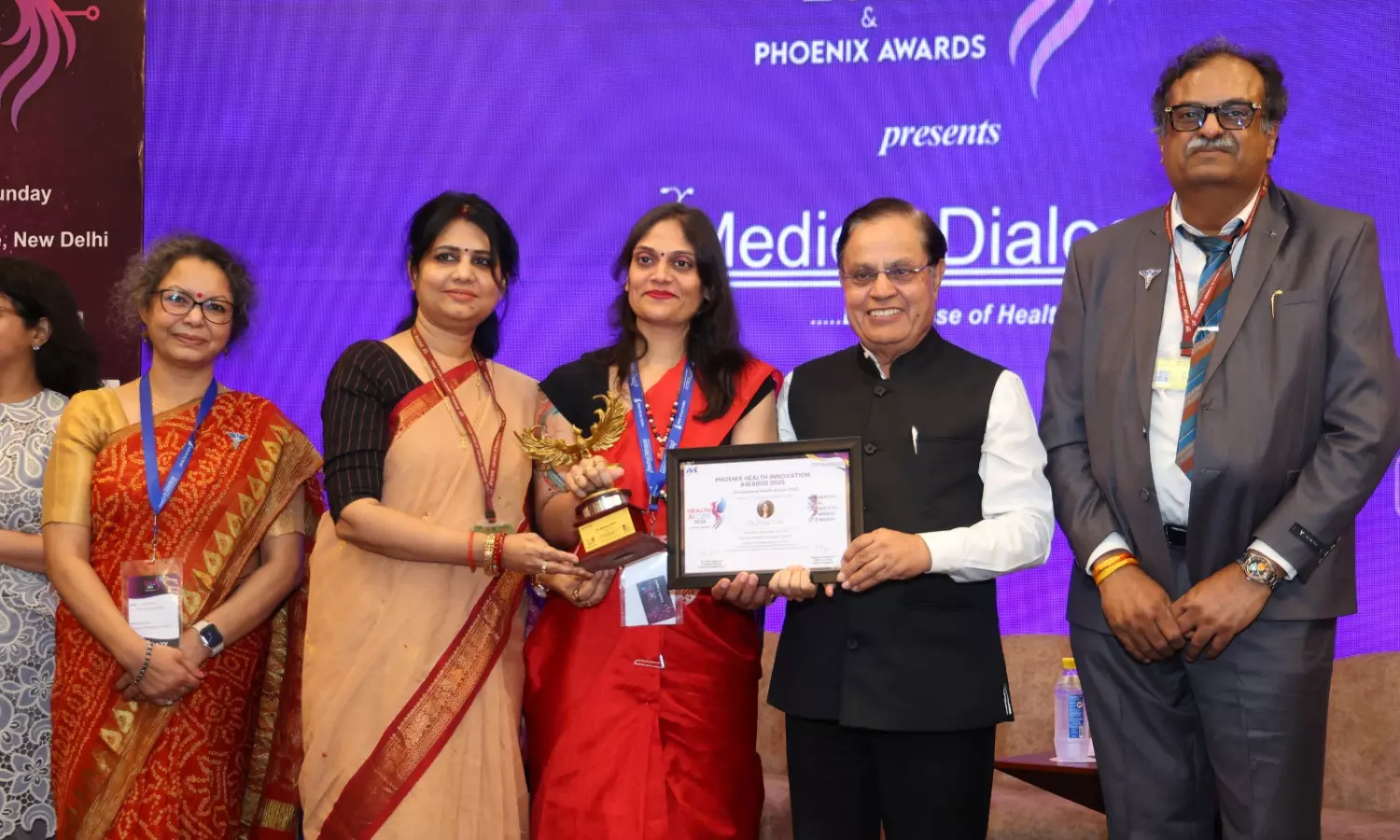


Scientist Dr Rucha Patil is redefining affordable rare disease and hemophilia care in India through low-cost diagnostics and innovative treatment research.
Scientist Dr Rucha Patil has recently been honoured with the prestigious Phoenix Award at HealthAIcon 2026 for her contribution to affordable diagnostics, rare disease research, and patient-centred healthcare innovation. The award was presented by Dr Abhijat Sheth, Chairperson, National Medical Commission (NMC) and President, NBEMS, along with Dr Anil Kohli, Former President of the Dental Council of India, and Dr Sanghamitra Pati, Additional Director General, ICMR, during the event held at Hotel Eros, New Delhi, on May 17, 2026.
Currently serving as Scientist-D at ICMR-National Institute of Immunohaematology (now ICMR-NIRBID), Dr Patil is among the leading researchers working in bleeding disorders and rare diseases in India. With nearly 15 years of experience in translational hematology research, her work focuses on making diagnosis and treatment more affordable and accessible for patients suffering from bleeding disorders like Hemophilia A and G6PD deficiency.
Among her major contributions is the development of low-cost point-of-care diagnostic kits for G6PD deficiency and FVIII inhibitor detection for haemophilia patients, for which she is an inventor. She has also contributed to the validation and practical implementation of point-of-care tests (POCTs) for the diagnosis of bleeding disorders using lateral flow assay technology. These kits have reduced testing costs from nearly ₹2000–6000 to approximately ₹250, making diagnosis possible even in resource-limited settings and primary healthcare centres. Her rapid G6PD deficiency screening test, expected to cost nearly ₹25 per test, has also emerged as an important innovation for affordable public health screening.
Dr Patil has also received international recognition for her work on low-dose Emicizumab prophylaxis in Hemophilia A patients. Her research demonstrated that lower-dose treatment strategies could provide outcomes comparable to standard therapy while substantially reducing treatment costs. The work has already benefited more than 2000 patients and influenced policy discussions around affordable hemophilia care in India and other resource-limited countries.
Over the years, Dr Patil has received several honours including the INSA Young Scientist Award, SERB Women Excellence Award, and the DHR-ICMR Gold Technology Award. Her work continues to bridge laboratory innovation with real-world patient care, reflecting the spirit of the Phoenix Award.
In an exclusive conversation with Health Dialogues Managing Editor Deshbandhu Singh, Dr Patil spoke about her innovation journey, affordable diagnostics, patient experiences, and the future of rare disease care in India.
Q: What motivated you to work in bleeding disorders and rare diseases?
Ans: My journey into bleeding disorders began unexpectedly while I was teaching at KJ Somaiya College. After clearing the NET examination, I joined ICMR-NIIH for a PhD because of its strong translational research environment.
During my PhD, we regularly worked in patient clinics, taking histories, collecting blood samples, and diagnosing bleeding disorders. Those interactions changed my perspective completely. I witnessed children with severe brain bleeds, damaged joints, and families travelling across states simply to access testing or treatment.
Seeing the human burden of these disorders motivated me to work toward affordable diagnostics and better treatment strategies for rare bleeding disorders.
Q: Why is diagnosis of haemophilia and VWD still delayed in India?
Ans: India has made significant progress in haemophilia treatment, but specialised diagnostic infrastructure remains limited. Advanced coagulation testing requires expensive equipment, trained manpower, and technical expertise, which are available only at a few centres.
Delayed diagnosis can lead to repeated joint bleeds, disability, and life-threatening brain haemorrhages. Some patients also develop inhibitors against factor replacement therapy, making treatment ineffective.
Early diagnosis and prophylactic treatment can significantly improve quality of life. Many patients today are able to attend school regularly, protect their joints, and lead near-normal lives.
Q: How can low-cost diagnostic kits help patients?
Ans: India is estimated to have nearly 1,40,000 haemophilia patients, but only around 29,000 are formally registered, highlighting major underdiagnosis.
ICMR-NIRBID’s rapid point-of-care diagnostic kits and inhibitor detection kit can help bridge this gap. The tests cost nearly one-twentieth of conventional testing, provide results within 20 minutes, and do not require sophisticated laboratory infrastructure.
The aim is simple, identify patients earlier, start treatment earlier, and prevent lifelong complications.
Q: How do these rapid diagnostic kits work?
Ans: These kits work on the principle of lateral flow immunoassay, similar to a home pregnancy test.
A finger-prick blood sample is placed on the strip along with a buffer solution. If the clotting factor is present, both the test and control lines appear. If the factor is absent or severely deficient, only the control line appears.
The process is simple, rapid, and highly suitable for decentralised testing.
Q: Why is your low-dose Emicizumab research important for countries like India?
Ans: Emicizumab has transformed the lives of patients with severe haemophilia A. Earlier, many patients experienced frequent bleeding episodes, repeated hospital visits, and major emotional and financial stress.
However, affordability remains a major challenge in countries like India. Our research demonstrated that even less than half the standard dose could provide comparable outcomes while substantially reducing treatment costs.
Today, more than 2000 patients are benefiting from this low-dose regimen. The work also contributed to Health Technology Assessment studies showing the approach to be more cost-effective than conventional treatment models.
Q: How can India improve rare disease diagnostics and treatment?
Ans: Improving rare disease care requires innovation, affordability, and coordinated public health planning.
Low-cost point-of-care diagnostics can decentralize testing and make early diagnosis possible even in remote settings. India also has tremendous potential in developing indigenous “Make in India” technologies, biosimilars, and cost-effective treatment strategies.
At the same time, stronger coordination between governments, clinicians, researchers, and industry partners will be essential to improve equitable healthcare access across the country.
Q: How important is point-of-care testing for India?
Ans: Point-of-care testing is extremely important for diseases where conventional laboratory testing is expensive and available only at specialised centres.
In disorders like haemophilia and VWD, such technologies can bridge major healthcare gaps by enabling rapid screening closer to patients. They can also support faster clinical decision-making and disease monitoring.
Ultimately, point-of-care diagnostics strengthen healthcare systems by making testing more accessible and affordable.
Q: Can these technologies reach district hospitals and PHCs?
Ans: Yes, that is one of the primary goals behind developing these technologies.
After technology transfer to industry partners, efforts are being made to ensure these diagnostic kits become available through platforms like the Government e-Marketplace (GeM), enabling district hospitals and primary healthcare centres to procure them more easily.
The vision is to move advanced diagnostics beyond specialised urban centres and make them accessible at the grassroots level.
Q: What role does government-industry collaboration play?
Ans: Government research institutes and industry bring complementary strengths to healthcare innovation.
Institutes like ICMR-NIIH contribute expertise in disease biology, diagnostics, and early-stage technology development, while industry partners support manufacturing, quality assurance, and commercialization.
Such collaborations are essential for translating scientific innovation into real-world public health impact.
Q: What has been your most emotional patient experience?
Ans: One of the most difficult experiences during my early years was counselling parents after diagnosis of severe bleeding disorders. There were heartbreaking moments when we lost patients to uncontrolled bleeding.
At the same time, some of the most emotional moments today come from seeing how newer therapies like low-dose Emicizumab have transformed lives.
Children who once missed school frequently are now active and attending classes regularly. Adults are working, getting married, and planning their futures confidently. Moments like these remind us why translational research matters.
Q: What is your long-term vision for rare disease care in India?
Ans: The landscape of bleeding disorder care has already transformed significantly, moving from therapies requiring frequent intravenous infusions to highly effective treatments that can reduce bleeding episodes almost to zero.
My long-term vision includes affordable diagnostics through point-of-care technologies, cost-optimised clinical research, HTA-driven policy changes, and wider access to indigenous diagnostics and therapeutics.
Scientific innovation becomes truly meaningful only when it reaches the people who need it most.