
Medical Dialogues
  • Dermatology
Login Register
This site is intended for healthcare professionals only
Login Register
  • MD Brand Connect
  • Webinars
  • Vaccine Hub
  • MDTV
    • Breaking News
    • Medical News Today
    • Health News Today
    • Latest
    • Journal Club
    • Medico Legal Update
    • Latest Webinars
    • MD Shorts
    • Health Dialogues
  • Fact Check
  • Health Dialogues
Medical Dialogues
  • Medical News & Guidelines
      • Anesthesiology
      • Cardiology and CTVS
      • Critical Care
      • Dentistry
      • Dermatology
      • Diabetes and Endocrinology
      • ENT
      • Gastroenterology
      • Medicine
      • Nephrology
      • Neurology
      • Obstretics-Gynaecology
      • Oncology
      • Ophthalmology
      • Orthopaedics
      • Pediatrics-Neonatology
      • Psychiatry
      • Pulmonology
      • Radiology
      • Surgery
      • Urology
      • Laboratory Medicine
      • Diet
      • Nursing
      • Paramedical
      • Physiotherapy
  • Health news
      • Doctor News
      • Government Policies
      • Hospital & Diagnostics
      • International Health News
      • Medical Organization News
      • Medico Legal News
      • NBE News
      • NMC News
  • Fact Check
      • Bone Health Fact Check
      • Brain Health Fact Check
      • Cancer Related Fact Check
      • Child Care Fact Check
      • Dental and oral health fact check
      • Diabetes and metabolic health fact check
      • Diet and Nutrition Fact Check
      • Eye and ENT Care Fact Check
      • Fitness fact check
      • Gut health fact check
      • Heart health fact check
      • Kidney health fact check
      • Medical education fact check
      • Men's health fact check
      • Respiratory fact check
      • Skin and hair care fact check
      • Vaccine and Immunization fact check
      • Women's health fact check
  • AYUSH
    • Ayurveda
    • Homeopathy
    • Siddha
    • Unani
    • Yoga
  • State News
      • Andaman and Nicobar Islands
      • Andhra Pradesh
      • Arunachal Pradesh
      • Assam
      • Bihar
      • Chandigarh
      • Chattisgarh
      • Dadra and Nagar Haveli
      • Daman and Diu
      • Delhi
      • Goa
      • Gujarat
      • Haryana
      • Himachal Pradesh
      • Jammu & Kashmir
      • Jharkhand
      • Karnataka
      • Kerala
      • Ladakh
      • Lakshadweep
      • Madhya Pradesh
      • Maharashtra
      • Manipur
      • Meghalaya
      • Mizoram
      • Nagaland
      • Odisha
      • Puducherry
      • Punjab
      • Rajasthan
      • Sikkim
      • Tamil Nadu
      • Telangana
      • Tripura
      • Uttar Pradesh
      • Uttrakhand
      • West Bengal
  • Medical Education
      • Ayush Education News
      • Dentistry Education News
      • Medical Admission News
      • Medical Colleges News
      • Medical Courses News
      • Medical Universities News
      • Nursing education News
      • Paramedical Education News
      • Study Abroad
  • Industry
      • Health Investment News
      • Health Startup News
      • Medical Devices News
      • Pharma News
      • Pharmacy Education News
      • AI and healthcare
      • Industry Perspective
  • MDTV
      • Health Dialogues MDTV
      • Health News today MDTV
      • Latest Videos MDTV
      • Latest Webinars MDTV
      • MD shorts MDTV
      • Medical News Today MDTV
      • Medico Legal Update MDTV
      • Top Videos MDTV
      • Health Perspectives MDTV
      • Journal Club MDTV
      • Medical Dialogues Show
This site is intended for healthcare professionals only
LoginRegister
Medical Dialogues
LoginRegister
  • Home
  • Medical news & Guidelines
    • Anesthesiology
    • Cardiology and CTVS
    • Critical Care
    • Dentistry
    • Dermatology
    • Diabetes and Endocrinology
    • ENT
    • Gastroenterology
    • Medicine
    • Nephrology
    • Neurology
    • Obstretics-Gynaecology
    • Oncology
    • Ophthalmology
    • Orthopaedics
    • Pediatrics-Neonatology
    • Psychiatry
    • Pulmonology
    • Radiology
    • Surgery
    • Urology
    • Laboratory Medicine
    • Diet
    • Nursing
    • Paramedical
    • Physiotherapy
  • Health news
    • Doctor News
    • Government Policies
    • Hospital & Diagnostics
    • International Health News
    • Medical Organization News
    • Medico Legal News
    • NBE News
    • NMC News
  • Fact Check
    • Bone Health Fact Check
    • Brain Health Fact Check
    • Cancer Related Fact Check
    • Child Care Fact Check
    • Dental and oral health fact check
    • Diabetes and metabolic health fact check
    • Diet and Nutrition Fact Check
    • Eye and ENT Care Fact Check
    • Fitness fact check
    • Gut health fact check
    • Heart health fact check
    • Kidney health fact check
    • Medical education fact check
    • Men's health fact check
    • Respiratory fact check
    • Skin and hair care fact check
    • Vaccine and Immunization fact check
    • Women's health fact check
  • AYUSH
    • Ayurveda
      • Ayurveda Giuidelines
      • Ayurveda News
      • Top Ayurveda News
    • Homeopathy
      • Homeopathy Guidelines
      • Homeopathy News
    • Siddha
      • Siddha Guidelines
      • Siddha News
    • Unani
      • Unani Guidelines
      • Unani News
    • Yoga
      • Yoga Guidelines
      • Yoga News
  • State News
    • Andaman and Nicobar Islands
    • Andhra Pradesh
    • Arunachal Pradesh
    • Assam
    • Bihar
    • Chandigarh
    • Chattisgarh
    • Dadra and Nagar Haveli
    • Daman and Diu
    • Delhi
    • Goa
    • Gujarat
    • Haryana
    • Himachal Pradesh
    • Jammu & Kashmir
    • Jharkhand
    • Karnataka
    • Kerala
    • Ladakh
    • Lakshadweep
    • Madhya Pradesh
    • Maharashtra
    • Manipur
    • Meghalaya
    • Mizoram
    • Nagaland
    • Odisha
    • Puducherry
    • Punjab
    • Rajasthan
    • Sikkim
    • Tamil Nadu
    • Telangana
    • Tripura
    • Uttar Pradesh
    • Uttrakhand
    • West Bengal
  • Medical Education
    • Ayush Education News
    • Dentistry Education News
    • Medical Admission News
    • Medical Colleges News
    • Medical Courses News
    • Medical Universities News
    • Nursing education News
    • Paramedical Education News
    • Study Abroad
  • Industry
    • Health Investment News
    • Health Startup News
    • Medical Devices News
    • Pharma News
      • CDSCO (Central Drugs Standard Control Organisation) News
    • Pharmacy Education News
    • AI and healthcare
    • Industry Perspective
  • Home
  • News
  • Health news
  • Doctor News
  • Dr Shyam Sundar Nandi...

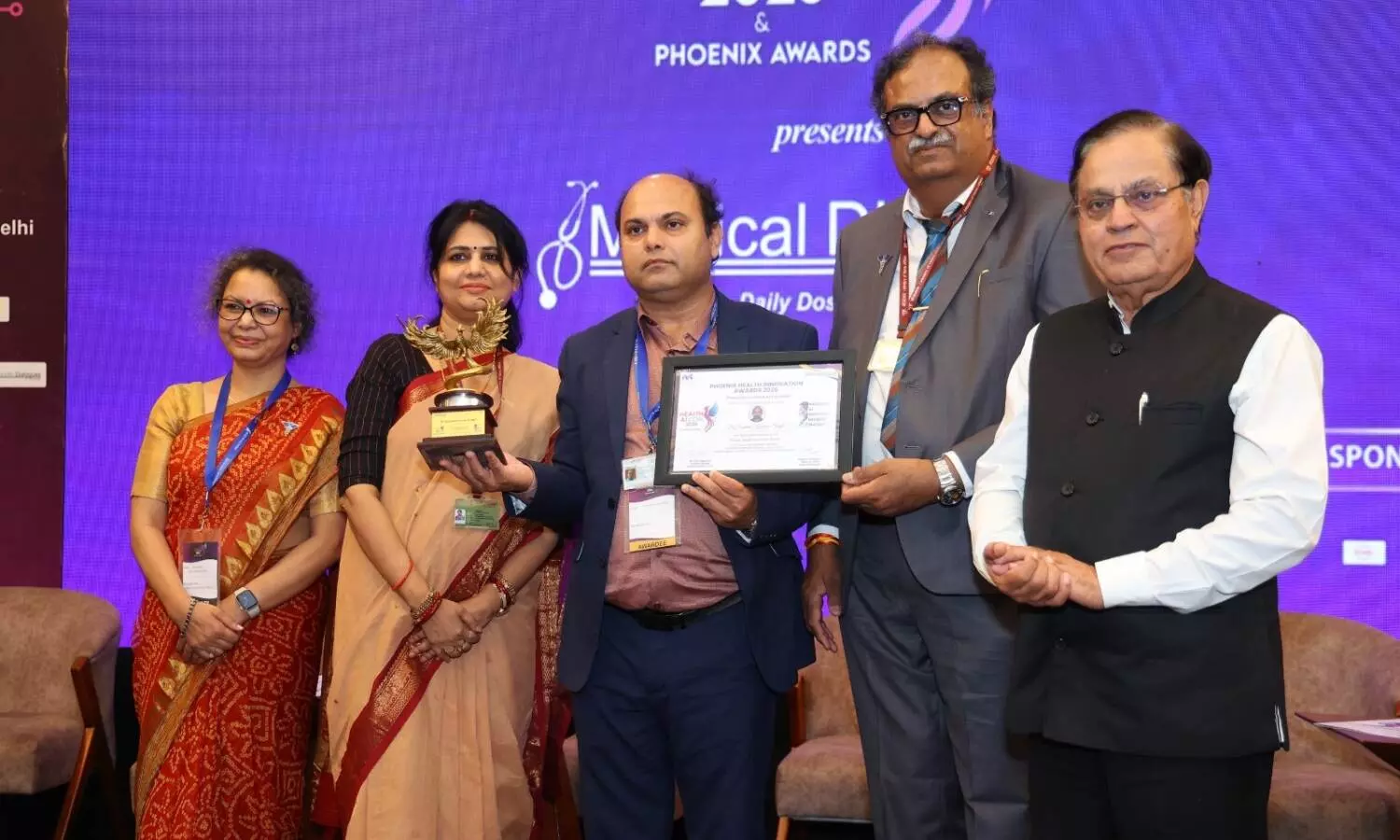
Dr Shyam Sundar Nandi Honoured with Phoenix Award at Health AI Con 2026 for Driving India's Rapid Diagnostic Revolution
Written By : Dr. Bhumika Maikhuri Published On 2026-06-08T12:30:20+05:30  |  Updated On 8 Jun 2026 12:30 PM IST
Dr Shyam Sundar Nandi Honoured with Phoenix Award at Health AI Con 2026 for Driving Indias Rapid Diagnostic Revolution
  • facebook
  • twitter
  • linkedin
  • whatsapp
  • Telegram
  • Email

Phoenix Awardee Dr Shyam Sundar Nandi, Scientist-E at ICMR-NIV, is advancing rapid diagnostics, CRISPR technologies, and outbreak detection to strengthen India's public health preparedness.

As India strengthens its preparedness against emerging infectious diseases and future pandemics, scientists working behind the scenes to develop faster, affordable, and accessible diagnostic technologies are playing an increasingly important role. Among them is Dr Shyam Sundar Nandi, Scientist-E and Deputy Director at the ICMR-National Institute of Virology (NIV), whose work in molecular virology, CRISPR-based diagnostics, rapid testing platforms, and infectious disease surveillance has contributed significantly to India's public health ecosystem.

In recognition of his contributions to healthcare innovation and indigenous diagnostic technology development, Dr Nandi has recently been honoured with the Phoenix Award at HealthAIcon 2026, a platform that celebrates individuals driving impactful advancements in healthcare, medical research, and public health. The award was presented by Dr Abhijat Sheth, Chairperson, National Medical Commission (NMC) and President, NBEMS, along with Dr Anil Kohli, Former President of the Dental Council of India, and Dr Sanghamitra Pati, Additional Director General, ICMR, during the event held at Hotel Eros, New Delhi, on May 17, 2026.

Over the years, he has led the development of multiple diagnostic technologies targeting diseases such as COVID-19, Nipah virus infection, Mpox (Monkeypox), diphtheria, enteroviruses, and silicosis-associated conditions.

One of Dr Nandi's key areas of focus has been the development of rapid, low-cost, and field-deployable diagnostic tools that can function even in resource-constrained settings. His work spans RT-LAMP-based molecular diagnostics, CRISPR-powered detection systems, genome engineering, and point-of-care testing platforms designed to reduce dependence on sophisticated laboratory infrastructure. Several of these innovations have been commercialised and have supported disease surveillance and outbreak response efforts in India.

Beyond diagnostics, Dr Nandi's research has also contributed to advancing virology research through innovations such as CRISPR-engineered cell lines and novel screening tools for occupational diseases like silicosis. His work reflects a broader vision of strengthening India's biotechnology capabilities through indigenous innovation, affordable healthcare technologies, and enhanced pandemic preparedness. 

In his conversation with Deshbandhu Singh, Managing Editor of Health Dialogues, Dr Nandi shares insights into rapid diagnostics, CRISPR technology, future infectious disease threats, and the evolving landscape of public health innovation in India.

Q1. What inspired you to focus on rapid infectious disease diagnostics and CRISPR-based technologies?

My interest comes from the need for faster, accessible diagnostics, particularly in resource-limited settings where delayed diagnosis can affect patient outcomes and outbreak control. CRISPR-based technologies offer highly specific molecular detection and can be adapted for portable, point-of-care use. The possibility of combining innovation, affordability, and public health impact continues to motivate my work.

Q2. During the COVID-19 pandemic, what gaps did you observe in India’s diagnostic ecosystem?

The pandemic exposed limitations in decentralised testing, dependence on imported diagnostic components, uneven distribution of laboratory infrastructure, and gaps in real-time surveillance systems. It also highlighted the need for portable diagnostics, stronger domestic manufacturing, better digital integration, and multiplex testing platforms capable of detecting multiple pathogens simultaneously.

Q3. How is RT-LAMP different from conventional RT-PCR?

Both detect viral RNA, but RT-PCR requires repeated temperature cycling, whereas RT-LAMP works at a constant temperature. This makes RT-LAMP faster, simpler, and more suitable for portable and point-of-care applications, particularly in low-resource settings.

Q4. Why are portable and low-cost molecular diagnostics important for India?

India’s large population, diverse geography, and unequal healthcare access make decentralised diagnostics essential. Portable and affordable molecular tests can reduce diagnostic delays, improve outbreak response, strengthen surveillance, and bring advanced healthcare closer to rural and remote communities.

Q5. Can you explain your CRISPR-engineered cell line innovation in simple terms?

It functions like a “living biosensor” that has been genetically programmed to recognise specific biological signals. Using CRISPR-Cas9 and lentiviral technology, we introduced targeted genetic modifications and increased viral titers from 10⁷ to 10¹⁰, improving research and diagnostic capabilities.

Q6. How important is rapid diagnosis during outbreaks such as COVID-19, Nipah, or Mpox?

Rapid diagnosis is critical because it enables early isolation, timely treatment, efficient contact tracing, and better outbreak surveillance. Faster detection helps reduce transmission, improve patient management, and support informed public health responses.

Q7. Is India better prepared for future pandemics compared to 2020?

Yes. India has significantly expanded molecular testing capacity, strengthened indigenous manufacturing, improved genomic surveillance, enhanced digital health systems, and increased public awareness. However, further improvements are needed in decentralised healthcare access, workforce training, integrated surveillance, and rapid translation of research into scalable products.

Q8. How can indigenous diagnostic technologies reduce dependence on imports?

Domestic diagnostic technologies improve self-reliance, affordability, and supply-chain resilience during public health emergencies. The COVID-19 pandemic demonstrated the importance of strong indigenous manufacturing ecosystems, and such technologies can eventually become common in district hospitals and field laboratories.

Q9. What role will CRISPR play in the future of diagnostics and virology research?

CRISPR has the potential to transform diagnostics through rapid pathogen detection, mutation tracking, and portable testing platforms. In virology research, it helps scientists study viral infection mechanisms, develop disease models, identify drug targets, and strengthen pandemic preparedness through adaptable detection systems.

Q10. Which future infectious disease threats concern you the most?

The greatest concerns are emerging zoonotic viruses, antimicrobial resistance, and pathogens with high transmissibility and mutation rates. Future preparedness will depend on rapid diagnostics, genomic surveillance, early pathogen detection, and integrated public health response systems.

Q11. What technologies is your team currently working on?

We are developing CRISPRDx, RT-LAMP and SELEX-based platforms, along with microfluidics-enabled point-of-care diagnostic kits for high-risk pathogens such as Nipah, Zika, Ebola, and Mpox.

Q12. What advice would you give young Indian scientists?

Build strong scientific fundamentals, embrace interdisciplinary research, develop practical laboratory skills, remain curious, uphold scientific integrity, and focus on solving real-world healthcare challenges. Meaningful innovation comes from combining scientific excellence with societal impact.
dr shyam sundar nandiicmrhealth ai conresearchphoenix awardsinnovation
Dr. Bhumika Maikhuri
    Show Full Article
    Next Story

    Editorial

    Comparing Telmisartan Amlodipine FDC vs. Telmisartan Cilnidipine FDC in Indian Hypertensive Patients: Latest START RENAL 2026 Update

    Comparing Telmisartan Amlodipine FDC vs. Telmisartan Cilnidipine FDC in Indian Hypertensive...

    Dapagliflozin Metformin in T2D: Six Potential Benefits Beyond Glucose Lowering-Dr Setu Gupta

    Dapagliflozin Metformin in T2D: Six Potential Benefits Beyond Glucose Lowering-Dr Setu Gupta

    Merck Marks Beta Blocker Month: Revisiting a Landmark Discovery & Spotlight on Bisoprolol

    Merck Marks Beta Blocker Month: Revisiting a Landmark Discovery & Spotlight on Bisoprolol

    CKM Syndrome Stage 1: Why Obesity Is No Longer a Cosmetic Problem

    CKM Syndrome Stage 1: Why Obesity Is No Longer a Cosmetic Problem

    Dapagliflozin in Heart Failure: Cardiologists Practical Perspective

    Dapagliflozin in Heart Failure: Cardiologist's Practical Perspective

    View All

    Journal Club Today

    New Study Questions Brain Health Benefits of Omega-3 Fish Oil Supplements

    New Study Questions Brain Health Benefits of Omega-3 Fish Oil Supplements

    View All

    Health News Today

    Health Bulletin 01/July/2026

    Health Bulletin 01/July/2026

    View All
    © 2022 All Rights Reserved.
    Powered By: Hocalwire
    X
    We use cookies for analytics, advertising and to improve our site. You agree to our use of cookies by continuing to use our site. To know more, see our Cookie Policy and Cookie Settings.Ok