
Madras HC allows 72 year old London-based doctor to give evidence via video conference
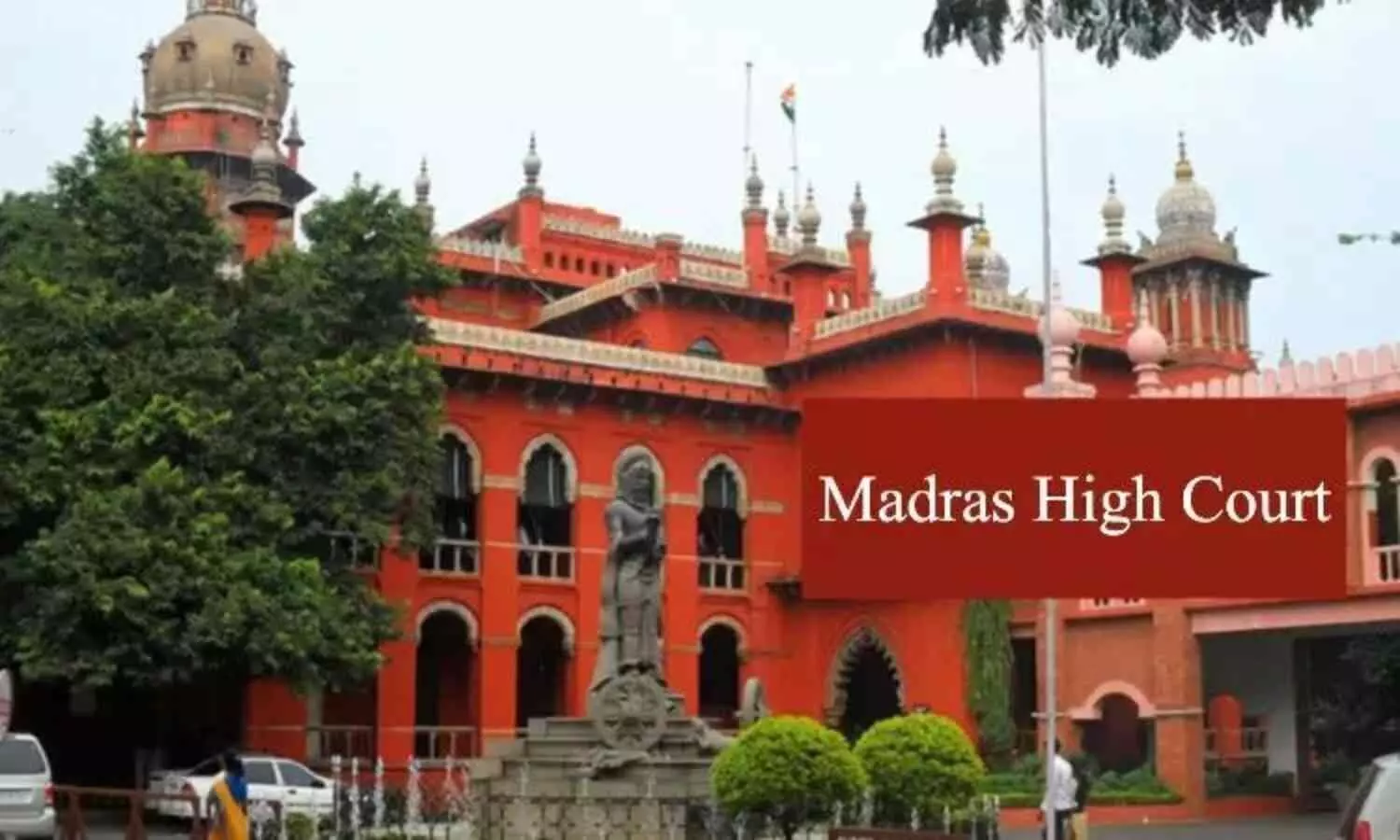


Chennai: The Madras High Court has permitted a 72-year-old London-based doctor to give evidence through video conference in a long-pending property dispute, observing that the complexity of a case or the volume of documents involved cannot, by itself, prevent witnesses from giving evidence virtually.
Justice N Anand Venkatesh passed the order while hearing a revision petition challenging the Coimbatore trial court's decision to allow the doctor to record his evidence through video conference.
The doctor is a party to a long-running property dispute in which he has sought partition and allotment of a one-third share in the property. He has also challenged a decree passed by the District Munsif Court, Coimbatore, in 2004 in favour of the opposite parties and sought to restrain them from selling the disputed properties.
When the matter had reached the stage of witness examination, the doctor sought permission to appear through video conference. The trial court allowed his request, taking into account his age and the fact that he was practising in London.
The High Court was also informed that the doctor had appeared in person on the previous three hearing dates for cross-examination, but the proceedings could not be completed.
The High Court, while upholding the permission for virtual evidence, noted that courts are increasingly using video-conferencing even in complicated proceedings involving extensive records.
According to the Indian Express, the court observed that the decision of the trial court did not need any interference as the case was “certainly” not a complex issue and cross-examination of the doctor could be easily conducted through the virtual mode. Further, the High Court was of the view that the “age and health ailments faced by the first respondent/ plaintiff (doctor) justify his appearance before the court below through the VC mode”.
The judge pointed out that complex arbitration matters involving large financial interests and voluminous documents are already being conducted through the virtual mode.
The court observed that the Madras High Court Video Conferencing Rules, 2026 specifically provide a procedure for recording evidence through video conference.
The order therefore reinforces the use of video-conferencing as a practical means of recording evidence, particularly where a witness is unable to repeatedly travel to court because of age or because of residence abroad.
