Medical Bodies seek specialised framework for medical negligence cases ahead of Supreme Court hearing
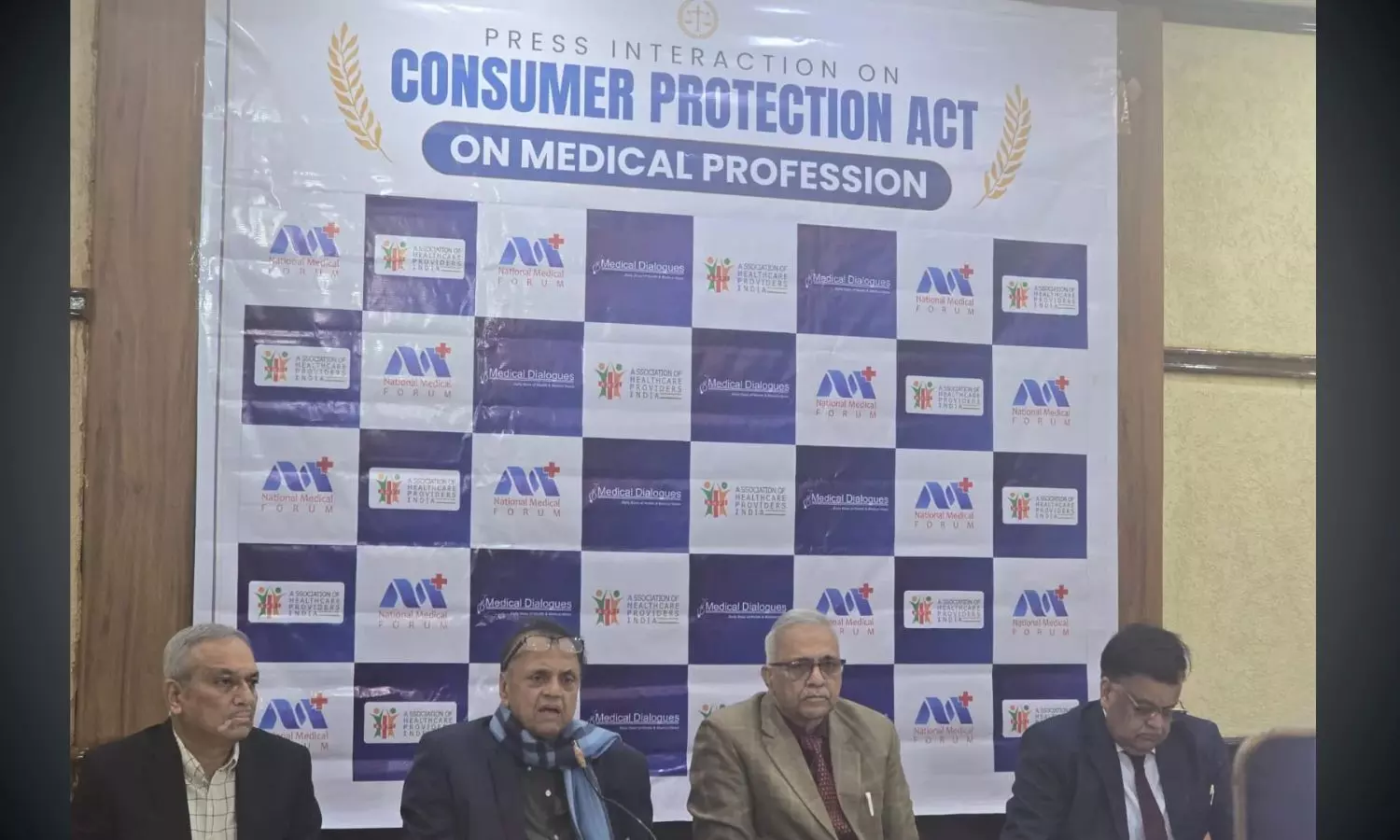


New Delhi: Nearly three decades after medical services were brought under the ambit of the Consumer Protection Act (CPA), concerns have emerged over the adequacy of consumer commissions in adjudicating complex medical negligence cases, the distinction between genuine negligence and unavoidable adverse clinical outcomes, and the implications of litigation for medical practice and the doctor-patient relationship.
Calling for a reconsideration of the existing legal framework while safeguarding patients' rights and access to justice, the National Medical Forum (NMF), in association with the Association of Healthcare Providers (India) (AHPI), presented the Delhi Declaration 2026 on Medical Negligence, Professional Accountability and Consumer Protection at a press interaction held at the Press Club of India, New Delhi.
In its note, the declaration stated, "Three decades after the landmark judgment of the Hon’ble Supreme Court in Indian Medical Association v. V.P. Shantha (1995), advances in medical science, evolving healthcare practices, experiences of medical litigation and subsequent judicial pronouncements call for a comprehensive reconsideration of the application of the Consumer Protection Act to medical services, while ensuring that patients’ rights and access to effective redressal remain fully protected. We recognise that medical practice involves complex clinical judgments, scientific uncertainties and ethical responsibilities that distinguish it from ordinary commercial services. Medical negligence must therefore be assessed against accepted professional standards and prevailing clinical circumstances, rather than solely on treatment outcomes."
"Through the Delhi Declaration 2026, we advocate a fair, transparent and specialised framework for resolving medical negligence disputes that safeguards patients’ rights, ensures professional accountability, protects medical professionals against unjustified allegations and strengthens public trust in healthcare," it added.
The declaration seeks reconsideration of the applicability of the Consumer Protection Act (CPA) to medical professionals, nearly three decades after the landmark Supreme Court judgment in Indian Medical Association vs. V.P. Shantha (1995).
"We respectfully pray that the Hon’ble Supreme Court reconsider whether medical negligence disputes should continue to fall within the jurisdiction of consumer commissions, considering the specialised nature of medical practice and the evolution of medical jurisprudence," the declaration mentioned.
Addressing the media, Dr Prem Aggarwal, Chairman, National Medical Forum, raised serious concerns about the experience of medical professionals under the CPA over the past 30 years. He emphasised that medicine involves complex clinical judgments, scientific uncertainties and unavoidable risks, and that an unsuccessful treatment or adverse outcome cannot automatically be equated with medical negligence.
Dr Girdhar Gyani, Director General, Association of Healthcare Providers (India) (AHPI), emphasised the need to reform the existing mechanism for resolving medical negligence disputes.
The National Medical Forum and AHPI have been pursuing the matter through legal and professional advocacy. A petition challenging the applicability of the CPA to medical services is presently before the Hon'ble Supreme Court of India, which has issued notices to the concerned government authorities, including the National Medical Commission and the Ministry of Consumer Affairs. The matter is scheduled for hearing on 26 November 2026.
The Delhi Declaration has urged the Hon'ble Supreme Court to reconsider the jurisdiction of consumer commissions over medical negligence disputes. It advocates a specialised, transparent and expert-driven mechanism for their adjudication.
The declaration has reiterated that patients' safety, dignity, informed consent, professional accountability and access to timely justice must remain fully protected. It seeks to distinguish genuine medical negligence from recognised complications, reasonable clinical decisions and unavoidable adverse outcomes.
The declaration has acknowledged the principles laid down by the Supreme Court of India while adjudicating cases of Medical Negligence, including:
- Patient safety comes first. Every patient deserves safe, ethical and appropriate care.
- Every patient deserves dignity and transparency. Patients have the right to understandable information, informed consent and respectful treatment.
- Adverse outcomes require fair assessment. Death, disability or failure to recover does not, by itself, establish negligence.
- Recognised complications must be assessed objectively. Their occurrence alone does not establish negligence when appropriate care has been provided.
- Treatment outcomes cannot be guaranteed. Failure of treatment must be evaluated against the accepted standard of care.
- Clinical judgment deserves fair evaluation. Reasonable decisions consistent with accepted medical practice should not be judged solely with hindsight.
- Medical disputes require expert assessment. Complex clinical questions should be evaluated with appropriate independent medical expertise.
- Genuine grievances deserve timely redressal. Patients must have accessible and effective mechanisms to seek justice.
- Accountability must be proportionate. Clinical negligence, service deficiencies,
- professional misconduct and criminal negligence must be assessed according to the applicable legal standards.
- Justice must protect both patients and the integrity of healthcare. Fair procedures should prevent unjustified allegations without obstructing legitimate claims