Super-specialist Doctors Cannot Remain Indebted to Govt Forever: Karnataka HC
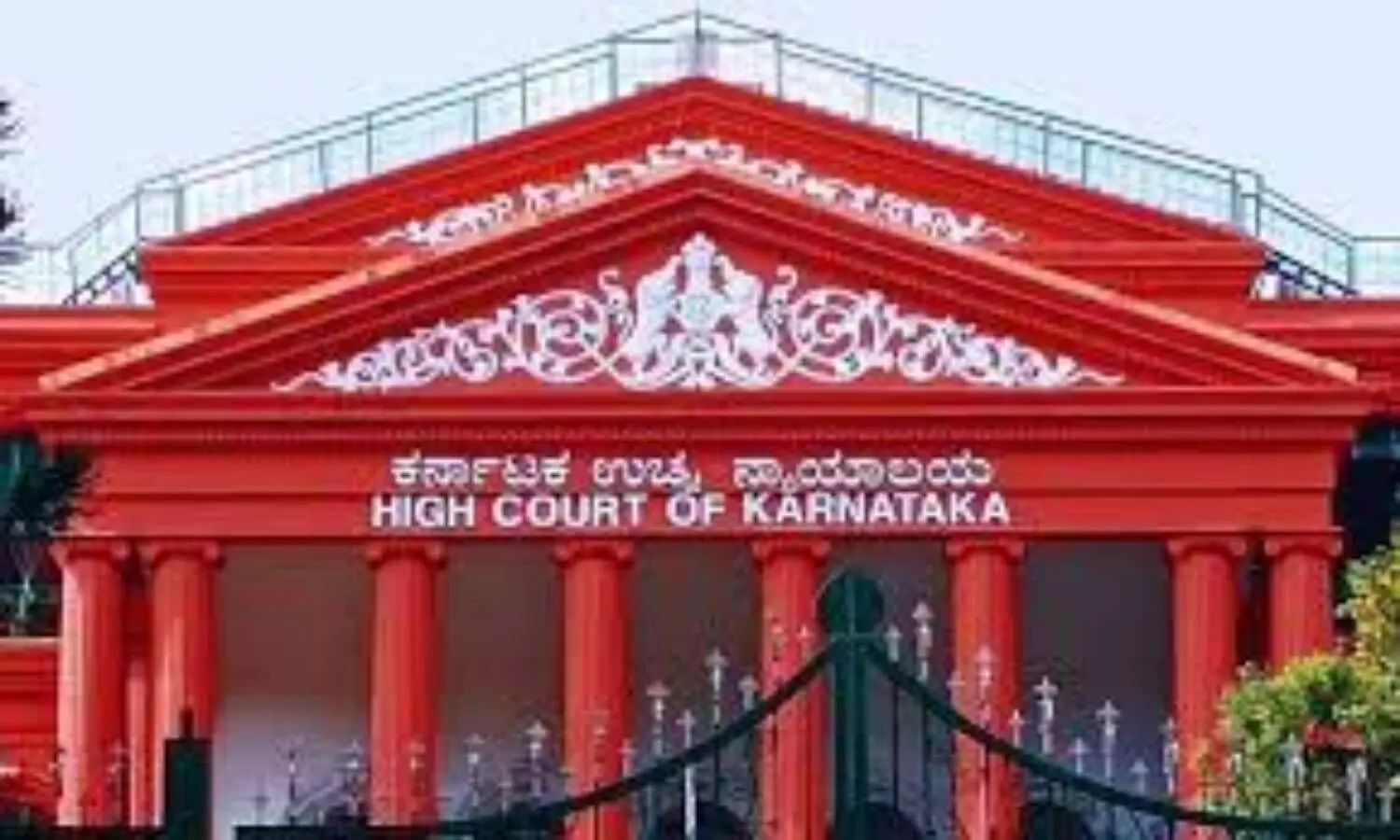


Bengaluru: In a recent ruling, the Karnataka High Court observed that it was unacceptable that a doctor securing admission to the super-speciality courses under the in-service quota must remain indebted to the Government till retirement even though he has not been issued any posting orders.
With this observation, a Division Bench of the High Court, comprising Justices Anu Sivaraman and Venkatesh Naik T granted relief to a doctor, who was issued show-cause notices by the Bengaluru Medical College and Research Institute (BMCRI) in 2022 after he resigned from service after not being assigned to a post during the tenure of the super-speciality course.
"The respondent, a Super Specialty Qualified Doctor cannot be expected to remain idle and not work when no posting orders are provided to him, even in spite of reporting to the Government for duty and seeking the same. We are of the opinion that the condition that a post-graduate doctor who has availed of the inservice quota for admission to a Super Specialty Course must remain indebted to the Government for the rest of his official life, even in the absence of any posting orders, is not an acceptable proposition," observed the Division bench while partially upholding an order dated 05.04.2023, passed by a single judge who has quashed the show-cause notices issued to the doctor.
"In any view of the matter, since the respondent had reported for duty and had not been issued with any posting orders, the Government or the Institute from which he was relieved, cannot now contend that he was guilty of the offence of unauthorised absence from service from the Institution in which he had not been posted by the Government. The contention that there is an automatic resumption of service under the Institution from which he was relieved also cannot be accepted in the facts and circumstances of the instant case. We find that the said finding of the learned Single Judge is not liable to be interfered with. The finding that the domestic enquiry initiated by the BMCRI for unauthorised absence was illegal and liable to be set aside, is affirmed. The reliefs (a), (b) and (c) of the judgment of the learned Single Judge, are upheld," ordered the bench.
However, the Division bench vacated the part of the order stating that the Government had to pay salary to the doctor for the period for which posting was not provided to him and also directing the Chief Secretary to conduct an enquiry and recover the loss caused to the Government in this behalf.
Background:
The petitioner-doctor was appointed as an Intensive Care Medical Officer in the Department of General Surgery, Bangalore Medical College and Research Institute. He completed his two-year probationary period on 21.10.2011, which was declared satisfactory. Based on a Government Order dated 07.08.2013, the doctor qualified as an in-service candidate and was granted a seat at Kidwai Memorial Institute of Oncology to pursue the M.Ch Surgical Oncology course.
On 13.08.2015, he executed a bond in relation to his deputation, and having been relieved from BMCRI, he joined the M.Ch course at KMIO on 31.08.2015. Consequently, he completed the three-year course over the period 2015–2018 and was relieved from deputation on 08.08.2018.
On 09.08.2018, BMCRI submitted a joining letter to the Additional Chief Secretary, Department of Medical Education, requesting a posting as Assistant Professor at KMIO, on the basis that a vacancy existed there and that there was no Surgical Oncology position at BMCRI. Thereafter, and until his resignation in August 2021, he was not given any posting neither at KMIO nor at BMCRI. On 27.08.2021, the doctor tendered his resignation.
However, issuing a notice dated 11.04.2022, BMCRI declined accepting his resignation, citing Government Order dated 07.08.2013 and directed the doctor to report within seven days. Another notice was issued on 06.05.2022 and to this notice, the doctor submitted a detailed reply on 03.06.2022 stating that he was resigning for not being assigned a post for three years. On 15.07.2022, BMCRI issued a further show cause notice alleging continuous unauthorized absence, and later, through an order dated 21.10.2022, a domestic inquiry was initiated against him.
Thereafter, the doctor challenged the Government Order dated 07.08.2013 and the notices issued by BMCRI and seeking acceptance of his resignation. The Single Judge bench allowed the petition, partly accepting the Government Order dated 07.08.2013 in terms of the judgment of the Apex Court in Association of Medical Super Speciality Aspirants and Residents & Ors. v. Union of India & Ors. The Single Judge held that the bond executed by the doctor in favour of the State mandating compulsory service till retirement with no eligibility for voluntary retirement was liable to be quashed and that BMCRI should have accepted the letter of resignation. The Single Judge quashed the notices dated 11.04.2022, 06.05.2022 and 15.07.2022 and the Order dated 21.10.2022 and directed the Chief Secretary to pay salary to the doctor for the period for which no posting was given, and to hold an enquiry and file a report within six months
Challenging this order, BMCRI filed an appeal before the Division Bench of the High Court. The Additional Government Advocate argued that the Single Judge granted relief to the doctor on the fallacious understanding that the Apex Court had reduced the bond period to two years. It was argued that the Apex Court, having considered the reasonableness of the bond period, only directed the State Governments to 'consider' imposing a condition of compulsory service of two years and that the final decision on the duration was left to the State Governments.
Further, it was argued that the doctor did not properly report for duty and after being relieved from KMIO, he simply wrote a letter to the BMCRI stating that he was seeking a post as an Assistant Professor at KMIO, whereas he was supposed to have reported to his parent institute-BMCRI until he was assigned a new posting. The counsel further argued that the doctor agreed to the conditions of deputation and signed the bond voluntary.
Having applied for the M.Ch Surgical Oncology as an in-service candidate and on that secured deputation and funding from the Government, he accepted the terms and conditions of the Government Order dated 07.08.2013 and joined KMIO aware that the bond dated 13.08.2015 specified that he had to serve the Government until retirement as a pre-condition imposed for the BMCRI to depute him, argued the Government Pleader. Further, it was contended the petitioner-doctor owed a duty to the Government and to the general public to render service.
It was also argued that the doctor did not join BMCRI, but instead directly sought posting as an Assistant Professor at KMIO, and therefore there was no lapse on the part of BMCRI in not providing a posting order.
On the other hand, the counsel for the doctor argued that the Apex Court in Association of Medical Super Speciality Aspirants' case (supra) upheld government bonds for medical students to serve compulsorily in government service. However, the Apex Court directed that the period of compulsory service and the mode of exit should be reasonable, and the State Governments and the Armed Forces Medical College were directed to consider imposing the condition of compulsory service of two years, in default 15 of which the doctors shall recompense the government by paying Rs.20 lakhs.
Referring to this case, the counsel argued that the impugned Bond mandates that the doctors serve compulsorily till retirement and are not eligible for any voluntary retirement, which means that there is no exit from compulsory service at all, which is in violation of the directions of the Apex Court.
The counsel also argued that the appellants have failed to consider that the doctor had already served for several years before undertaking the M.Ch Super Speciality course, and was not given any posting after his deputation ended in 2018. Even after completing his deputation, he reported for duty on 09.08.2018, he was neither given any posting nor paid any salary for more than three years, despite his repeated requests. In these circumstances, it cannot be held that he violated the conditions of the impugned Government Order, and the disciplinary enquiry initiated by the appellants deserves to be set aside.
Observations by High Court Division Bench:
The Division Bench of the High Court noted that the bond execited by the petitioner-doctor specifically provided that the persons deputed for super-speciality course in the in-service quota should report to the Government after completing the course. The bench further noted that the doctor had reported to the Government after completing his course and the bond provided for compulsory government service till retirement.
At the outset, the HC bench observed that the Apex Court in Association of Medical Super Specialty Aspirants' case (supra) held that bonds for compulsory government service are legal and valid.
"However, it is worth noticing that the Apex Court was considering the validity of bonds to serve the Government for three years after post-graduate and super specialty courses. The validity of the condition to serve the Government till retirement was not considered," observed the HC Division Bench.
The bench further observed that, "...it is not in dispute that the respondent had reported to the Government after completion of his course and had requested for posting orders which were not forthcoming. The contention now sought to be raised by the appellants is that the respondent had left the Country to work abroad. However, we notice that in the absence of any posting orders being issued to the respondent, the appellants cannot raise these contentions in these proceedings."
"It is not on account of any fault of the respondent that appropriate posting orders as provided in the Bond and the Government Order were not made available to the respondent. The respondent, a Super Specialty Qualified Doctor cannot be expected to remain idle and not work when no posting orders are provided to him, even in spite of reporting to the Government for duty and seeking the same," the HC bench held.
Accordingly, the Division Bench concluded that since the doctor had reported for duty and had not been issued with any posting orders, the Government or the Institute from which he was relieved, cannot now contend that he was guilty of the offence of unauthorised absence from service from the Institution in which he had not been posted by the Government.
"The contention that there is an automatic resumption of service under the Institution from which he was relieved also cannot be accepted in the facts and circumstances of the instant case," observed the bench and upheld the Single Bench order that the domestic enquiry initiated by the BMCRI for unauthorised absence was illegal and liable to be set aside.
"The reliefs (a), (b) and (c) of the judgment of the learned Single Judge, are upheld. However, the finding that the appellant-Government is to pay salary to the respondent for the period for which posting was not provided to him and the direction to the Chief Secretary to conduct an enquiry and recover the loss caused to the Government in this behalf are vacated," clarified the bench.
To view the order, click on the link below:
https://medicaldialogues.in/pdf_upload/2026/09/05/dr-adnan-saeed-vs-bmcri-474277.pdf