Emergency Care Boost: ICMR hands over mobile stroke units to Assam
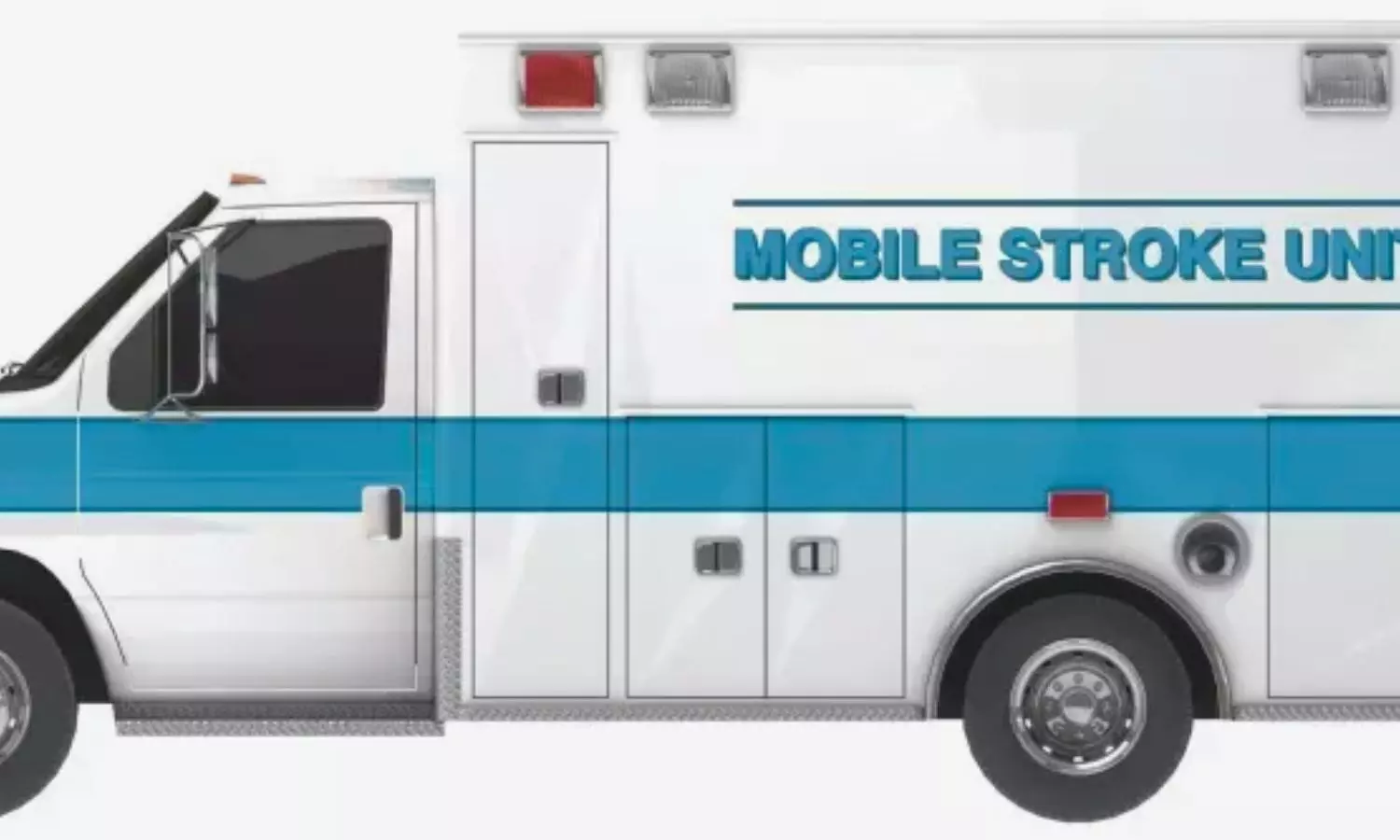
Mobile Stroke Unit


Dibrugarh: Two specialised Mobile Stroke Units (MSUs) were officially handed over to the Assam government by the Indian Council of Medical Research (ICMR) on Tuesday at a ceremony held at Assam Medical College and Hospital (AMCH), marking a major step in strengthening emergency stroke care in the state.
The MSUs, which have been operational since 2019 at AMCH in Dibrugarh and Tezpur Medical College and Hospital (TMCH), were initially launched under an ICMR-funded initiative aimed at studying “Stroke Care Pathways” in the region. Following the conclusion of the pilot phase, ICMR donated the units to the Assam government to ensure uninterrupted, rapid stroke care for people across upper and central Assam.
Also Read:Patients treated by mobile stroke units had better outcomes, finds NEJM study
Stroke remains a major public health challenge worldwide. The World Health Organisation identifies it as the second leading cause of death globally, accounting for nearly 11 per cent of all deaths. In India, stroke is the fourth leading cause of death and the fifth leading cause of disability, according to a 2018 Lancet study.
The situation is particularly concerning in Assam, where a 2024 analysis published in Scientific Reports noted that stroke incidence rose from 89 to 108 cases per one lakh population over the study period. The disease burden has also increased, with stroke-related deaths and years lived with disability climbing from 1,965 in 1990 to 2,029 per one lakh population in 2021.
Recognising the need for rapid, time-bound intervention—especially in the rural, remote and difficult terrain of Northeast India—the introduction of Mobile Stroke Units marks a major step forward.
Between 2021 and August 2024, the MSUs responded to more than 2,300 emergency calls. Trained nurses screened 294 suspected stroke cases, with around 90 per cent of patients treated directly at their homes, the ministry said, reports UNI.
Integration with the 108 emergency ambulance service has expanded coverage to a radius of up to 100 kilometres, significantly improving access to urgent stroke care.
Stroke treatment is extremely time-sensitive, guided by the principle that “time is brain,” with medical experts noting that a delay of even one minute can result in the loss of nearly two million neurons. The MSUs are equipped with on-board CT scanners, enabling doctors to immediately distinguish between ischemic and haemorrhagic strokes and initiate appropriate treatment without delay.
Speaking to TOI, ICMR director general Dr Rajiv Bahl said, “Our goal is to mitigate disability by bringing the diagnosis to the patient’s doorstep. These units have proven that early intervention in rural and semi-urban settings is not just possible, but highly effective.”
Dr. Sanjeeb Kakati, principal of AMCH, said that AMCH made history by becoming the first government institution in the country to perform thrombolysis within a mobile unit, adding that integrating these units into the permanent healthcare infrastructure would save countless lives across the state.