Over 1,000 robotic surgeries performed at AIIMS Delhi in 13 months
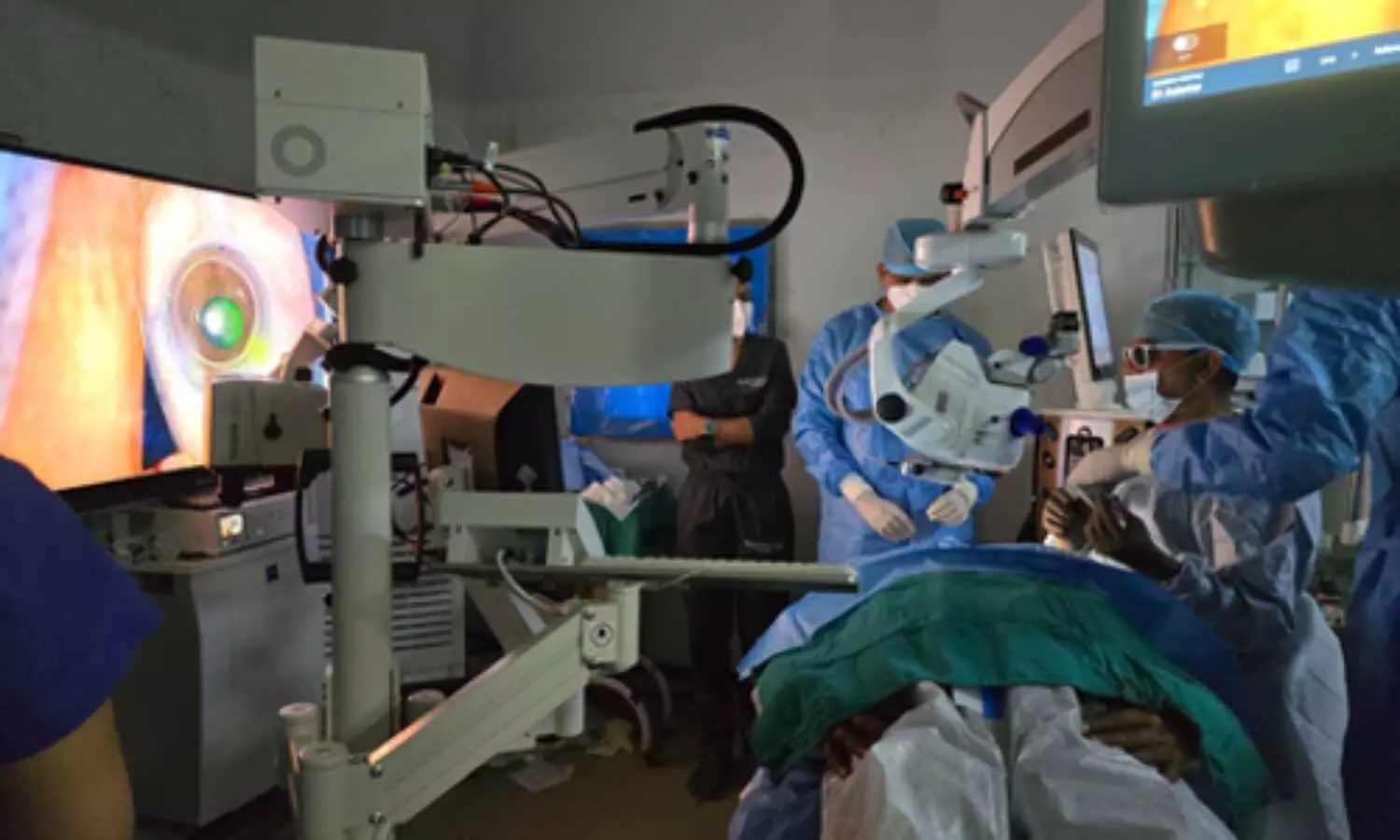


New Delhi: The All India Institute of Medical Sciences (AIIMS) Delhi has performed over 1,000 robotic surgeries in the last 13 months, the Institute announced on Tuesday. The Department of Surgical Disciplines introduced robotic surgery more than a year ago to address complex surgical challenges.
The state-of-the-art surgical robot has to date performed surgeries, including hepatobiliary procedures like pancreatic duodenectomy, gastrectomy, esophagectomy, colectomy, anterior resection for gastrointestinal malignancy, various complex abdominal wall reconstructions for hernias, kidney transplantation, and minimally invasive resection of thyroid, parathyroid, adrenal, and pancreas for endocrine tumours, AIIMS said in an official statement.
“This marks a transformative milestone, as the department becomes one of the first General Surgery units in a government hospital in India to acquire such cutting-edge technology,” the apex healthcare Institute said, news agency IANS reported.
Also Read:3000-bed facility planned for patients' attendants: AIIMS Delhi informs HC
“The adoption of the surgical robot represents a crucial development in making minimally invasive, highly precise surgeries accessible to a larger population, setting a benchmark for public healthcare in India,” it added.
While private hospitals in metropolitan cities like Delhi, Mumbai, and Chennai have embraced robotic systems in specialties such as urology and gynaecology over the last decade, their adoption in government hospitals, especially for General Surgery, has been relatively limited.
AIIMS is bridging the gap by bringing advanced robotic capabilities to a public healthcare setup, ensuring that patients from diverse socio-economic backgrounds benefit from the technology.
“AIIMS is an academic Institute and more than a hundred surgical residents are pursuing their surgical training at the Department at any given point in time. Successful installation of the system will provide our resident doctors ample opportunity to get trained on this latest technology during their residency period. This positioned our training curriculum on a par with any of the renowned medical institutes of the world,” said Professor Sunil Chumber, Head of the Department.
Robotic surgery offers several advantages, including reduced blood loss, shorter hospital stays, and faster recovery for patients.
The technology is particularly advantageous for surgeries requiring meticulous dissection and suturing in confined anatomical spaces. For example, complex colorectal surgeries, esophagectomies, and pancreatic surgeries that were traditionally challenging due to their invasive nature can now be performed with reduced complications and quicker recovery times. Robotic surgery has also been associated with significant improvements in surgical outcomes globally, reports IANS.
The surgical robot allows for a magnified, three-dimensional view of the operative field and offers unparalleled dexterity through robotic arms, enabling surgeons to perform intricate procedures with precision.
Also Read:Padma Shri Prof Dr BKS Sanjay honoured with Prof TP Shrivastava Oration