Mere assumption not sufficient to fasten medical negligence liability: Kerala HC dismisses appeal against hospital, gynaecologist in newborn death case
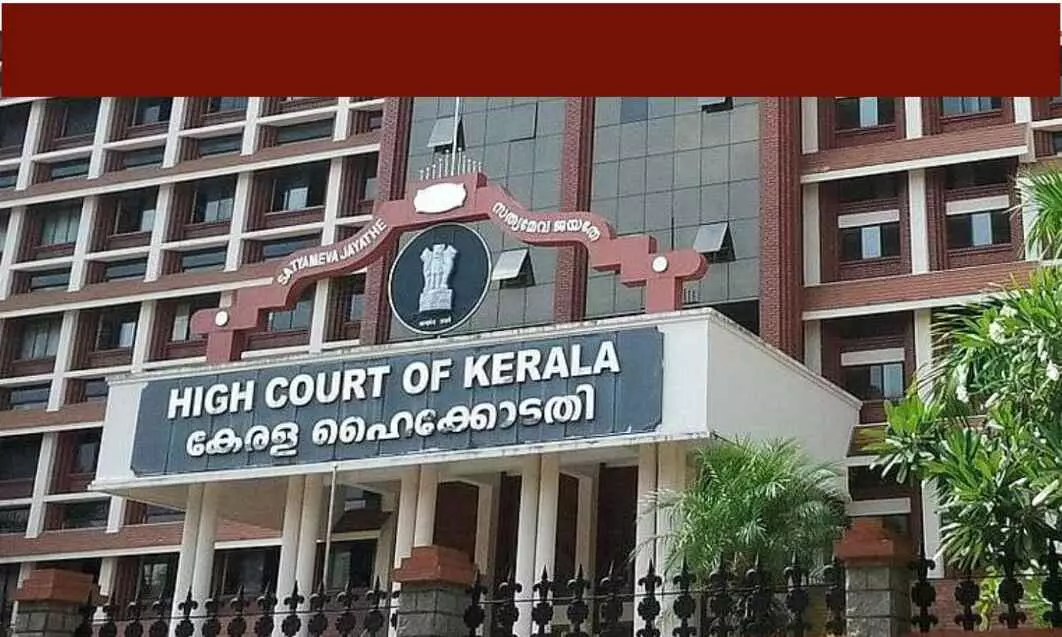


Ernakulam: Observing that doctors cannot be held negligent merely because treatment is unsuccessful or a patient dies, the Kerala High Court has dismissed a second appeal filed by complainants challenging the setting aside of a compensation award against a Hospital and its treating gynaecologist over the death of their newborn during delivery in 1998.
The Court noted that allegations of medical negligence must be supported by credible medical evidence.
The bench passed the judgment on November 6, 2026, dismissing a second appeal filed by the parents of the deceased child. The couple had challenged an appellate court's decision setting aside a compensation award of Rs 1.5 lakh against the hospital and the doctor.
The case dates back to May 18, 1998, when the woman was admitted to Unity Hospital for her third delivery. She had previously undergone a Caesarean section during her first delivery, while her second delivery was normal.
As her expected date of delivery was May 16 and there were favourable conditions for vaginal delivery, the treating gynaecologist initially decided to wait for spontaneous labour.
However, when labour did not commence, the doctor decided to induce labour and administer Pitocin on May 23, 1998.
While labour progressed, variations in the foetal heart rate were observed at around 5 pm. On examination, the doctor found that the cervix was fully dilated, but the foetal head had not descended.
The gynaecologist then performed a Lower Segment Caesarean Section (LSCS) after obtaining consent, and a severely asphyxiated baby was delivered at 6.10 pm.
Despite resuscitative efforts, the newborn could not be revived.
Alleging negligence in the management of labour and delivery, the parents initially demanded Rs 4 lakh in compensation, subsequently restricting their claim to Rs 1.5 lakh while filing the civil suit.
In February 2004, the First Additional Sub Court, Thrissur, held the hospital and the gynaecologist liable for medical negligence and awarded Rs 1.5 lakh with 6 per cent annual interest.
The trial court had raised concerns regarding the alleged excessive administration of Pitocin, delay in performing the Caesarean section, inadequate foetal monitoring, absence of an Apgar score and failure to maintain a partogram.
However, the First Additional District Court, Thrissur, reversed the decision in November 2012, finding that the trial court had failed to properly assess the medical records and expert testimony.
Aggrieved by the decision, the complainants approached the High Court.
During the proceedings, the hospital and the gynaecologist maintained that appropriate medical care had been provided throughout the woman's admission and that the Caesarean section was performed in an attempt to save both the mother and the child.
The High Court examined the hospital's case sheet and the testimony of an expert gynaecologist, who found no fault with the antenatal care or the management of labour.
The allegation of excessive Pitocin administration was also found to be unsupported by medical literature or expert evidence. The Court noted that the records documented regular monitoring of maternal parameters and foetal heart rate.
Regarding the alleged delay in performing the Caesarean section, the parents had failed to establish that earlier surgical intervention was medically necessary or would probably have saved the baby, the bench observed.
The Court said that the absence of a paediatrician in the labour room does not establish negligence either. The anaesthetist had testified that resuscitative measures, including artificial ventilation, cardiac massage, endotracheal intubation and oxygenation, were undertaken immediately after delivery.
On the alleged documentation lapses, the Court held that omissions such as the absence of an Apgar score or partogram could not establish liability without evidence linking them to the child's death.
Highlighting the burden of proof in medical negligence cases, the Court observed:
"In every case where treatment is not successful, or the patient dies, it cannot be automatically assumed that the medical professional was negligent."
The Court stressed that a higher threshold of proof was necessary to enable doctors to make clinical decisions in high-risk situations without fear of unnecessary litigation.
"In a case where there is no medical evidence available before a court, conclusions concerning medical negligence cannot be accepted. Correctness or otherwise of the line of treatment and the decision to conduct an operation and the method followed are all required to be considered against the background of medical evidence in the particular facts of the case. Mere legal principles and general standards of assessment are not sufficient.
It noted that the parents had not established what a reasonably competent obstetrician would have done differently under the same circumstances or whether an alternative course of treatment would probably have prevented the death.
The High Court said,
The omission of an Apgar score, a partogram or a particular device, without proof of such a link, does not make the Doctor or the hospital liable. Nor can negligence be inferred merely from the unfortunate result, for a medical professional is not to be judged with the wisdom of hindsight.
Upholding the first appellate court's findings, the High Court dismissed the second appeal, thereby affirming the decision setting aside the Rs 1.5 lakh compensation award against the Hospital and its gynaecologist.