
Whooping cough vaccination for pregnant women strengthens babies' immune system: Study
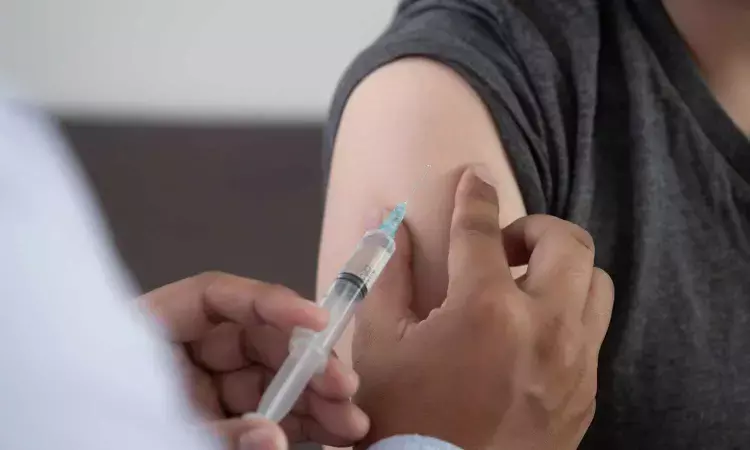


Vaccinating women during pregnancy leads to the transfer of antibodies to their newborns. These antibodies were detected not only in blood, but also in the nasal mucosa, the site where whooping cough bacteria enter the body. This has been shown by international research led by Radboud university medical center. ‘The fact that these antibodies reach the nasal mucosa has not been demonstrated before and highlights how effective this vaccination is’.
Since 2019, pregnant women in the Netherlands have been offered a vaccination against whooping cough (pertussis) for their unborn child, known as the 22-week shot. ‘We give this vaccine to protect babies from whooping cough right after birth. In the first weeks of life, babies are extremely vulnerable and too young to be vaccinated themselves. That’s why we vaccinate the mother during pregnancy,’ explains immunologist Dimitri Diavatopoulos of Radboudumc. Antibodies from the mother are transferred to the baby through the placenta. This study now shows that these antibodies also reach the nasal mucosa – exactly where whooping cough bacteria enter the body.
Importance of vaccination
Whooping cough is well controlled in Europe but remains a deadly disease in many parts of the world. Each year, between 200,000 and 300,000 people die from it, mostly young infants in low- and middle-income countries, where good vaccines are not always available. In the study conducted by Radboudumc and the Medical Research Council Unit The Gambia, 343 mothers and their babies participated, with half of the pregnant women receiving the whooping cough vaccine. ‘Mothers who were vaccinated during pregnancy passed on antibodies through the placenta that were subsequently detected in the baby’s nasal mucosa,’ says Diavatopoulos.
Immune response differs by vaccine type
The study also shows that babies who received a whole-cell whooping cough vaccine at 8, 12, and 16 weeks developed, on average, a stronger immune response than those who received an acellular vaccine. ‘The difference is that a whole-cell vaccine contains the complete, but inactivated, whooping cough bacterium, whereas an acellular vaccine contains only a few purified components of the bacterium,’ Diavatopoulos explains. ‘Acellular vaccines usually cause fewer side effects but often also provide shorter-lasting protection. Our findings suggest that whole-cell vaccines may support longer-term immune protection’, says Janeri Fröberg, postdoctoral researcher at Radboudumc.
In Europe, the acellular vaccine has been used since 2005, while most low- and middle-income countries still use the whole-cell vaccine. The researchers emphasize that further studies are needed to determine what these results mean for clinical protection and vaccination policies in different settings.
WHO: keep the whole-cell vaccine
For the Netherlands, this study underscores the importance of the 22-week shot, which gives babies immediate protection during their most vulnerable period. For lower-income countries, where most deaths occur, the results show that implementing whooping cough vaccination during pregnancy could save lives. And for countries that continue to use whole-cell vaccines, the findings support the World Health Organization (WHO) recommendation to maintain their use, as they may provide longer lasting immunity.
Reference:
Mucosal immune responses to Bordetella pertussis in Gambian infants following maternal and primary vaccination: an immunological sub-study of a double-blinded, randomized, controlled, phase 4 trial, The Lancet Microbe,DOI:10.1219/24tlmicrobe0660.
