Women practicing regular antenatal exercises had significantly lower rates of maternal request Caesarean Section: Study
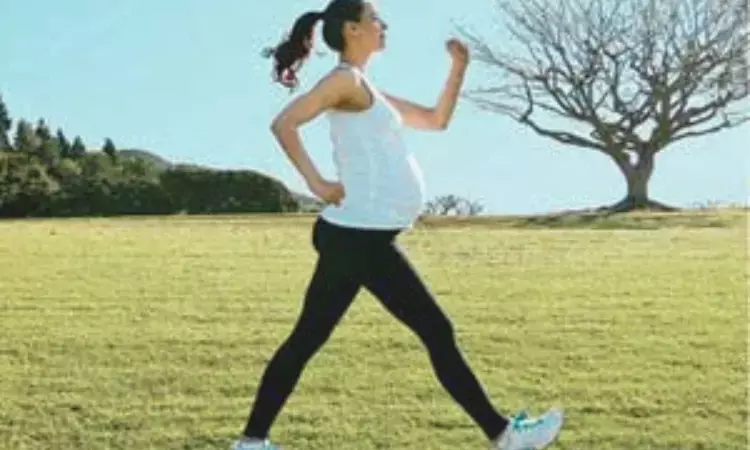


India, like other developing countries, is undergoing rapid urbanisation and with it changes in lifestyle among urban population. Almost 60% of pregnant women in rural India work right until the day of delivery, but in the urban setup, only 10.7% of pregnant women achieve recommended level of physical activity during pregnancy. This may be associated with an increase in medical complications like gestational diabetes, gestational hypertension, and an increased incidence of caesarean section.
Pregnancy not only gives a woman’s physiological function a greater shift, it is also a special stage where lifestyle behaviours including physical activity, can significantly affect maternal and foetal health. Pregnancy and labour entail complex happenings that are different with each mother. Preparing the body and mind for birth in the antenatal period is traditionally not concentrated upon much by obstetricians. Structured physical activity, in fact, prepares the body for the above and simultaneously decreases the incidence of many medical complications in pregnancy.
Pregnant women require a safe, effective and productive way to improve or maintain muscular and cardiovascular strength and endurance throughout their pregnancy. Their bodies may thus be able to face the increasing physical demands of pregnancy in a more comfortable way.
Variables in exercise protocol included intensity, duration and type of exercise, temperature and humidity of the exercise environment and diet. It is important that the training is supervised because pregnant women are generally unaware of what factors elevate the catecholamine response to exercise and foetal hypoxia is a realistic concern. Despite the benefits of exercise in pregnancy supported by the most updated guidelines, the physical exercise program adherence revealed itself as a limitation and as a significant challenge in many randomised control trials (RCT). Nevertheless, the loss to follow-up seems to be higher and adherence to the intervention was lower for unsupervised versus supervised group exercise. Keeping this in mind, this study was designed to assess the effect of a structured physical activity regime supervised by trained professionals on low risk nulliparous women. Authors included low risk pregnant women who were willing to join and offered them the structured exercise program.
One hundred eight women booked for antenatal care participated in a comparative study involving a ten week program designed by the Physiotherapy Department. Entry was at 24-27 weeks gestation with three physical sessions once in three weeks, interspersed with seven virtual weekly sessions. Minimum three home sessions/week were mandatory. Women fulfilling inclusion criteria were divided into two groups based on acceptance to join. Outcomes studied included mode of birth, requirement of analgesia, need for episiotomy, back/pelvic pain, maternal exertion during labour, preterm births and neonatal outcomes.
46.3% mothers had spontaneous vaginal births in exercise group vs 24% in control. Elective Caesarean for maternal request was more in control group. Mean weight gain was 9.33kg in study group and 12.51kg in control. Incidence of back pain was 18% in exercise group compared to 72% in controls. 64% in exercise group took epidural analgesia vs 84% in control group. Maternal exertion perceived in labour was comparatively less in exercise group. Episiotomy rates in spontaneous births in exercise group was 8% vs 30.77% in controls.
According to the findings of this study, regular antenatal exercises can help to lower the rate of Caesarean section at maternal request, decrease maternal weight gain, decrease perception of pain and overall discomfort during labour, reduce back pain throughout pregnancy and decrease the need for epidural analgesia during labour.
Although there was no statistical difference, the number of mothers requiring episiotomy in spontaneous vaginal birth are less in exercise group. The incidence of gestational hypertension and gestational diabetes was similar in both groups, this could probably be attributed to universal screening at 24 weeks and inclusion of only low risk nulliparas in this study. Neonatal outcomes such as mean baby birth weight and APGAR scores did not show significant differences in both groups. These findings suggest that pregnant women should be physically active during their pregnancy and participate in a supervised fitness programmes, unless contraindicated. To corroborate the reported findings, large-scale prospective research is required. The data suggests that obstetricians should advise every pregnant woman regarding the benefits of a supervised exercise program and incorporate structured activity into the antenatal journey. Because each woman has a unique set of modifying factors, individualization of exercise prescription is crucial. Aside from her physiological needs, the woman's medical history, occupational and leisure interests, budgetary and time limits and psychological attitudes towards exercise must all be considered.
The physical changes of pregnancy are progressive, hence the obstetrician must reevaluate the exercise prescription at frequent intervals throughout the pregnancy. A woman’s birth experience is an important aspect of her pregnancy journey, providing positivity and better understanding and support of physiological changes through a structured program can go a long way in reducing unindicated interventions.
Source: Satyala et al. / Indian Journal of Obstetrics and Gynecology Research 2025;12(2):235–242