
A routine blood test could help predict who benefits most from CAR T-cell therapy
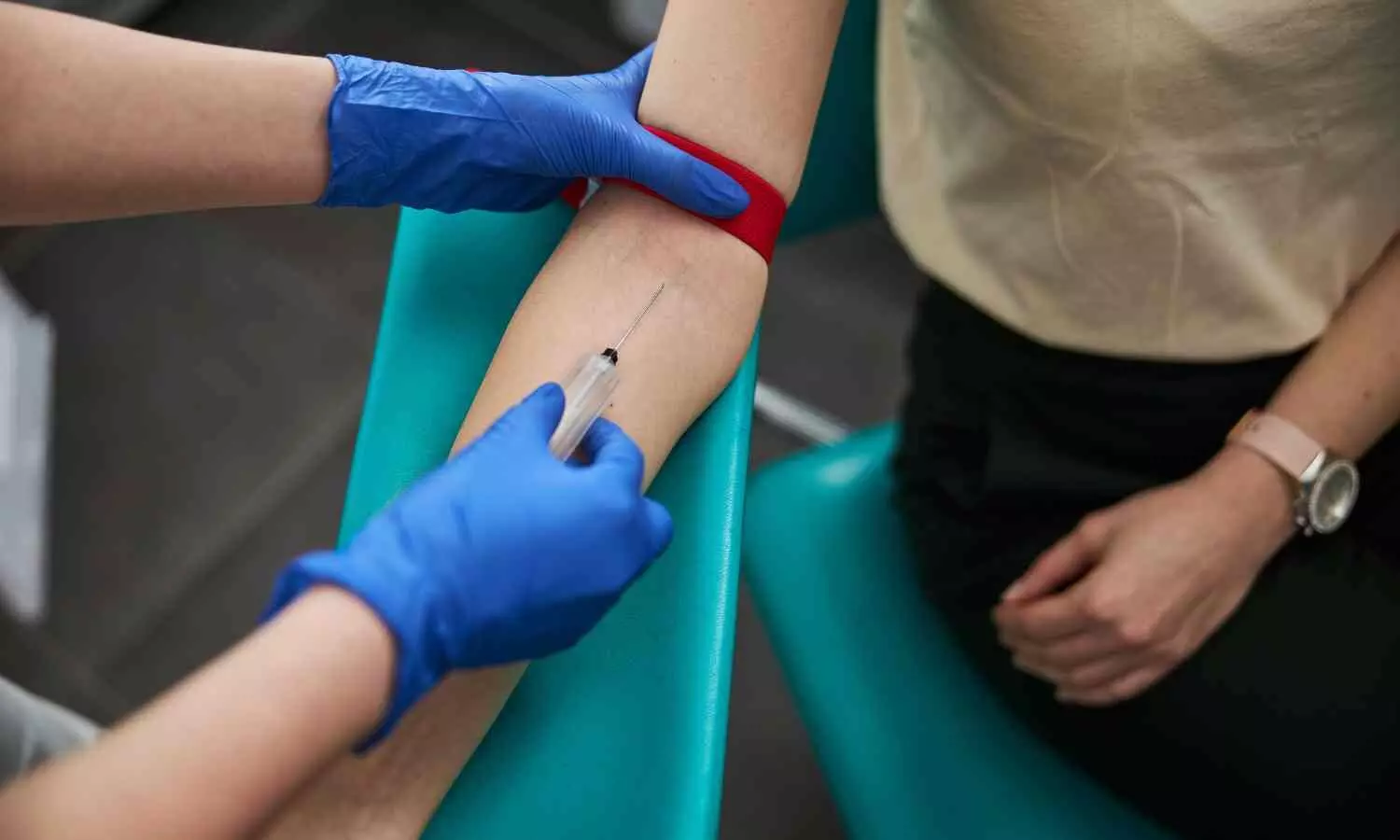


Measuring the lymphocytes-white blood cells that fight infection-in a patient's blood can be used to predict outcomes in non-Hodgkin lymphoma patients who receive CAR T-cell therapy, according to research from physicians at Fox Chase Cancer Center and Temple Health.
The study, which was presented today at the 67th American Society of Hematology (ASH) Annual Meeting and Exposition, found that a higher absolute lymphocyte count, or ALC, and a faster rate of ALC increase after therapy, were linked with better outcomes, including progression-free survival, overall survival, and complete response. A high concentration of lymphocytes in the blood indicates a strong immune response.
It’s an important finding, because it could help providers quickly assess how patients are responding to therapy and guide treatment decisions.
“If we see that a patient has low ALC and might relapse, we can try another strategy. Finding a kinetic marker that doesn’t take a lot of resources to check but could still make a real difference in a patient’s course of treatment is exciting,” said first author Helen Gandler, MD, a third-year resident in internal medicine at Temple Hospital.
Gandler was mentored in her research by Anthony Stack, DO, an Assistant Professor in the Blood Cancer and Cellular Therapy Institute at Fox Chase and senior author on the study.
Why Better Markers Matter
During CAR T-cell therapy, patients’ T cells are collected and genetically modified to express a chimeric antigen receptor that helps target and kill lymphoma cells. These modified T cells are then infused back into the patient. CAR T therapy is a relatively new treatment for non-Hodgkin lymphoma (NHL), so there’s a need for more information on how and when to use it instead of other treatment options and which patients it might benefit most.
While the therapy is initially highly effective in patients whose NHL has relapsed or resisted other treatments, most eventually relapse again. Knowing how to identify those patients early on could help providers move on to other therapies more quickly.
For the new study, researchers looked at the link between absolute lymphocyte count and treatment outcomes in patients with relapsed or resistant NHL who received a type of CAR T therapy called axicabtagene ciloleucel, which is also known by its brand name, Yescarta.
Key Findings
- Higher baseline ALC = better survival: Patients whose ALC was above-median at the start of treatment had significantly longer progression-free survival and higher overall survival.
- Faster ALC increase = stronger response: Patients whose ALC increased the fastest in the first 10 days post-treatment had a greater complete response rate and longer progression-free survival.
- Early peak = favorable prognosis: The patients whose ALC peaked sooner had better survival outcomes.
A Practical, Low-Cost Tool
While it’s the first time the rate of ALC increase has been identified as a potential marker for treatment response, Gandler said the findings aren’t a complete surprise.
“It makes sense that patients showing robust immune responses are the ones having better progression free survival and better overall survival,” she said.
It’s especially exciting because checking a patient’s ALC can be done with existing hospital resources and at relatively low cost, she added.
Better Understanding CAR-T Cell Therapy
The study is part of a larger effort spearheaded by Stack to better understand CAR T-cell therapy, how to use it most effectively, and how it affects different patient populations.
Researchers hope to study ALC trends in other patient populations, including patients receiving lisocabtagene maraleucel, a different type of CAR T-cell therapy.
Reference:
Helen Gandler, Rashmi Khanal, Christina Darwish, Anirudh Rao, Rachel Thomas, Yuliya Shestovska, Alexander Vartanov, Asya Varshavsky Yanovsky, Peter Abdelmessieh, Michael Styler, Henry Fung, Anthony Stack, Lymphocyte kinetics as a predictor of clinical outcomes following CAR-T therapy for non-Hodgkin lymphoma, Blood, https://doi.org/10.1182/blood-2025-5506
