Ablation Shows Comparable Outcomes With Fewer Complications in T1a RCC: Study
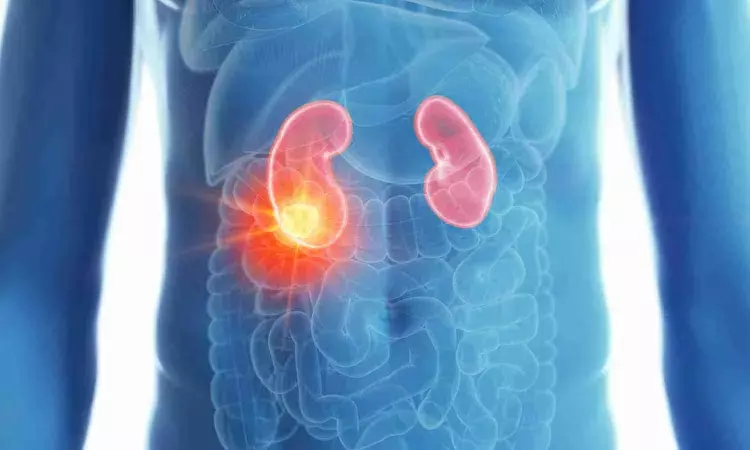


According to a new study, ablation for small renal tumors showed similar risk for tumor progression, as well as fewer complications and shorter hospital stays, when compared with the results of surgical procedures for T1a renal cell carcinoma, as revealed by a nationwide registry study of patients with T1a renal cell carcinoma. The study was published in the Radiology journal by Johanne A. and colleagues.
The detection of small renal masses, as a result of incidental findings on imaging studies, has put pressure on healthcare systems worldwide. Surgical intervention and nephrectomy are traditionally considered the standard treatment options for small renal cell carcinomas, particularly those with T1a characteristics. However, the results of such procedures may include longer hospital stays, as well as higher perioperative and healthcare costs. Therefore, minimally invasive techniques, such as tumor ablation, are being considered as possible alternatives for the treatment of small renal cell carcinomas.
The researchers conducted a retrospective nationwide registry cohort study of adult patients from Denmark with T1a renal cell carcinoma between January 2013 and December 2021. The researchers evaluated the clinical outcomes of the patients receiving tumor ablation, surgical resection, or nephrectomy treatment.
The researchers included a total of 1862 patients in the study. The median age of the study population was 64 years, with an interquartile range of 55 to 71 years. The study population comprised 1305 male patients. The researchers provided the patients with various treatment modalities based on clinical decision-making and treatment eligibility, including tumor ablation for 540 patients, surgical resection for 1002 patients, and nephrectomy for 320 patients.
Key findings:
• In this nationwide study of 1862 patients with T1a RCC, tumor ablation was shown to have equivalent tumor progression rates compared with resection, with a hazard ratio of 1.46 (P =0.40).
• Local recurrence was seen in 13 of 540 patients (2.41%) who underwent ablation, compared with 12 of 1002 (1.20%) who underwent resection and 0 of 320 who underwent nephrectomy (P = 0.007).
• Distant metastatic disease was seen in 9 of 540 (1.67%) who underwent ablation, 19 of 1002 (1.90%) who underwent resection, and 14 of 320 (4.38%) who underwent nephrectomy (P = 0.02).
• Hospital stays were shortest for the ablation group with a median hospitalization time of 0 days compared with 2 days for the resection and nephrectomy groups (P < 0.001).
• The ablation group had fewer 30-day post-treatment hospital contacts with a median of one contact and an interquartile range of 0 to 2, compared with one contact and an interquartile range of 1 to 2 for the resection and nephrectomy groups (P = 0.001).
The results of tumor ablation in T1a renal cell carcinoma revealed a similar risk of tumor progression with the advantages of reduced hospitalization time and fewer complications following the treatment, indicating that minimally invasive tumor ablation may be an effective and efficient approach for the treatment of small renal cell carcinomas.
Reference:
Ahrenfeldt, J., Jespersen, J., Tonnesen, P., Nielsen, T. K., Keller, A. K., Iisager, L., & Lyskjær, I. (2026). Ablation and surgery show comparable long-term outcomes for T1a renal cell carcinoma: A danish nationwide registry study. Radiology, 318(3). https://doi.org/10.1148/radiol.251485