
AI tools with skull X-rays can help detect meningiomas: Nature study
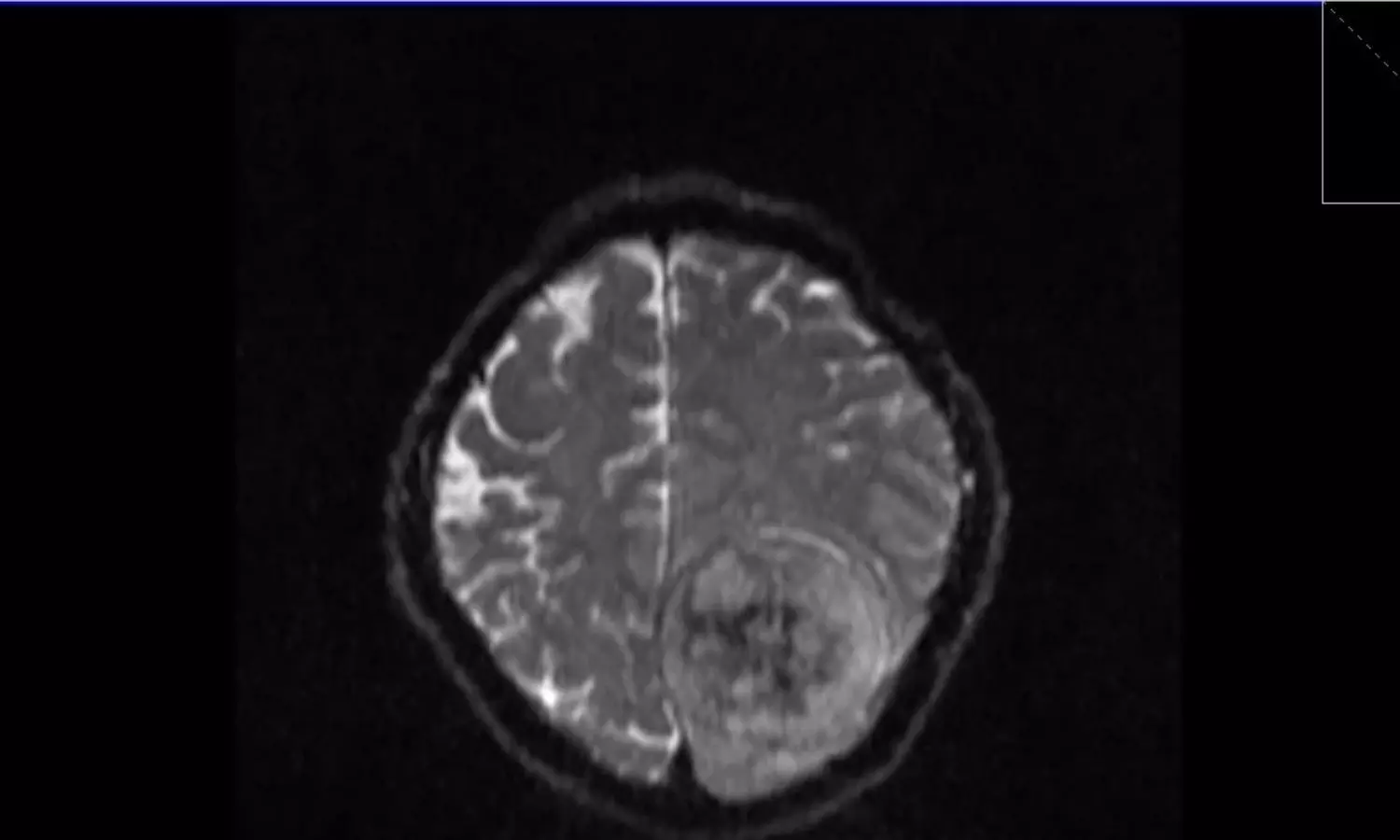


A new study published in the journal of Scientific Reports proposed a potential diagnostic tool by combining deep learning with conventional machine learning approaches, particularly for resource-constrained environments where modern imaging modalities might not be easily accessible.
X-rays are useful for quick screening since they are inexpensive and readily accessible, despite being less detailed than CT or MRI. Deep learning models, especially the convolutional neural networks, can learn minor textural and structural anomalies indicative of meningioma, while classic machine-learning classifiers refine prediction by examining extracted characteristics.
When combined, these methods improve accuracy, lower observer variability, and help physicians detect malignancies early. In neuro-oncology settings, this integrated strategy may strengthen decision-making, increase access to diagnostic assistance, and improve workflow efficiency. Thus, this study was set to investigate the possibility of automated meningioma identification utilizing a widely available and reasonably priced imaging modality.
For this retrospective collection of skull X-ray pictures was taken from St. Vincent's Hospital in South Korea included 158 meningioma patients (632 images) and 201 control participants (804 images) without brain tumors or vascular disorders. The analysis comprised anteroposterior, towne, and lateral views. The core of the deep learning model was EfficientNetB0.
Transfer learning and attention methods were added to improve it. To enhance classification performance, extracted features were included into conventional classifiers like Random Forest and XGBoost. Metrics including accuracy, sensitivity, specificity, F1-score, and AUROC were used to assess the model's performance. Data (824 photos) from Incheon St. Mary's Hospital in South Korea were used for external validation.
The hybrid EfficientNetB0–Random Forest model has the best accuracy (0.97) and AUROC (0.999) in the internal validation cohort. With an accuracy of 0.74 and an AUROC of 0.76, Random Forest performed the best among classifiers, according to external validation data. The model's emphasis on important cranial areas for meningioma identification was emphasized via Grad-CAM displays.
Overall, this work used a hybrid technique that combines deep learning and conventional machine learning classifiers to show the viability and effectiveness of employing skull X-rays for automated meningioma identification. Grad-CAM visualizations reinforced the validity of predictions by offering insights into the model's decision-making process, especially for convexity and parasagittal meningiomas.
Source:
Kim, H. U., Choi, Y., Kim, Y. S., Kim, Y. I., Yoon, W.-S., & Yang, S. H. (2025). Automated meningioma detection using skull X ray images with deep learning and machine learning classifiers. Scientific Reports, 15(1), 40185. https://doi.org/10.1038/s41598-025-23933-9
