
- Home
- Medical news & Guidelines
- Anesthesiology
- Cardiology and CTVS
- Critical Care
- Dentistry
- Dermatology
- Diabetes and Endocrinology
- ENT
- Gastroenterology
- Medicine
- Nephrology
- Neurology
- Obstretics-Gynaecology
- Oncology
- Ophthalmology
- Orthopaedics
- Pediatrics-Neonatology
- Psychiatry
- Pulmonology
- Radiology
- Surgery
- Urology
- Laboratory Medicine
- Diet
- Nursing
- Paramedical
- Physiotherapy
- Health news
- Fact Check
- Bone Health Fact Check
- Brain Health Fact Check
- Cancer Related Fact Check
- Child Care Fact Check
- Dental and oral health fact check
- Diabetes and metabolic health fact check
- Diet and Nutrition Fact Check
- Eye and ENT Care Fact Check
- Fitness fact check
- Gut health fact check
- Heart health fact check
- Kidney health fact check
- Medical education fact check
- Men's health fact check
- Respiratory fact check
- Skin and hair care fact check
- Vaccine and Immunization fact check
- Women's health fact check
- AYUSH
- State News
- Andaman and Nicobar Islands
- Andhra Pradesh
- Arunachal Pradesh
- Assam
- Bihar
- Chandigarh
- Chattisgarh
- Dadra and Nagar Haveli
- Daman and Diu
- Delhi
- Goa
- Gujarat
- Haryana
- Himachal Pradesh
- Jammu & Kashmir
- Jharkhand
- Karnataka
- Kerala
- Ladakh
- Lakshadweep
- Madhya Pradesh
- Maharashtra
- Manipur
- Meghalaya
- Mizoram
- Nagaland
- Odisha
- Puducherry
- Punjab
- Rajasthan
- Sikkim
- Tamil Nadu
- Telangana
- Tripura
- Uttar Pradesh
- Uttrakhand
- West Bengal
- Medical Education
- Industry
Clear Cell RCC Leads Kidney Cancer Cases in South India: Apollo Study
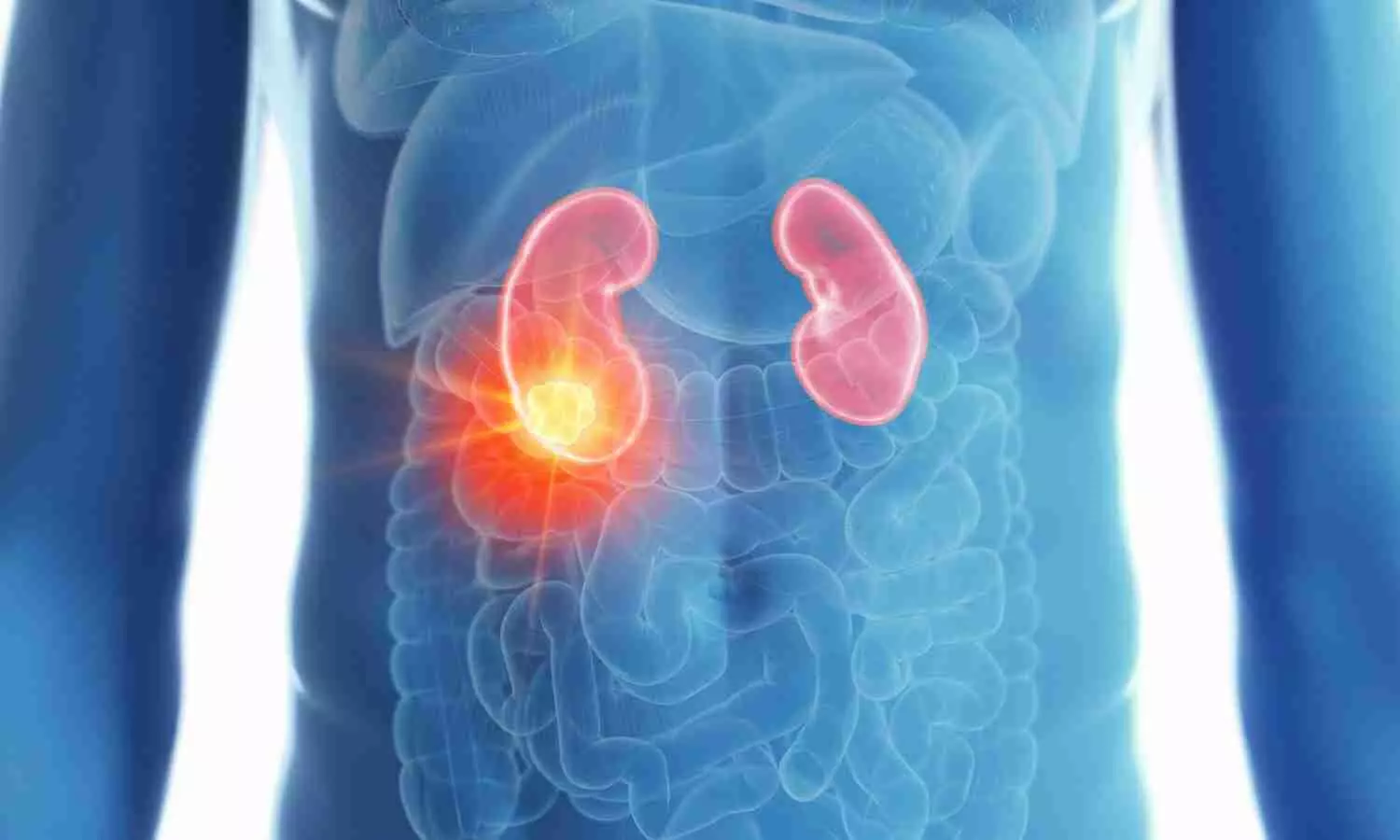
India: A recent study published in Apollo Medicine has shed light on the demographic patterns and histomorphological characteristics of renal cell carcinoma (RCC) in a South Indian population, highlighting trends that largely mirror global observations while underscoring important regional insights.
Conducted by Githa Rachel Oommen from the Department of Hematology and Clinical Pathology, Apollo Hospitals, Chennai, and Suganthi Krishnamurthy, the study provides valuable real-world data from a quaternary care setting, addressing the relative scarcity of Indian evidence in this domain.
Renal cell carcinoma accounts for nearly 2% of all cancers worldwide, with its incidence and mortality continuing to rise across different populations. However, data from India regarding its clinical presentation and pathological features remain limited. To bridge this gap, the researchers carried out a retrospective observational analysis of RCC cases diagnosed over one year, from January to December 2022, at their centre. The study included patients who underwent either radical or partial nephrectomy and had a confirmed diagnosis of RCC, while excluding non-neoplastic kidney conditions and other malignancies.
The following were the key findings:
- A total of 116 renal cell carcinoma cases were analysed. The median age at diagnosis was 53 years.
- There was a clear male predominance, with over 70% of cases occurring in men.
- Clear cell RCC was the most common histological subtype, accounting for 83.6% of cases.
- Papillary RCC was the second most frequent subtype.
- A large proportion of tumours measured 4–7 cm in size, corresponding to stage pT1b.
- Most tumours were confined to the kidney at the time of diagnosis.
- The upper pole of the kidney was the most commonly involved site.
- Lymphovascular invasion, a marker of aggressive disease, was observed in 13.8% of cases.
- Regional lymph node involvement was present in a small proportion (3.4%) of patients.
- Partial nephrectomy was performed in 34 cases.
- These cases generally had a smaller mean tumour size.
- Only a small proportion of cases presented at an advanced pathological stage.

Commenting on the findings, Dr. Githa Rachel Oommen noted, as told to Medical Dialogues, that "the study was undertaken to understand better whether RCC patterns in the Indian population align with global data, given the limited domestic evidence". She stated that, "the observed trends—including male predominance, clear cell histology, and diagnosis in the early 50s—are consistent with both Indian and international studies, although Western populations often present at a slightly older age."
She further emphasized the clinical implications of the findings, pointing out that the presence of lymphovascular invasion and nodal involvement signals more aggressive disease biology. Such patients, she suggested, may benefit from closer surveillance and consideration of systemic therapies rather than routine follow-up alone.
Dr. Oommen also highlighted the need for improved awareness and early detection strategies in India. She noted that RCC is frequently diagnosed incidentally, often when tumours have already reached moderate sizes. Strengthening screening practices for high-risk individuals, along with detailed pathological reporting, could play a crucial role in improving patient outcomes.
Overall, the study provides important baseline data on RCC in a South Indian tertiary care setting and reinforces the need for broader, multicentric research to understand regional variations better and guide clinical practice.
Reference: Oommen, G. R., & Krishnamurthy, S. (2026). Comparison of Demographic and Histomorphologic Features of Renal Cell Carcinoma: One-year Experience in a Quaternary Care Centre in South India. Apollo Medicine. https://doi.org/10.1177/09760016251332684
MSc. Biotechnology
Medha Baranwal holds a Bachelor’s degree in Biomedical Sciences from the University of Delhi and a Master’s degree in Biotechnology from Amity University. Since May 2018, she has been contributing to Medical Dialogues, writing and editing medical news articles that translate complex research into clear, accessible information for healthcare professionals.
Dr Kamal Kant Kohli-MBBS, DTCD- a chest specialist with more than 30 years of practice and a flair for writing clinical articles, Dr Kamal Kant Kohli joined Medical Dialogues as a Chief Editor of Medical News. Besides writing articles, as an editor, he proofreads and verifies all the medical content published on Medical Dialogues including those coming from journals, studies,medical conferences,guidelines etc. Email: drkohli@medicaldialogues.in. Contact no. 011-43720751

