
Routine scans could detect early prostate radiotherapy changes, suggests study
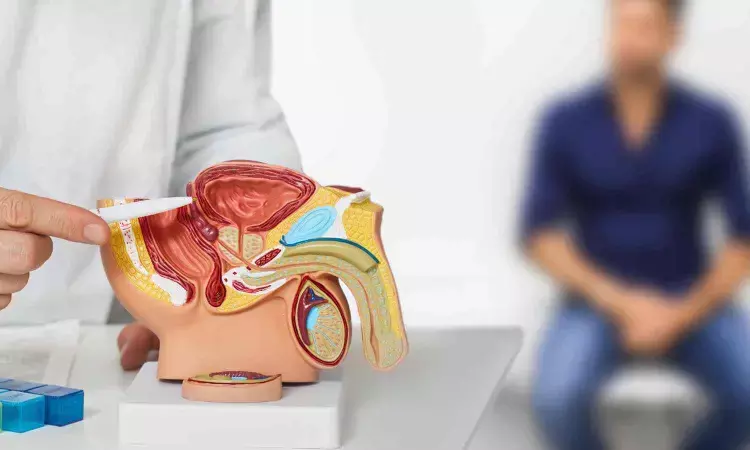


Daily scans taken during prostate cancer radiotherapy could be repurposed to guide changes to treatment, reducing the risk of side effects, a study suggests.
Using AI, scientists found that images originally taken to help position patients for radiotherapy could also identify changes linked to future rectal bleeding as early as one week into treatment.
Monitoring these early changes could help doctors decide when to adapt radiotherapy to limit side effects while maintaining cancer control, experts say.
Radiotherapy is an effective treatment for prostate cancer but can cause side effects, such as rectal bleeding. This happens when nearby healthy tissues, like the rectum, receive a small amount of radiation because of their proximity to the prostate.
Adaptive radiotherapy involves updating treatment plans regularly in response to changes in patient anatomy, rather than using the same plan for the duration of treatment. Decisions to alter radiotherapy treatment currently don’t take into account subtle changes and patterns in the tissue – known as radiomic features.
University of Edinburgh scientists examined daily imaging data from 187 patients treated with prostate radiotherapy, using machine learning tools to identify links between radiomic features and the development of rectal bleeding within two years after therapy.
Patterns observed from single scans one week into treatment were highly predictive of later rectal bleeding. Combining data from the first three weeks of scans was found to give the most reliable prediction.
The findings suggest tracking radiomic features could provide a valuable early window for intervention that could improve or personalise radiotherapy, experts say.
The approach could one day be integrated into routine treatment planning and monitoring to help clinicians decide when and how to adjust prostate radiotherapy plans, researchers suggest. But they caution this is likely to take many years and the findings should be confirmed with a larger study.
The study, funded by Prostate Cancer UK, is published in the journal Physics and Imaging in Radiation Oncology: https://doi.org/10.1016/j.phro.2025.100850. The research team included scientists from the University of Cambridge and The Christie NHS Foundation Trust.
Dr Zhuolin Yang, Research Fellow from the University of Edinburgh’s Institute of Genetics and Cancer, said: “The key result here is that early treatment imaging contains quantitative information about later toxicity risk, long before symptoms occur. This supports the idea that predictive biomarkers for adaptive radiotherapy may not require new scans or technology, only better use of the data we already collect.”
Professor Bill Nailon, Clinical Scientist, Edinburgh Cancer Centre, said: “This study gives a proof-of-concept that imaging collected for beam setup could support future adaptive workflows. Future trials and automation will be essential before approaches like this can be integrated into clinical decision-making.”
Dr Hayley Luxton, Head of Research Impact at Prostate Cancer UK, said: "Radiotherapy is a very common treatment used to cure prostate cancer. While very effective, the natural movement of the prostate and surrounding organs during treatment can lead to damage to the surrounding areas, causing bleeding and other side effects that can have a significant impact on men's lives.
"We know there's a need to make treatments kinder, so that's why in partnership with Movember and Garfield Weston Foundation we funded this research to identify which men are most likely to have these side effects and change their treatment plan early, avoiding these issues without compromising the effect on the cancer itself.
"While more research is needed in larger groups of men, this marks a great step forward in personalising radiotherapy to make it kinder and better for more men who need it."
Reference:
Yang, Zhuolin et al., Identifying the optimal time point for adaptive re-planning in prostate cancer radiotherapy to minimise rectal toxicity using normal tissue imaging biomarkers, Physics and Imaging in Radiation Oncology, DOI: 10.1016/j.phro.2025.100850
