Scalp Cooling Improves Hair Preservation and Shows Good Safety in Children with ALL: Study
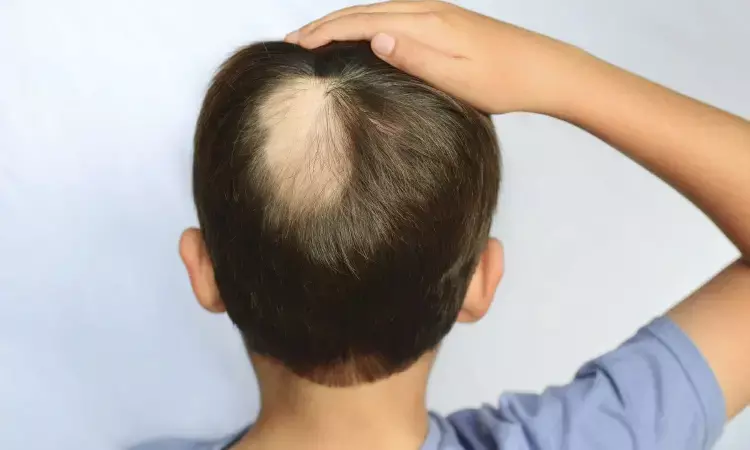


A new study published in the journal of Supportive Care in Cancer showed that in children with acute lymphoblastic leukemia (ALL), scalp cooling (SC) improves hair preservation and demonstrates good safety.
For children receiving chemotherapy, chemotherapy-induced alopecia (CIA) is a frequent side effect. A potential strategy to lessen chemotherapy-induced alopecia, a side effect that can be particularly upsetting for kids receiving treatment for acute lymphoblastic leukemia (ALL), is scalp cooling. This method helps maintain hair development by limiting follicular absorption of cytotoxic drugs by reducing scalp temperature during medication infusion.
Although results differ depending on the kind of chemotherapy and dosage intensity, recent pediatric research indicate that scalp cooling is both practical and increasingly successful. Minimizing hair loss may greatly enhance a child's emotional health, treatment confidence, and general quality of life throughout ALL therapy, therefore it is critical to recognize its protective potential. Therefore, this study investigated the efficacy of SC in children.
In children receiving induction chemotherapy for acute lymphoblastic leukemia (ALL), researchers carried out this study. The participants were divided into non-cooling (NC) and SC groups in a progressive manner. During the chemotherapeutic infusion (daunorubicin + vincristine), SC was performed using a pre-cooled Elasto-Gel® cap.
Successful hair preservation (HP), which is defined as NCI-CTCAE v5.0 alopecia grade-1 at end of induction (EOI), was the main result. Secondary results included trichoscopy and trichogram results, as well as modifications in scalp-ultrasonographic and scanning electron microscopic parameters (SEM).
The median age of the twenty-two enrolled children was 72 months. Out of 11 children in each group, two in NC and one in SC passed away before to EOI. In contrast to 2/9 in the NC group, 9/10 in the SC group achieved successful HP. Among the sonographic measurements, the SC group showed a substantially smaller drop in skin thickness (−0.03 mm vs. −0.3 mm, p = 0.049).
Shaft-diameter (−7.9 µm vs. −21.6 µm, p = 0.005) and cuticular scale-density (−3.5 scales/100 µm vs. −12 scales/100 µm, p = 0.0004) were substantially better preserved in the SC group among the SEM metrics. The NC group showed more prominent trichoscopic and trichogram results linked to CIA. During SC, none of the patients complained of headaches or vertigo.
Overall, in children with ALL receiving induction chemotherapy, SC was linked to an increased chance of successful HP. For kids with cancer, SC is safe and well-tolerated. Additional research is required to examine the long-term safety results of SC.
Source:
Kumar, R., Prakash, S., Bansal, S., Ahuja, R., Mehta, N., Bhari, N., Jana, M., Yadav, S., Meena, J. P., Seth, R., & Gupta, A. K. (2025). Efficacy of scalp cooling to prevent chemotherapy-induced alopecia in children with acute lymphoblastic leukemia: A non-randomized trial. Supportive Care in Cancer: Official Journal of the Multinational Association of Supportive Care in Cancer, 33(12). https://doi.org/10.1007/s00520-025-10190-9