Advanced Glycation End Products: Novel Biomarker for Diabetic Retinopathy Progression, Finds Study
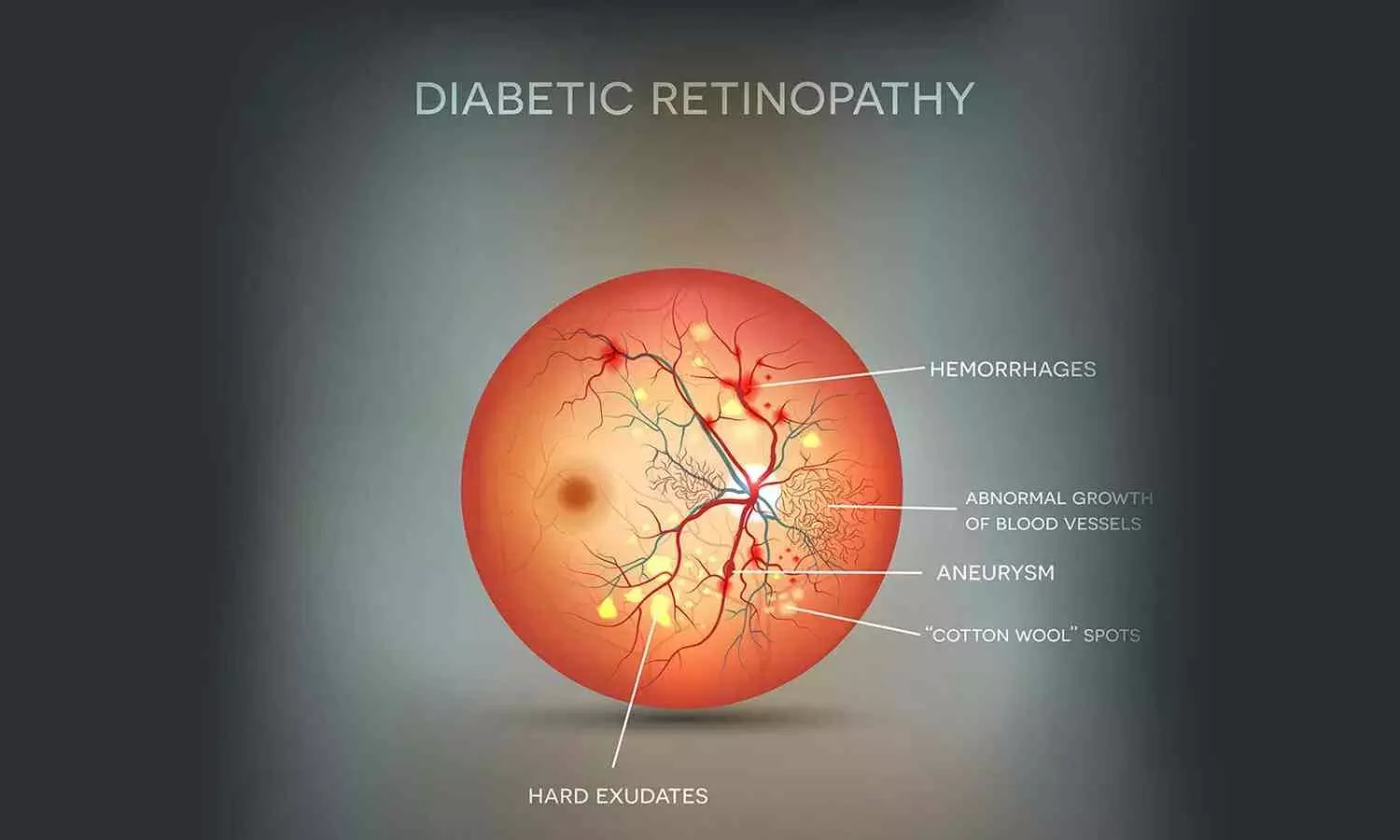


A recent cross-sectional study published in the Indian Journal of Ophthalmology in April 2025 reveals that advanced glycation end products (AGEs) are highly sensitive biomarkers and novel therapeutic targets for proliferative diabetic retinopathy (PDR). Demonstrating an impressive diagnostic accuracy with an area under the curve of 0.84, AGEs provide a precise clinical tool to accurately flag the critical transition into severe, proliferative disease stages.
Although HbA1c is the standard glycemic marker, it fails to capture cumulative long-term hyperglycemic damage, limiting its ability to predict severe microvascular complications. To address this clinical gap, Dr. Nibha Mishra and colleagues evaluated serum Nε-CML—a predominant advanced glycation end product—as a superior biomarker for tracking diabetic retinopathy progression.
Therefore, the cross-sectional study evaluated 80 subjects, including 20 healthy controls and 60 type 2 diabetics categorized into no retinopathy, NPDR, and PDR. Researchers used ELISA to correlate serum Nε-CML levels with visual acuity, strictly excluding patients with confounding systemic diseases, such as atherosclerosis or Alzheimer's, to accurately isolate the biomarker's direct relationship with progressive retinal damage.
Key Clinical Findings of the Study Includes:
Elevated Biomarker Levels: Investigators noted a significant, progressive surge in mean Nε-CML concentrations from 31.3 ± 21.2 ng/mL in healthy controls to 91.2 ± 66.7 ng/mL in the NPDR stage and 132.0 ± 84.0 ng/mL in patients with PDR.
Visual Acuity Correlation: Findings demonstrated that best-corrected visual acuity progressively deteriorated on the logMAR scale in direct, significant correlation with both advancing disease severity and escalating Nε-CML levels.
Diagnostic Precision: Researchers highlighted remarkable diagnostic accuracy for severe retinopathy, evidenced by a receiver operating characteristic area under the curve of 0.84 for the PDR stage compared to a lower 0.69 for NPDR.
Clinical Thresholds: Analysis successfully identified a critical serum diagnostic threshold, showing that Nε-CML levels exceeding 41.482 ng/dL yield 90% sensitivity and specificity for marking the exact conversion to clinical retinopathy.
The results suggest that AGEs, specifically Nε-CML, are highly sensitive biomolecular indicators that track disease progression with an exceptional diagnostic area under the curve value of 0.84 for the most severe stages. These resilient markers serve as pivotal new-age tools in translational medicine, providing a clearer metabolic memory of long-term cellular damage to pinpoint the exact transition from the non-proliferative to the proliferative phase.
Thus, the study concludes that clinicians might find it highly beneficial to progressively incorporate these cost-effective serum Nε-CML immunoassays into routine ocular screening protocols, as they offer a significantly more stable, long-term reflection of retinal microvascular damage and pathological angiogenesis than conventional blood glucose testing alone.
Although the current findings strongly support the diagnostic value of these biomolecules in tracking disease severity, the relatively modest sample size of 80 participants indicates that further validation through larger, extensive clinical trials would be a prudent and helpful step before universally integrating this promising diagnostic test into standard daily clinical practice.
Reference
Mishra N, Saxena S, Shukla RK, Tiwari A. Advanced glycation end products are biomolecular biomarkers for proliferative diabetic retinopathy. Indian J Ophthalmol 2025;73:906-11.