Frequent Uveitis Attacks Predict Longer Steroid Use and Worse Vision After Cataract Surgery: Study
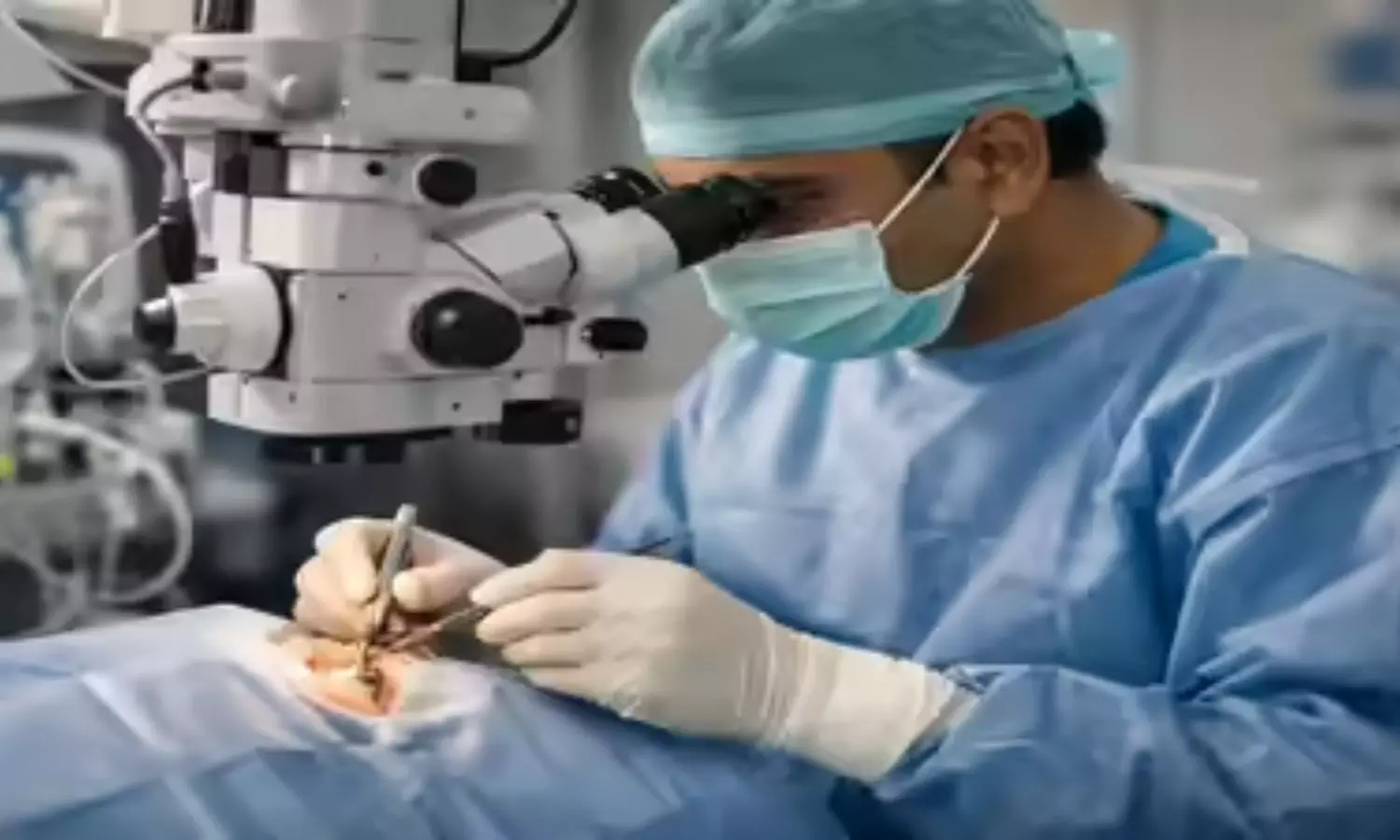


A new research published in the journal of Clinical Ophthalmology found that patients with a higher number of prior uveitis attacks undergoing cataract surgery tend to require prolonged use of topical corticosteroids after surgery and may experience moderately poorer visual outcomes. These findings highlight the importance of considering a patient’s uveitis history during preoperative counseling and planning.
Cataract surgery in patients with uveitis has long been considered more complex than routine cases. While ophthalmologists have traditionally focused on eye-specific predictors of success, this study suggests that broader factors, including the inflammatory history of patient and the energy used during surgery, play a crucial role in outcomes.
The retrospective study examined 54 eyes from adult patients who underwent phacoemulsification followed by intraocular lens implantation, with average patient age being 39 years. The patients had a range of underlying conditions linked to uveitis, which included axial spondyloarthritis, Behçet’s disease, and juvenile idiopathic arthritis.
One month after surgery, best-corrected visual acuity (BCVA) rose significantly, which indicated that the procedure is highly effective even in this complex population. However, recovery speed and visual outcomes varied widely.
This study identified 3 independent predictors of visual recovery such as preoperative vision levels, the number of prior uveitis flare-ups, and cumulative dissipated energy (CDE), measured through ultrasound energy used during surgery. Higher inflammatory burden and greater surgical energy both correlated with poorer visual outcomes.
The patients took a median of 13 days to reach steroid-free recovery, but this too depended on specific factors. Each additional uveitis attack added roughly 1.3 days to recovery, while higher surgical energy extended recovery time further.
Also, patients receiving biologic disease-modifying antirheumatic drugs (bDMARDs) that target systemic inflammation, recovered significantly faster. On average, these patients reached steroid-free status about 5 days sooner than those not on biologics.
All patients on biologics in the study had been treated for at least 3 months before surgery and continued therapy throughout the perioperative period, which suggests that consistent inflammation control may create a more favorable healing environment.
While the study is limited by its retrospective design and modest sample size, it provides strong evidence that managing inflammation at a systemic level could effectively improve outcomes for patients with uveitic cataracts.
Overall, the findings of this study highlights the potential importance of systemic immunomodulation in surgical planning. More dedicated prospective studies are needed to confirm these results and refine treatment strategies.
Source:
Baytaroğlu, A., Çiftci, Ş. N., Uçar Baytaroğlu, I. M., Doğruya, S., & Daldal, H. (2026). Investigating non-ocular factors affecting postoperative recovery following uveitic cataract surgery. Clinical Ophthalmology (Auckland, N.Z.), 20, 604342. https://doi.org/10.2147/OPTH.S604342