
Pegcetacoplan Slows Geographic Atrophy Progression Without Visual Acuity Benefit: Study
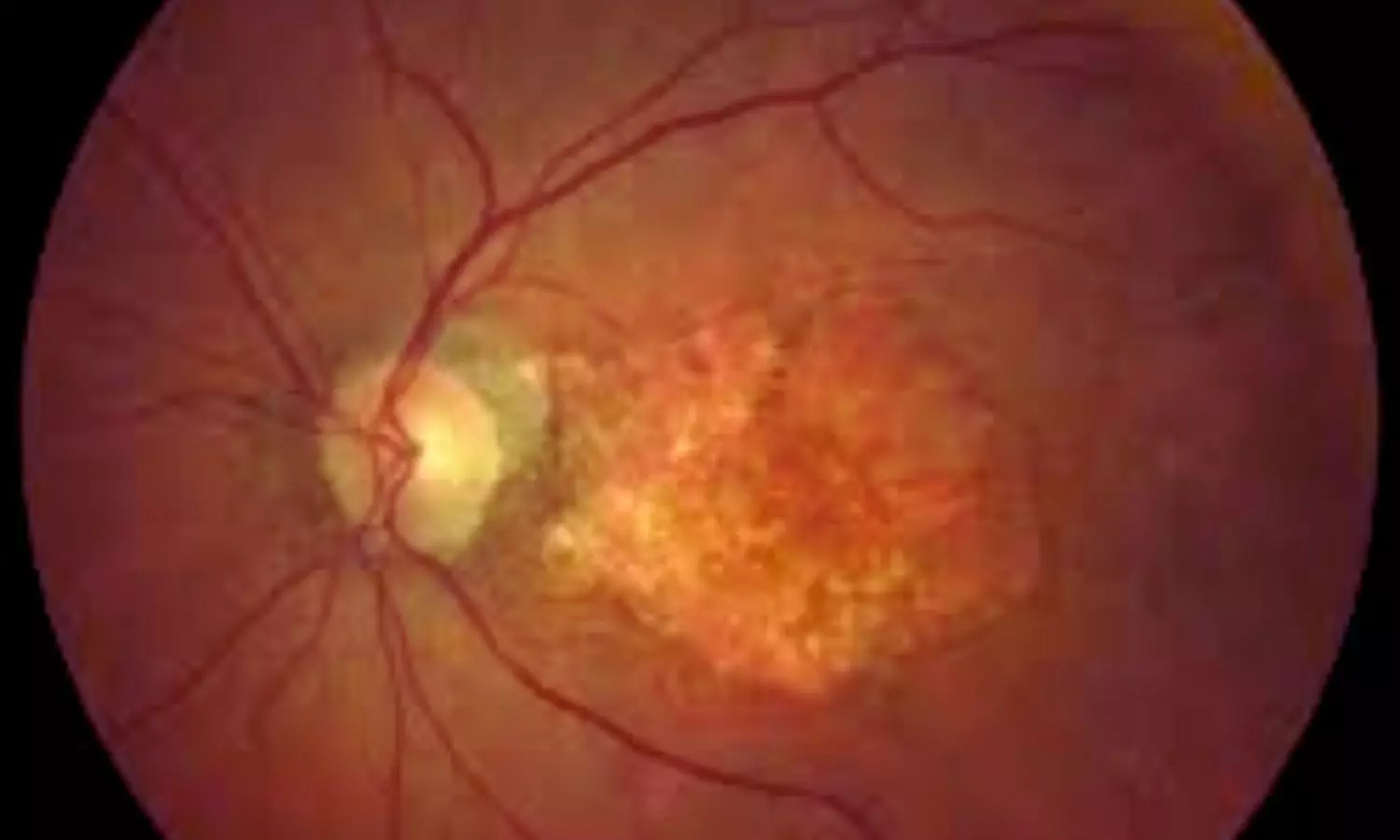


USA: Researchers have found in a real-world study that pegcetacoplan injections slowed the depletion rates of the retinal pigment epithelium and ellipsoid zone after treatment. Best recorded visual acuity continued to worsen at a similar rate before and after therapy, indicating no functional vision benefit. Overall, pegcetacoplan demonstrated structural disease-modifying effects in geographic atrophy, without improvement in visual outcomes.
Geographic atrophy (GA), an advanced stage of age-related macular degeneration (AMD), is a leading cause of irreversible vision loss, and therapeutic options have only recently emerged. To better understand how pegcetacoplan performs outside clinical trials, investigators evaluated its impact in routine clinical practice. The retrospective real-world study was published in the MDPI journal Vision and led by Jessica A. Cao of Retina Consultants of Texas, Bellaire, USA, along with colleagues.
The study assessed changes in retinal structure and visual function before and after intravitreal pegcetacoplan initiation. A total of 168 eyes from 110 patients with GA secondary to AMD were included, all of whom received at least three pegcetacoplan injections. Clinical and imaging data were analyzed from as early as five years before treatment initiation and up to nine months following the start of therapy, enabling comparisons of disease progression trends over time.
Retinal pigment epithelium and photoreceptor ellipsoid zone depletion areas were measured using an automated artificial intelligence–based algorithm applied to optical coherence tomography images.
Key findings were as follows:
- At baseline, 45.2% of eyes had concurrent neovascular age-related macular degeneration, with mean retinal pigment epithelium and ellipsoid zone depletion areas of 3.3 mm² and 4.9 mm², respectively.
- By the time pegcetacoplan therapy was initiated, disease severity had increased markedly, with mean depletion areas expanding to 8.6 mm² for the retinal pigment epithelium and 11.2 mm² for the ellipsoid zone.
- Most eyes had subfoveal geographic atrophy along with concurrent neovascular age-related macular degeneration at treatment initiation, reflecting an advanced and heterogeneous real-world patient population.
- Following pegcetacoplan initiation, a significant reduction in the rate of structural disease progression was observed.
- Square root–transformed retinal pigment epithelium depletion rates declined from 0.25 mm per year before treatment to 0.096 mm per year after treatment.
- Ellipsoid zone depletion rates similarly decreased from 0.26 mm per year pre-treatment to 0.049 mm per year post-treatment.
- These structural findings were consistent with results from phase 3 clinical trials, supporting the anatomic disease-modifying effect of pegcetacoplan in routine practice.
- Despite the observed anatomical benefits, best-recorded visual acuity continued to deteriorate at a rate of 0.05 logMAR per year both before and after treatment.
- Pegcetacoplan did not alter the trajectory of visual decline during the follow-up period.
The authors noted several limitations, including the short nine-month post-treatment follow-up, the retrospective single-center design, and the high proportion of eyes with concurrent neovascular AMD and foveal involvement, which limits direct comparison with clinical trials. They emphasized the need for longer-term and larger real-world studies to better define the durability, safety, and visual impact of pegcetacoplan in everyday clinical settings.
Reference:
Cao, J. A., Zhou, A. W., Teagle, G. M., Baumann, L. M., Sahraravand, R. A., Wong, C. W., Zanet, S. D., Jovic, N., Steiner, P., Patel, S. B., Minaker, S. A., MacCumber, M. W., Brown, D. M., Al-khersan, H., & Wykoff, C. C. (2025). Geographic Atrophy Progression in Clinical Practice Before and After Pegcetacoplan Treatment. Vision, 9(4). https://doi.org/10.3390/vision9040095

Next Story