Bio-Active Composite Therapy holds transformative potential in regenerative orthopaedics: study
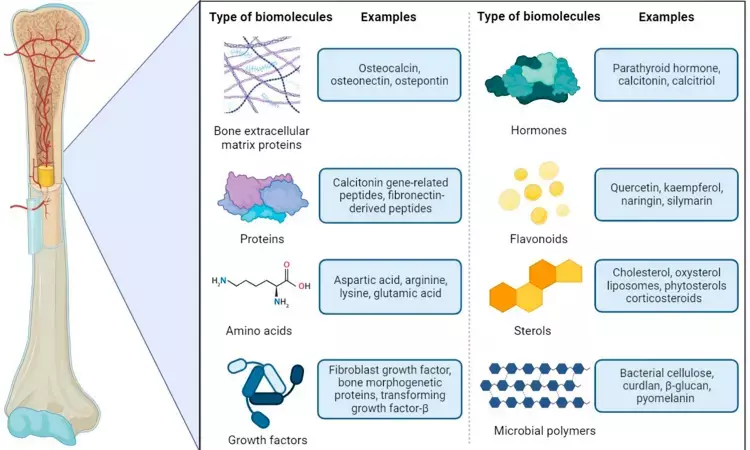


Bio-Active Composite Therapy (BACT) represents a significant advancement in regenerative orthopaedics, integrating bioactive materials with biological systems to enhance bone and tissue regeneration. This comprehensive approach leverages materials such as hydroxyapatite, bioactive glasses, polymers, and metals to create scaffolds that mimic the extracellular matrix, facilitating cellular activities essential for tissue repair.
A systematic literature review was conducted by Naveen Jeyaraman et al using databases including PubMed, Scopus, Web of Science, and Google Scholar. Keywords such as “Bio-Active Composite Therapy,” “regenerative orthopaedics,” and “bioactive materials” were employed to identify relevant studies published. Inclusion criteria focused on peer-reviewed articles, reviews, and clinical trials related to the development, application, and evaluation of BACT in bone and soft tissue regeneration. Data extraction emphasized bioactive material types, fabrication techniques, clinical applications, outcomes, and associated challenges. The findings were categorized thematically to synthesize current advancements and identify knowledge gaps. The article has been published in 'Indian journal of orthopedics.'
The key findings were:
• BACT utilizes a diverse range of bioactive materials, with hydroxyapatite and bioactive glasses being predominant due to their osteoconductive and osteoinductive properties.
• Advanced fabrication techniques, particularly additive manufacturing (e.g., 3D printing), enable the creation of scaffolds with precise geometries and tailored porosity, enhancing cellular adhesion and proliferation.
• Clinically, BACT has demonstrated efficacy in bone regeneration, cartilage repair, and ligament healing, although biocompatibility and immunotoxicity remain challenges, especially with certain metal oxides like TiO2.
• Economic barriers and technical precision in scaffold application also pose significant limitations.
The authors concluded – “BACT emerges as a transformative approach in regenerative orthopaedics, offering novel pathways for the repair and regeneration of musculoskeletal tissues. The exploration and integration of innovative bioactive materials, alongside advancements in fabrication technologies underscore the potential of BACT to address complex orthopaedic challenges. However, the realization of BACT’s full potential necessitates overcoming challenges related to biocompatibility, safety, and accessibility, underscoring the importance of multidisciplinary collaboration and rigorous clinical evaluation. As we advance, the continued development and refinement of BACT hold promise for ushering in a new era of personalized, effective treatments within musculoskeletal disorders, thereby enhancing patient outcomes and quality of life."
Further reading:
Bio-Active Composite Therapy (BACT) in Regenerative Orthopaedics Naveen Jeyaraman et al Indian Journal of Orthopaedics (2025) 59:1112–1122 https://doi.org/10.1007/s43465-025-01475-6