Brace Wearing for >=18 Hours/Day tied to Higher Chance of Avoiding Surgery in Idiopathic Scoliosis-Study
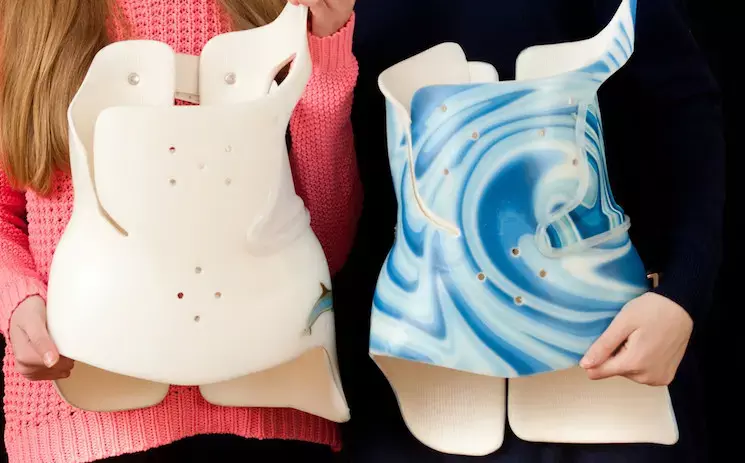


Scoliosis is an abnormal spine curvature involving the trunk. It is called idiopathic when no recognized cause exists. It affects approximately 3% of the population and is more frequent in adolescents and girls. Current treatments include observation, scoliosis-specific exercises, bracing, and, in severe cases, surgery
Brace Adolescent Idiopathic Scoliosis Trial (BrAIST) reported a bracing dose–response curve in AIS for brace-wearing time (BWT) up to 18 h/day (h/d) on the outcome end-of-treatment < 50°. Stefano Negrini et al conducted a study to examine the dose– response curve for this and other relevant outcomes in cases of BWT > 18 h/d.
Retrospective secondary analysis of consecutively collected data was done. Participants: braced AIS patients with curves < 45° and a subgroup with BrAIST inclusion criteria. Treatment: different braces, prescribed 18 to 24 h/d, according to curve topography, Cobb angle and a shared decision-making approach. The authors divided patients into BWT quartiles and developed dose–response curves using the BrAIST methodology for the end-of-growth outcomes END < 50°, END < 30°, avoidance of progression, and improvement.
The key findings of the study were:
• The study included 884 patients (85% female), with a mean age of 13.0 ± 1.3 years and a mean Cobb angle of 28 ± 7°.
• In the higher BWT quartiles, larger scoliosis curves were found but also better final Cobb angle results.
• The dose–response curves showed statistically significant improvements for the outcomes END < 30° and improvement (outcomes improvements ranging 45–60% and 25–35%, respectively).
• The outcomes END < 50° and avoiding progression showed a ceiling effect due to a very high success rate (range 97–98% and 85–87%, respectively).
The authors concluded – “BWT > 18 h/d is associated with avoiding surgery (END < 50°), reduced progression, and increased improvement rates, and achieving END < 30°, which is particularly relevant because it reduces the risk of problems in adulthood. Decisions on daily BWT should be based on the desired outcomes and an honest conversation with the patients and parents.”
Further reading:
Wearing a brace for idiopathic scoliosis above 18 hrs/day shows a dose–response effect on the outcomes improvement and end-of-treatment Cobb angle below 30 degrees Stefano Negrini et al European Spine Journal https://doi.org/10.1007/s00586-025-09124-0