
- Home
- Medical news & Guidelines
- Anesthesiology
- Cardiology and CTVS
- Critical Care
- Dentistry
- Dermatology
- Diabetes and Endocrinology
- ENT
- Gastroenterology
- Medicine
- Nephrology
- Neurology
- Obstretics-Gynaecology
- Oncology
- Ophthalmology
- Orthopaedics
- Pediatrics-Neonatology
- Psychiatry
- Pulmonology
- Radiology
- Surgery
- Urology
- Laboratory Medicine
- Diet
- Nursing
- Paramedical
- Physiotherapy
- Health news
- Fact Check
- Bone Health Fact Check
- Brain Health Fact Check
- Cancer Related Fact Check
- Child Care Fact Check
- Dental and oral health fact check
- Diabetes and metabolic health fact check
- Diet and Nutrition Fact Check
- Eye and ENT Care Fact Check
- Fitness fact check
- Gut health fact check
- Heart health fact check
- Kidney health fact check
- Medical education fact check
- Men's health fact check
- Respiratory fact check
- Skin and hair care fact check
- Vaccine and Immunization fact check
- Women's health fact check
- AYUSH
- State News
- Andaman and Nicobar Islands
- Andhra Pradesh
- Arunachal Pradesh
- Assam
- Bihar
- Chandigarh
- Chattisgarh
- Dadra and Nagar Haveli
- Daman and Diu
- Delhi
- Goa
- Gujarat
- Haryana
- Himachal Pradesh
- Jammu & Kashmir
- Jharkhand
- Karnataka
- Kerala
- Ladakh
- Lakshadweep
- Madhya Pradesh
- Maharashtra
- Manipur
- Meghalaya
- Mizoram
- Nagaland
- Odisha
- Puducherry
- Punjab
- Rajasthan
- Sikkim
- Tamil Nadu
- Telangana
- Tripura
- Uttar Pradesh
- Uttrakhand
- West Bengal
- Medical Education
- Industry
CT/USG -Guided Biopsy Ensures High Diagnostic Yield in Spinal Tuberculosis: Indian Researchers Report
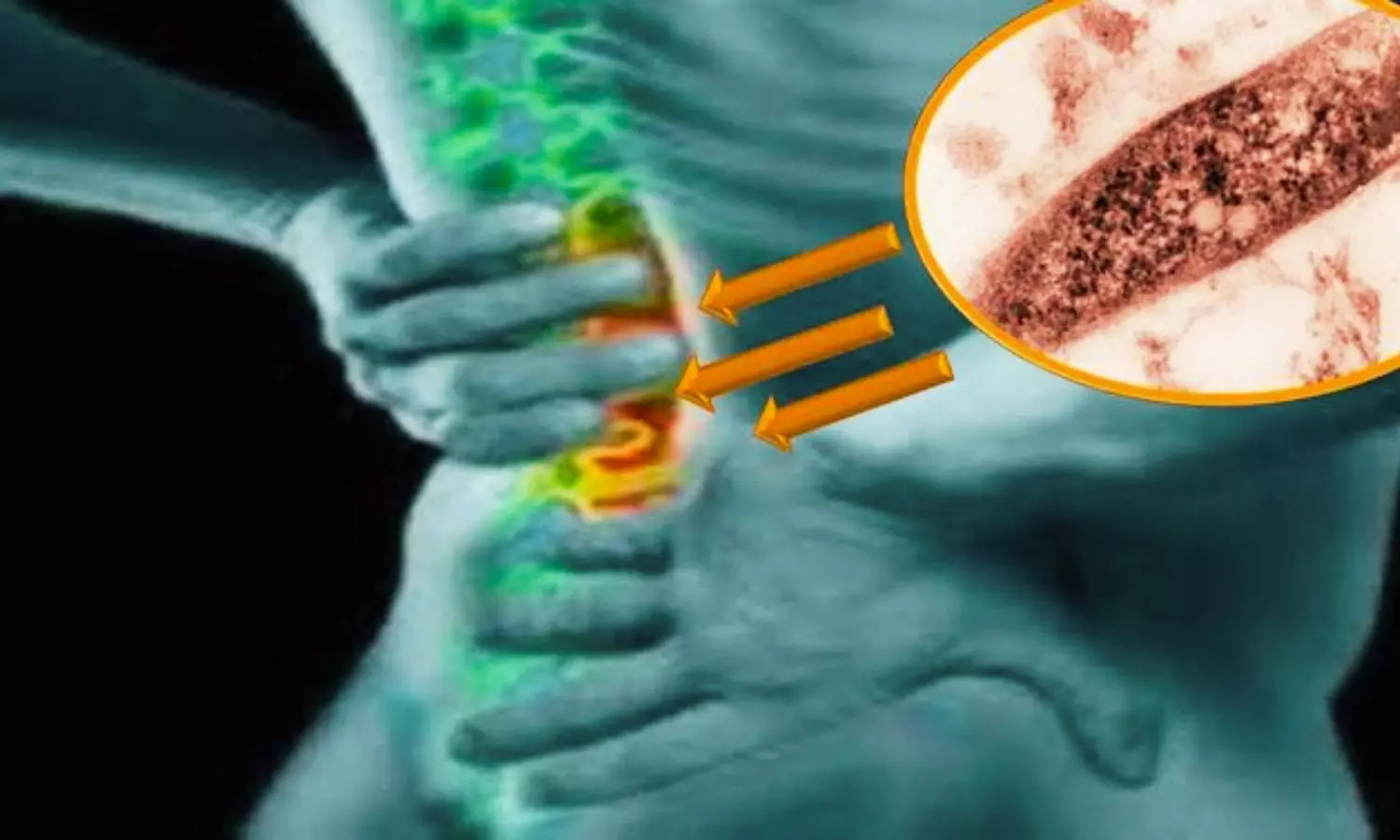
India: A recent study published in the Journal of Clinical Orthopaedics and Trauma highlights the clinical value of CT and ultrasound-guided biopsy in improving diagnostic accuracy in spinal tuberculosis (TB), a condition that often presents diagnostic challenges due to its being deep-seated and paucibacillary nature.
Led by Anil K. Jain from the Department of Pathology, Gandhi Medical College, the study evaluated whether tissue obtained through minimally invasive percutaneous techniques could reliably confirm spinal TB using a combination of laboratory methods.
Spinal TB, caused by Mycobacterium tuberculosis, often presents subtly and is difficult to diagnose in its early stages. Delayed confirmation can lead to serious complications such as spinal deformity and neurological deficits. Speaking to Medical Dialogues, Dr. Jain explained that establishing a diagnosis is particularly challenging because spinal lesions are deep-seated, making tissue procurement difficult. He noted that this challenge prompted the evaluation of image-guided biopsy techniques to determine whether adequate tissue could be obtained for accurate diagnosis.
The study included 68 patients with clinically and radiologically suspected spinal TB who underwent CT or ultrasound-guided aspiration. The collected samples were subjected to multiple diagnostic modalities, including histopathology, cytology, acid-fast bacilli (AFB) smear, culture, and molecular tests such as CBNAAT and line probe assay (LPA).
Key Findings:
- No single diagnostic test was able to confirm all cases of spinal tuberculosis.
- AFB smear demonstrated the lowest detection rate, consistent with its limited sensitivity in paucibacillary disease.
- Combining molecular techniques such as CBNAAT and Line Probe Assay with histology or cytology significantly improved diagnostic accuracy.
- The integration of molecular and histopathological/cytological methods achieved a 100% diagnostic yield.
- combined approach was as effective as using all available diagnostic tests together.
Dr. Jain emphasized that relying on a single test may lead to missed diagnoses. Instead, he recommended that clinicians simultaneously utilize all available diagnostic methods on tissue obtained through guided biopsy to ensure accurate and early detection. This approach, he noted, allows timely initiation of anti-tubercular therapy (ATT), which is critical in preventing disease progression and improving patient outcomes.
He further highlighted the importance of maintaining a high index of suspicion in endemic regions like India. Persistent, localized spinal pain should prompt further evaluation, including MRI, to identify possible lesions. If imaging suggests spinal TB, percutaneous biopsy should be performed to confirm the diagnosis before initiating treatment as far as possible.
The study also highlighted the role of repeat biopsy in cases where patients do not respond adequately to ATT. In such scenarios, guided tissue sampling can help detect drug resistance and guide appropriate modifications in therapy.
Importantly, Dr. Jain pointed out that this diagnostic strategy is feasible even in resource-limited settings. With imaging-guided aspiration facilities increasingly available at district-level healthcare centers and support from national TB programs, implementing a combined diagnostic approach is both practical and necessary in high-burden countries.
Overall, the findings reinforce that CT/USG-guided biopsy provides adequate tissue for comprehensive testing and should be integrated into routine clinical practice for suspected spinal TB cases to ensure accurate and timely diagnosis.
Reference:
Jain, P., Gain, A., Jain, A. K., Dhammi, I. K., & Bhalla, M. (2026). CT/USG guided biopsy in spinal tuberculosis: Diagnostic yield. Journal of Clinical Orthopaedics and Trauma, 75, 103322. https://doi.org/10.1016/j.jcot.2025.103322

MSc. Biotechnology
Medha Baranwal holds a Bachelor’s degree in Biomedical Sciences from the University of Delhi and a Master’s degree in Biotechnology from Amity University. Since May 2018, she has been contributing to Medical Dialogues, writing and editing medical news articles that translate complex research into clear, accessible information for healthcare professionals.
Dr Kamal Kant Kohli-MBBS, DTCD- a chest specialist with more than 30 years of practice and a flair for writing clinical articles, Dr Kamal Kant Kohli joined Medical Dialogues as a Chief Editor of Medical News. Besides writing articles, as an editor, he proofreads and verifies all the medical content published on Medical Dialogues including those coming from journals, studies,medical conferences,guidelines etc. Email: drkohli@medicaldialogues.in. Contact no. 011-43720751

