Extended Trochanteric Osteotomy may Raise Stem Subsidence Risk in Revision THA: Study
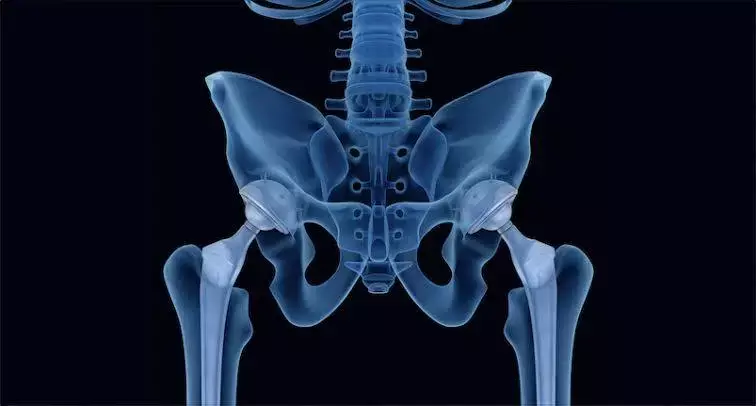


Tapered splined titanium stems (TSTSs) are the most frequently used femoral stem design in revision total hip arthroplasty. Despite encouraging and favorable results with TSTS, complications including femoral stem subsidence persist and subsidence >5 mm has been associated with implant failures and the need for aseptic re revision surgery.
Josef E. Jolissaint et al conducted a study to investigate whether an extended trochanteric osteotomy (ETO) at the time of TSTS insertion increased mean subsidence and whether the amount of cortical contact was associated with subsidence, failure, and revision. The article has been published in ‘JBJS Open access’
It was a single-center retrospective cohort study of a prospectively collected database including all patients who received a TSTS from 2016 to 2020. Data collected include surgery type, presence of an ETO, and stem specifications. Radiographs were reviewed to analyze cortical contact and postoperative subsidence. Pearson’s correlation coefficient was used to determine the association between contact length and subsidence.
The key findings of the study were:
• This cohort consisted of 299 hips, and 66 hips necessitated an ETO at the time of TSTS.
• Patients who required an ETO were more likely to subside (2.5 ± 0.2 mm vs 5.0 ± 0.7 mm, p < 0.001) and were more likely to subside >5 mm (32.3% vs 14.5%, p = 0.001).
• After controlling for other variables, an ETO was an independent risk factor for significant subsidence (adjusted OR: 3.4, p = 0.02).
• Contact length below the ETO was inversely related to stem subsidence (correlation coefficient of 20.26; p = 0.037), and multivariable logistic regression demonstrated bicortical contact > 30 mm to be a protective factor for significant subsidence (adjusted OR: 0.12, p < 0.001).
• Patients who received an ETO had a higher aseptic rerevision rate than patients who had a TSTS implanted without an ETO (16.1% vs 6.6%, p = 0.018).
The authors concluded – “Patients who receive an ETO during revision hip arthroplasty have a higher mean subsidence and 3-fold increase in odds for subsiding >5 mm. However, bicortical contact of 30 mm or greater below the ETO was protective against significant TSTS subsidence. Although not all patients with >5 mm of subsidence were revised, the aseptic rerevision rate was significantly higher in patients who received an ETO.”
The authors also commented – “An extended trochanteric osteotomy is an excellent technique to gain direct visualization of the femoral canal. However, it is not without its associated morbidity and postoperative complications, specifically stem subsidence. The results of this study suggest that when preparing for a TSTS after an ETO, careful consideration should be taken to confirm 3 cm of cortical engagement below the transverse limb of the ETO. The scaffolding technique, which prioritizes stem preparation followed by ETO closure, facilitates achieving sufficient cortical contact in the intact canal below the ETO segment. Consideration for intraoperative radiographs to confirm appropriate contact length and location may ensure sufficient fixation that will minimize the risk of postoperative stem subsidence.”
Level of Evidence: Level III.
For further details on the article refer to:
Extended Trochanteric Osteotomy Increases the Risk of Tapered Splined Stem Subsidence in Revision Total Hip Arthroplasty
Josef E. Jolissaint et al
JBJS Open Access 2025:e25.00110
http://dx.doi.org/10.2106/JBJS.OA.25.00110