Need for developing Population-Specific Prosthetic Designs in unicompartmental knee arthroplasty for Indian Patients: Study
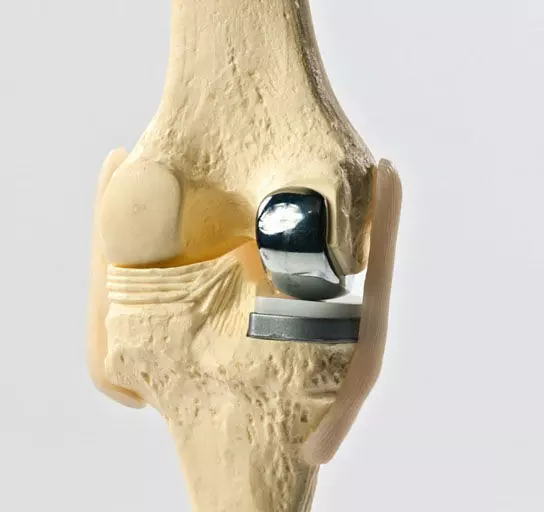


Accurate prosthesis sizing is crucial for successful unicompartmental knee arthroplasty (UKA). Indian patients have distinct knee morphometry due to cultural practices requiring deep flexion. Understanding these anatomical nuances is essential to optimize implant fit and functional outcomes.
A comprehensive review by Arun Mullaji et al analyzed knee morphology among Indian, Caucasian, and other ethnic populations. Data were sourced from PubMed, Scopus, and Google Scholar using keywords such as “knee morphology,” “unicompartmental knee arthroplasty,” “Indian population,” and “prosthesis design.” Key parameters, including anteroposterior (AP) and mediolateral (ML) dimensions, tibial plateau morphology, and aspect ratios, were statistically compared (p < 0.05).
The key findings of the study were:
• Significant ethnic and gender-based differences in knee morphology were observed.
• Indian males had a smaller femoral AP dimension (57.5 ± 3.1 mm) than Caucasian males (59.6 ± 3.2 mm), p < 0.001, while Indian females had 52.8 ± 3.1 mm compared to 55.4 ± 2.8 mm in Caucasian females ( p < 0.001).
• Tibial ML dimensions were also smaller in Indian knees (males: 69.1 ± 5.5 mm vs. Caucasian males 79.4 ± 4.3 mm, p < 0.001; females: 65.4 ± 4.7 mm vs. Caucasian females 70.2 ± 2.7 mm, p < 0.001).
• Approximately 25% of Indian patients did not achieve optimal tibial fit.
The authors concluded - “This review underscores the critical need to address the anatomical variations in knee morphology observed among Indian patients compared to other ethnic groups. The findings highlight that commercially available UKA implants, predominantly designed for Caucasian populations, often fail to align optimally with the resected bone surfaces in Indian knees. This mismatch can lead to compromised functional outcomes and reduced surgical success rates. To overcome these challenges, the development of a prosthesis specifically tailored to the unique anatomical characteristics of Indian patients is imperative. By incorporating population- and gender-specific designs, such implants can ensure better alignment and fi t, ultimately improving functionality and performance during UKA procedures. Furthermore, these customized solutions may have the potential to enhance patient mobility, satisfaction, and long-term outcomes, paving the way for a more personalized approach to knee arthroplasty.”
Further reading:
Unicompartmental Knee Arthroplasty for the Indian Patient: An Unmet Clinical Need for Redesigning Implants Based on Caucasian Morphometry Arun Mullaji et al Indian Journal of Orthopaedics (2025) 59:2014–2025 https://doi.org/10.1007/s43465-025-01580-6