
New research links testosterone therapy with serious health risks after total knee replacement surgery
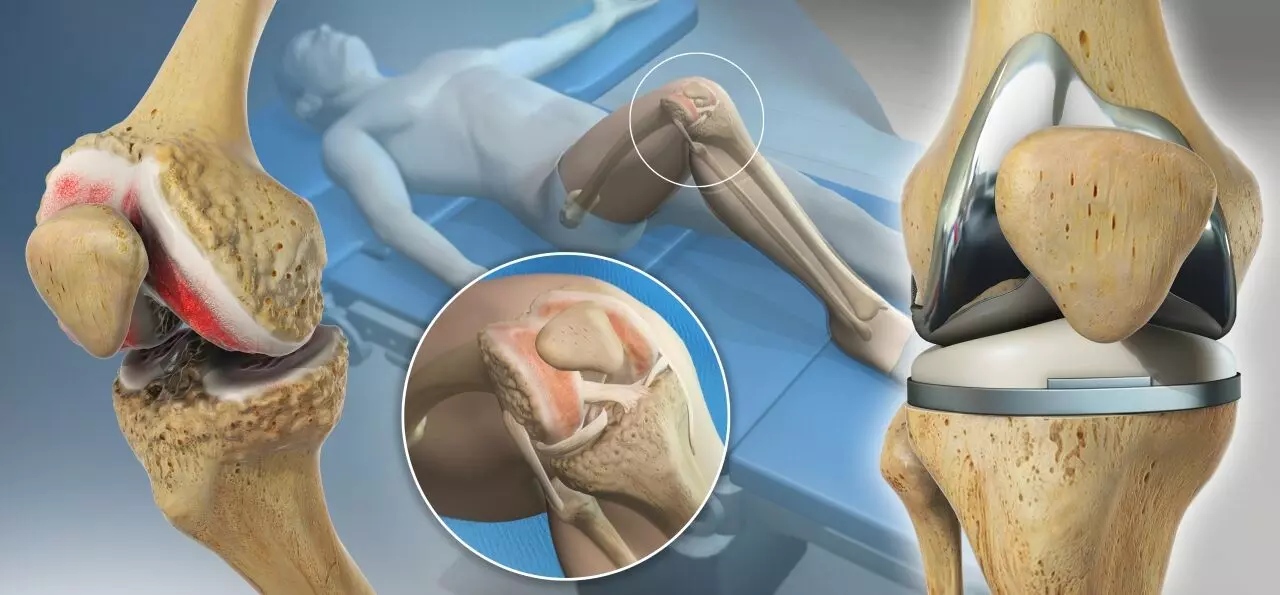


Testosterone replacement therapy (TRT) in men and women has soared in recent years, with prescriptions rising from 7.3 million in 2019 to more than 11 million in 2024.1 Now, a large-scale study presented at the 2026 Annual Meeting of the American Academy of Orthopaedic Surgeons (AAOS) points to serious health risks for testosterone users who undergo total knee arthroplasty (TKA).
Argen Omurzakov, a third-year medical student at Case Western Reserve University and Arsen M. Omurzakov, a third-year medical student at Weill Cornell Medical College, reviewed the post-surgical health of more than 13,000 people who received TKA. The researchers are twin brothers who have collaborated on new studies throughout their medical training.
The Omurzakovs found that patients who had taken testosterone in the 12 months before surgery faced higher postoperative risks for infection, blood clots, kidney damage, pneumonia and knee instability than those not taking the hormone.
The study is believed to be the largest of its kind to date – and the only one to include near-equal numbers of men and women.
Testosterone is made naturally in the body but can be synthesized in the lab, too. It is the main driver for growth, development and sexual health in males, but female bodies also produce small amounts. Women of all ages take testosterone supplements to improve sex drive, build muscle mass, treat peri- or post-menopausal symptoms and more. Though the hormone helps build muscle and bone in all patients, it can have serious side effects.
“With more people taking this hormone than ever, and TKA surgeries expected to exceed one million per year by 2030, we wanted to dive deeper into the question of testosterone’s post-surgical effects,” said Dr. Brian Chalmers, the senior author of the study.
The study, “Preoperative Testosterone Replacement Therapy is Associated with Increased Complication Risk After Total Knee Arthroplasty: A Propensity-Matched Analysis of 13,250 Patients”, retrospectively followed adult patients undergoing primary TKA before February 2020 through five years of follow-up using a national electronic health record database. This investigation builds on earlier work by the Omurzakovs and sports surgeons Dr. Alex White and Dr. Samuel Taylor, which looked at possible links between preoperative testosterone replacement therapy and patient outcomes after total shoulder arthroplasty. The shoulder study helped expand how exogenous hormone therapy might influence joint replacement outcomes in different parts of the body.
In the knee replacement study, patients with a history of septic arthritis, bone death from poor blood supply (osteonecrosis) or chronic bone fractures were excluded. Patients were ranked according to their use of testosterone in the 12 months before surgery. Propensity score matching (1:1) was used to balance demographic and clinical variables, including age, sex, race, obesity, smoking, cardiovascular disease, diabetes, chronic kidney disease, and hypogonadism.
Highlights of the findings include:
- At 90 days, TRT users had higher rates of pulmonary embolism (PE) (1.6% vs. 1.2%, P = 0.041), pneumonia (3.3% vs. 1.9%, P <0.001), acute kidney injury (AKI) (4.2% vs. 2.9%, P < 0.001), and sepsis (1.9% vs. 1.1%, P < 0.001).
- At one year, TRT was associated with increased rates of PE (2.6% vs. 2.0%, P < 0.015), deep vein thrombosis (DVT) (4.5% vs. 3.3%, P < 0.001), cardiac events (3.0% vs. 2.4%, P =0.018), pneumonia (6.0% vs. 4.0%, P < 0.001), AKI (7.9% vs. 5.2%, P < 0.001), and sepsis (2.4% vs. 0.9%, P < 0.001).
- Periprosthetic complications at one year were also significantly higher in TRT users, including periprosthetic joint infection (PJI) (2.4% vs. 0.9%, P <0.001), periprosthetic fracture (0.7% vs. 0.2%, P < 0.001), aseptic loosening (1.0% vs. 0.5%, P = 0.001), instability (0.6% vs. 0.3%, P = 0.020), and revision surgery (1.6% vs. 1.0%, P = 0.002). These complications remained elevated at five years, with TRT patients experiencing higher rates of PJI (4.3% vs. 1.9%, P < 0.001), periprosthetic fracture (1.6% vs. 0.6%, P <0.001), loosening (2.7% vs. 1.3%, P < 0.001), instability (1.7% vs. 0.8%, P < 0.001), and revision (4.1% vs. 2.7%, P <0.001).
Though more research is needed to establish testosterone as a cause of serious postoperative issues, the hormone has already been linked with higher risks for blood clots. “Studies also suggest that testosterone influences the way our bones naturally rebuild themselves over time,” said Arsen Omurzakov. “Testosterone levels may also affect the immune system and the microbiomes that affect the immune system, healing and other key functions in the body,” added Argen Omurzakov.
Along with higher risks for blood clots, sepsis and other life-threatening conditions, the new study showed that patients on TRT are more likely to need revision surgery after a replaced knee loosens or adjacent bones don’t attach to the new joint properly (a process known as osseointegration). Post-surgical infections of the knee are also likelier when patients take testosterone before undergoing TKA.
Earlier studies of testosterone and knee surgery outcomes were smaller and more focused on short-term health issues, the researchers said. The scope of the new study, and the inclusion of a large female cohort, add significance to the findings. Women currently make up 60% of all TKA surgeries in the U.S., and this number is expected to grow.
