
New study demonstrates reduced opioid use after knee surgery with mini-scope technique
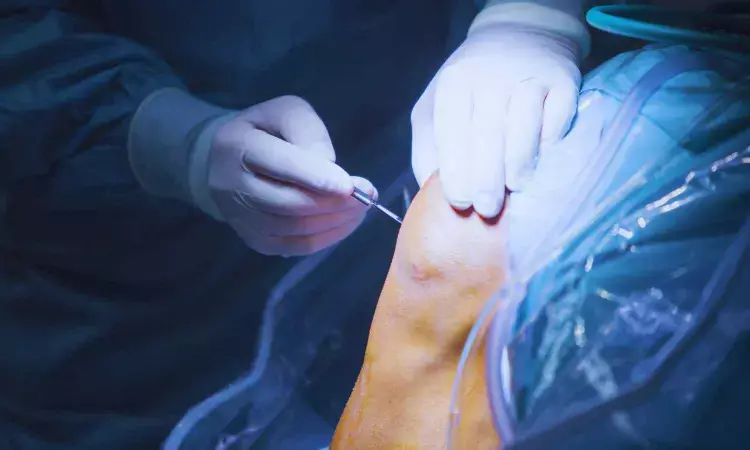


A new study led by Marshall University researchers found that patients who underwent knee surgery using a minimally invasive "needle arthroscopy" technique used significantly fewer opioids after surgery compared to those treated with standard arthroscopy.
The study published in The Journal of Orthopaedics compared outcomes for patients undergoing a partial meniscectomy-a common procedure to repair torn knee cartilage—performed with a small, needle-sized scope to those treated with traditional instruments. Results showed that patients in the needle arthroscopy group experienced less pain in the first two weeks after surgery, reported better early knee function and required fewer opioid pain medications during recovery.
Results from the multicenter, randomized trial also showed that the smaller-scope approach required less surgical fluid and led to lower pain scores shortly after surgery. Although both groups recovered similarly after six weeks, patients treated with the minimally invasive technique benefited from less discomfort and a quicker early return to activity.
“This study reinforces that smaller, less invasive approaches can make a meaningful difference in how patients experience recovery,” said Chad D. Lavender, M.D., orthopaedic surgeon at Marshall Health Network, assistant professor of orthopaedic surgery at the Marshall University Joan C. Edwards School of Medicine and lead author on the study. “By reducing post-operative pain and the need for opioid medications, we can help patients return to their normal lives faster while supporting broader efforts to combat opioid dependency.”
Reference:
Chad D. Lavender, Ethan Hahn, Tyler H. Hwang, Andrew L. Schaver, Eliana S. LeMaster, James Nottingham, Timothy E. Hewett, Evan H. Argintar, Opioid Use Following Partial Meniscectomy with Needle Arthroscopy Compared to Standard Knee Arthroscopy: Results from a Randomized Multicenter Trial, Journal of Orthopaedics, 2025, https://doi.org/10.1016/j.jor.2025.11.012.
