
Poller Screws Improve Union in lower limb Extra-Isthmic Fractures: Study
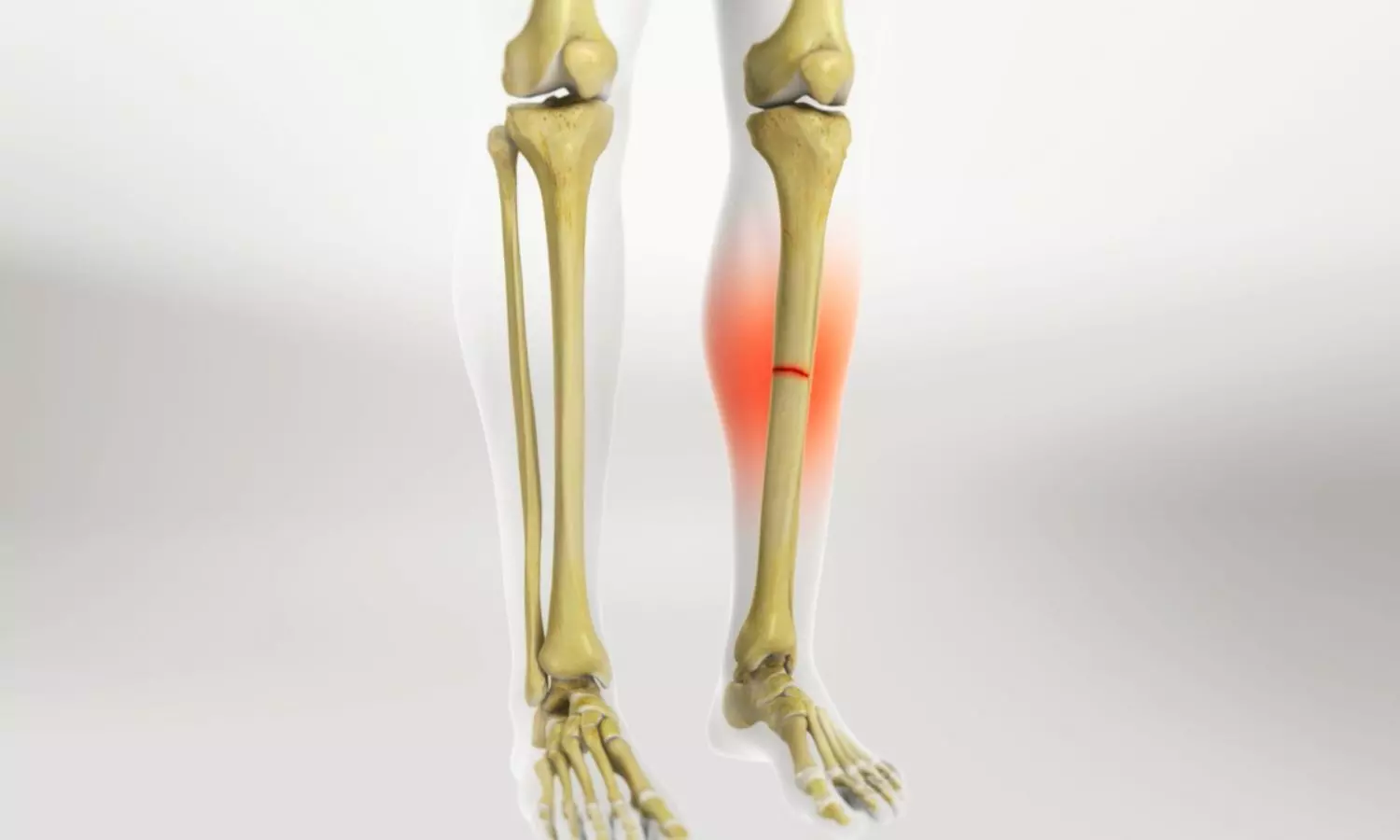


A new study that published in the Journal of Orthopaedic Surgery and Research found the use of Poller screws during intramedullary nailing of lower limb extra-isthmic fractures is associated with higher fracture union rates and fewer secondary surgeries, without negatively affecting alignment, healing time, or infection risk. Although operative time is longer, the enhanced construct stiffness and reduced micro-motion provided by Poller screws may contribute to better healing outcomes.
Intramedullary nailing is widely considered the standard treatment for fractures of long bones in the legs, particularly the tibia and femur. However, fractures occurring outside the narrow central portion of the bone (extra-isthmic fractures) often present challenges because the metal nail does not fit tightly within the wider metaphyseal bone region. This mismatch can reduce stability, increase micro-motion at the fracture site, and compromise healing.
Poller screws, also called blocking screws, are inserted near the fracture site to guide and stabilize the intramedullary nail. Although they have been used in orthopedic surgery for years, their effectiveness has remained debated due to inconsistent clinical evidence and concerns about longer surgical procedures.
Thus, this systematic review and meta-analysis examined studies involving Poller screw use in lower limb extra-isthmic fractures treated with intramedullary nails across databases including PubMed, EMBASE, the Cochrane Library, and Web of Science through December 2025.
Over 1,100 studies initially identified, 5 clinical trials involved 413 participants met inclusion criteria for analysis. This study compared outcomes between patients treated with standard intramedullary nailing alone and those receiving additional Poller screw stabilization.
The results showed that patients in the Poller screw group had significantly higher fracture union rates. Statistical analysis revealed that fractures stabilized with Poller screws were more than twice as likely to heal successfully when compared with those treated without them.
No significant differences in rates of malalignment, healing time, or postoperative infection between the two treatment approaches were found. While surgeries involving Poller screws took longer to perform, the patients required fewer secondary surgical procedures afterward, which suggested improved overall stability and recovery.
Finite element analysis using a three-dimensional digital model of the tibia examined how Poller screws influenced fracture stability under axial loading conditions similar to weight-bearing forces experienced during walking. The biomechanical analysis demonstrated that Poller screws reduced fracture-site displacement by nearly 55%, which indicated a substantial increase in construct stiffness.
Overall, the findings reinforce the idea that careful use of Poller screws can improve fixation in fractures where traditional intramedullary nails alone may not provide adequate stability. Extra-isthmic fractures are particularly prone to alignment problems and delayed healing because of the wider bone geometry near the ends of long bones.
Source:
Yang, Z., Sheng, B., Liu, D., Lu, Y., & Chen, B. (2026). The role of Poller screws in intramedullary nailing for lower limb extra-isthmic fractures. Journal of Orthopaedic Surgery and Research. https://doi.org/10.1186/s13018-026-06900-6

