
Sacroiliac Bone Marrow Edema May Be Less Specific for Axial Spondyloarthritis Than Previously Thought: Study
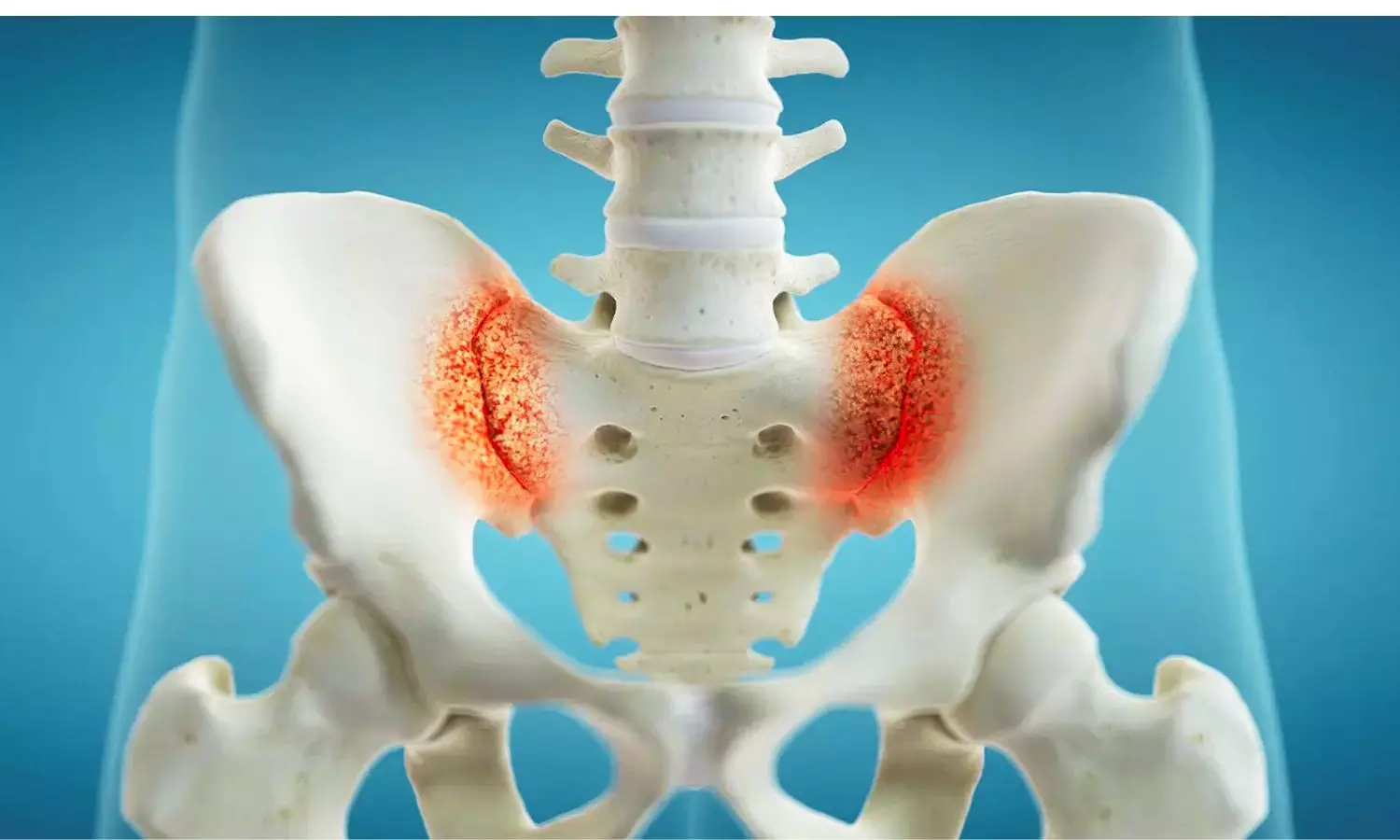


Germany: A large population-based study in Germany has found that nearly 30% of healthy individuals exhibited sacroiliac bone marrow edema (SBME) on MRI scans. Since SBME is considered a key imaging marker for Axial Spondyloarthritis, these findings raise concerns about relying solely on MRI changes for diagnosis. Higher SBME rates were observed in women, overweight individuals, older men, and men involved in intense recreational physical activity, suggesting that non-inflammatory factors may also contribute to these MRI findings.
The study was published in The Lancet Rheumatology by Keno Bressem, Department of Diagnostic and Interventional Radiology, Technical University of Munich, School of Medicine and Health, Klinikum rechts der Isar, TUM University Hospital, Munich, Germany, and colleagues.
MRI-detected bone marrow edema in the sacroiliac joints plays a major role in diagnosing axial spondyloarthritis and often guides treatment decisions, including the initiation of anti-inflammatory therapies. However, the prevalence of these MRI findings in the general population has remained unclear, raising the possibility of overdiagnosis when imaging abnormalities are interpreted without adequate clinical context.
To investigate this issue, researchers analyzed adults aged 20–69 years enrolled in the German National Cohort who underwent whole-body MRI scans between 2014 and 2016. The cross-sectional study included 11,163 participants, with nearly equal representation of women and men. Expert readers independently assessed a subset of MRI scans, while the remaining scans were analyzed using a validated deep-learning algorithm designed to automatically detect and quantify sacroiliac bone marrow edema.
The study led to the following findings:
- Sacroiliac bone marrow edema was detected in nearly one-third of the study population.
- Expert readers identified SBME in 28.9% of participants, while the deep-learning algorithm detected it in 30.8%.
- The prevalence of SBME was approximately 50 times higher than the reported prevalence of axial spondyloarthritis in the same population.
- Women had a higher prevalence of SBME compared to men.
- Pregnancy history was associated with higher SBME rates among women compared to nulliparous women.
- In men, increasing age was independently associated with a greater likelihood of SBME.
- Intensive recreational physical activity in men was linked to a higher prevalence of SBME.
- Higher body mass index was identified as one of the strongest modifiable risk factors for SBME.
- Physically demanding occupational work was also associated with increased SBME prevalence.
The researchers noted that previous studies had reported SBME in groups such as athletes and postpartum women, but were limited by small sample sizes and selected populations. This study provides the first large-scale population-based evidence showing that SBME is common in the general population.
The investigators suggested that SBME on MRI may often be linked to mechanical stress, pregnancy-related changes, obesity, or occupational strain rather than inflammatory disease alone, limiting its specificity for diagnosing Axial Spondyloarthritis.
The authors said the findings may support a more cautious interpretation of MRI changes and help develop diagnostic approaches that combine imaging with demographic and clinical factors to reduce misdiagnosis and unnecessary biological therapy use.
Reference:
Bressem, K., Torgutalp, M., Diekhoff, T., Kougkas, N., Xu, L., Vahldiek, J. L., Baraliakos, X., Haibel, H., Proft, F., Protopopov, M., Rios Rodriguez, V., Rademacher, J., Hermann, K., Aerts, H. J. W. L., Niendorf, T., Keil, T., Willich, S. N., Pischon, T., Schlett, C. L., . . . Poddubnyy, D. (2026). Prevalence and determinants of sacroiliac joint bone marrow oedema in the general population in Germany: A population-based cross-sectional study. The Lancet Rheumatology. https://doi.org/10.1016/S2665-9913(26)00071-8

Next Story