
Study finds no increased safety risk for obese patients undergoing shoulder replacement surgery
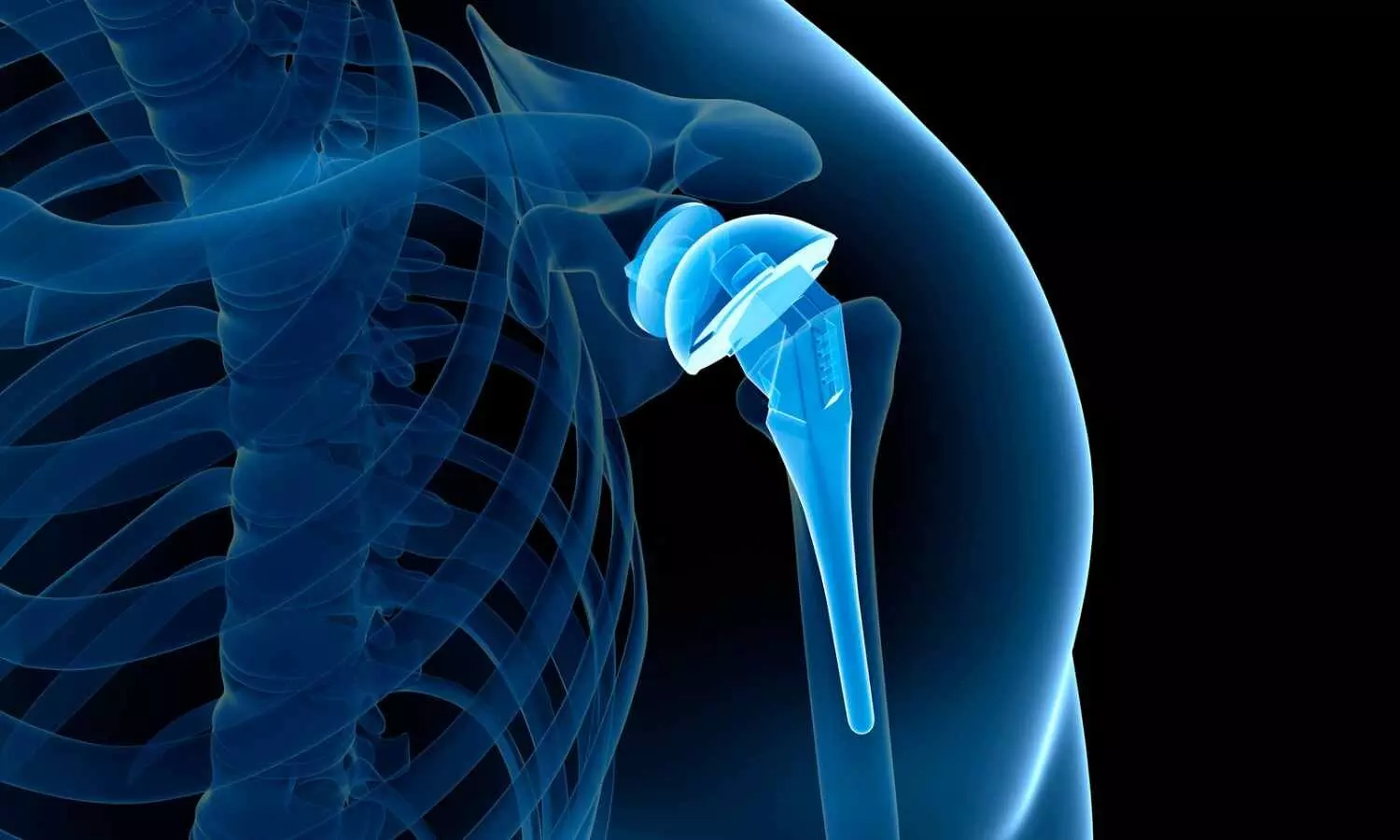


Higher BMI is not linked to increased risk of death or other complications following shoulder replacement surgery, according to a new study by Epaminondas Markos Valsamis from the University of Oxford, UK, and colleagues publishing November 20th in the open-access journal PLOS Medicine.
Joint replacement surgeries-including hip, knee and shoulder replacements-can significantly improve quality of life. Many patients with obesity are denied these procedures despite a lack of formal recommendations from national organizations. Evidence on the risks of joint replacement surgery in patients with obesity is limited and mixed.
In this study, researchers analyzed more than 20,000 elective shoulder replacement surgeries performed across the UK and Denmark to see whether BMI was associated with death or other complications.
Compared to patients with a healthy BMI (21.75 kg/m2), patients with obesity (BMI 40 kg/m2) had a 60% lower risk of death within the year following surgery. Those considered underweight (BMI <18.5 kg/m2) had a slightly higher risk of death. The study does not support restricting patients with a high BMI from having elective shoulder replacement surgery, contrary to evidence that some hospitals are starting to restrict patients.
One main limitation of this study was the small sample size of the underweight population (131 for the UK data, 70 for the Denmark data). However, this was a large study that consistently showed a lower risk of death and complications in patients with obesity undergoing shoulder replacement surgery across multiple outcomes and two countries. The results can help patients, surgeons, and policymakers make informed decisions about who should be considered fit for these surgeries.
Lead author Epaminondas Markos Valsamis says, “Shoulder replacements offer patients the opportunity for excellent pain relief and improved quality of life. Our research shows that patients with a higher BMI do not have poorer outcomes after shoulder replacement surgery.”
Senior author Professor Jonathan Rees adds, “While BMI thresholds have been used to limit access to joint replacement surgery, our findings do not support restricting higher BMI patients from accessing shoulder replacement surgery.”
Reference:
Epaminondas Markos Valsamis ,Josefine Beck Larsen,Adrian Sayers,Timothy Jones,Stephen E. Gwilym,Pia Kjær-Kristensen,Theis M. Thillemann,Inger Mechlenburg,Michael R. Whitehouse,Jonathan L. Rees, The association of body mass index with patient outcomes after shoulder replacement surgery: Population-based cohort study using linked national data from the United Kingdom and Denmark, PLOS Medicine, https://doi.org/10.1371/journal.pmed.1004786
