
Healthy diet during pregnancy associated with reduced risk of infant colic, eczema: JAMA
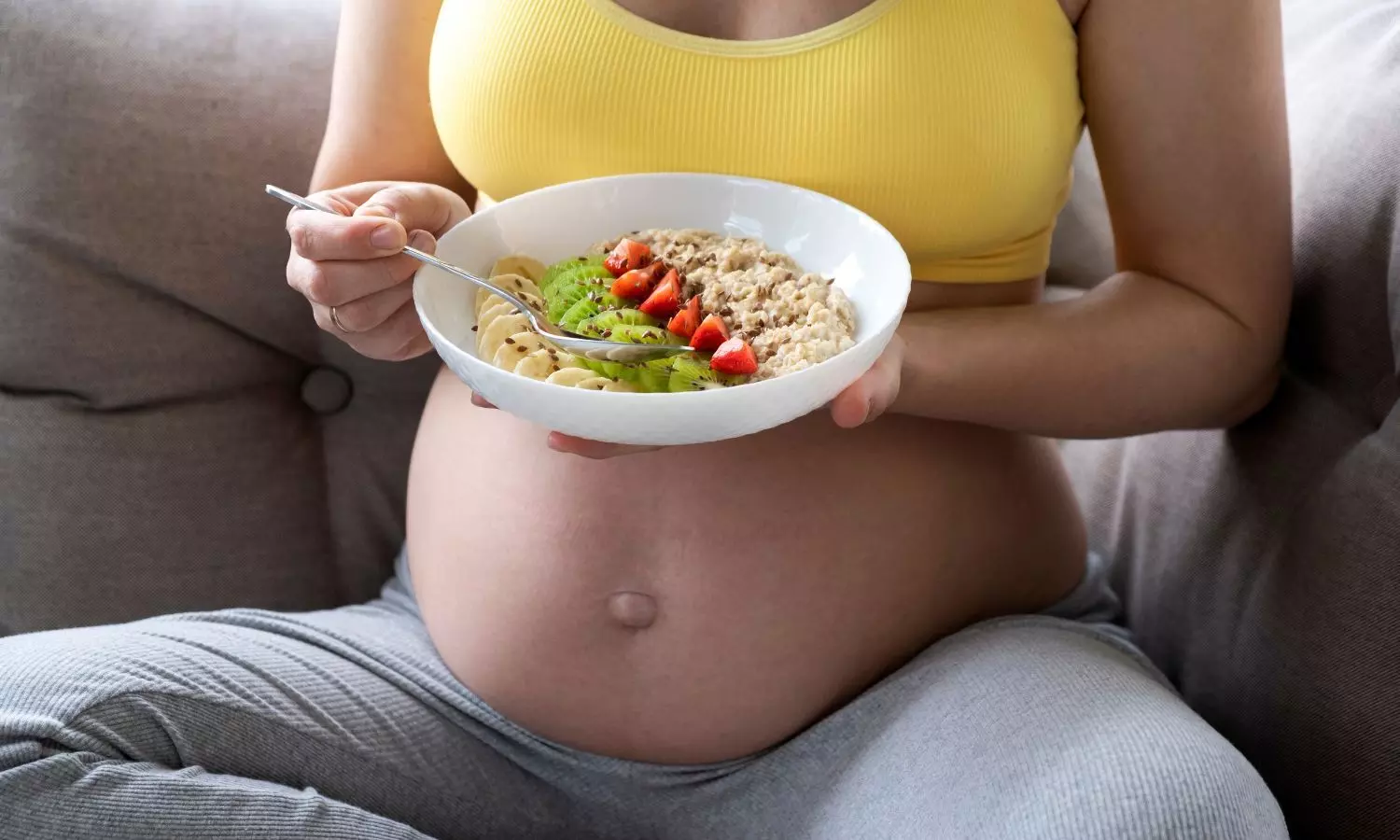


Infants born to mothers who ate a healthy, Mediterranean-style diet during pregnancy were at lower risk for colic and eczema, according to a new study by researchers at Harvard T.H. Chan School of Public Health, Boston Children’s Hospital, and Harvard Pilgrim Health Care Institute. The researchers also found that regularly consuming seafood during pregnancy helped lower an infant’s risk for these conditions.
“Our own prior studies have shown that babies who had colic have higher rates of atopic conditions in later life, including asthma, seasonal rhinitis and food allergies,” said corresponding author Jenifer Lightdale, associate chief of the Division of Gastroenterology, Hepatology and Nutrition at Boston Children’s Hospital and professor of pediatrics at Harvard Medical School. “Our new study is the first to ask how prenatal diet may influence colic, and in particular the combination of colic and eczema, as babies who have both conditions in infancy may be at highest risk for various manifestations of allergies when they are older.”
The study will be published in JAMA Network Open.
Previous research on diet and colic has focused on whether dietary changes after birth in breastfeeding mothers, or in choices of infant formulas, can affect the symptoms of colic once they are present. For this study, the researchers examined whether the dietary habits of women during pregnancy would be associated with the risk of colic in her baby, particularly the combination of colic and eczema.
More than 1,300 pregnant women were recruited into the Project Viva study from prenatal clinics in Eastern Massachusetts from April 1999 to November 2002. The participants filled out regular food questionnaires, which the researchers scored according to the Mediterranean Diet Score (MDS) and the Dietary Inflammation Index (DII). A high MDS score indicated a more healthful diet, with high intake of fruits, vegetables, whole grains, legumes, and healthy fats, and moderate intake of dairy and lean proteins. A high DII score indicated a less healthful diet, with high intake of red or processed meats, sugar-sweetened beverages, sodium, and refined grains. Participants also reported their intake of commonly allergenic foods, including peanuts, peanut butter, and other nuts; finfish and shellfish; and eggs and dairy.
The researchers found that 26% of the study’s infants had colic, and 5% had both colic and eczema. Mothers who adhered more closely to a Mediterranean diet had a significantly lower risk of having a baby with both colic and eczema: Each higher MDS point was associated with a 15% reduction in risk. By contrast, each higher DII point was associated with a 34% higher risk.
Looking at foods known to be common allergens, the researchers found that for each weekly serving of seafood a pregnant woman consumed, her infant had a 25% lower chance of having colic and eczema. Other typical allergenic foods-including dairy, eggs, and nuts—were not related to having a baby with colic and eczema. The researchers calculated that all of the associations the study found were strongest among infants whose mothers had a history of allergic conditions.
“Our findings provide yet another reason to help pregnant women achieve a healthy, balanced diet, with a particular emphasis on eating seafood,” said first author Emily Oken, president of the Harvard Pilgrim Health Care Institute and professor in the Department of Nutrition at Harvard Chan School. “Moms wish to do all they can for their babies, but there are often financial and other structural barriers to accessing healthy nutrition. We hope our study can be helpful not just to individuals and families, but also to programs and services that support women’s health and nutrition, including federal programs like WIC and SNAP as well as programs administered by health plans and systems, such as ‘food is medicine’ initiatives.”
Reference:
Oken E, Rifas-Shiman SL, Switkowski KM, Nadeau K, Lightdale JR. Maternal Prenatal Diet and Colic and Eczema Among Infants. JAMA Netw Open. 2026;9(10):e2638472. doi:10.1001/jamanetworkopen.2026.38472
