
Multiple Magnet Ingestion Linked to Highest Risk of Perforation and Surgery in Children: Study
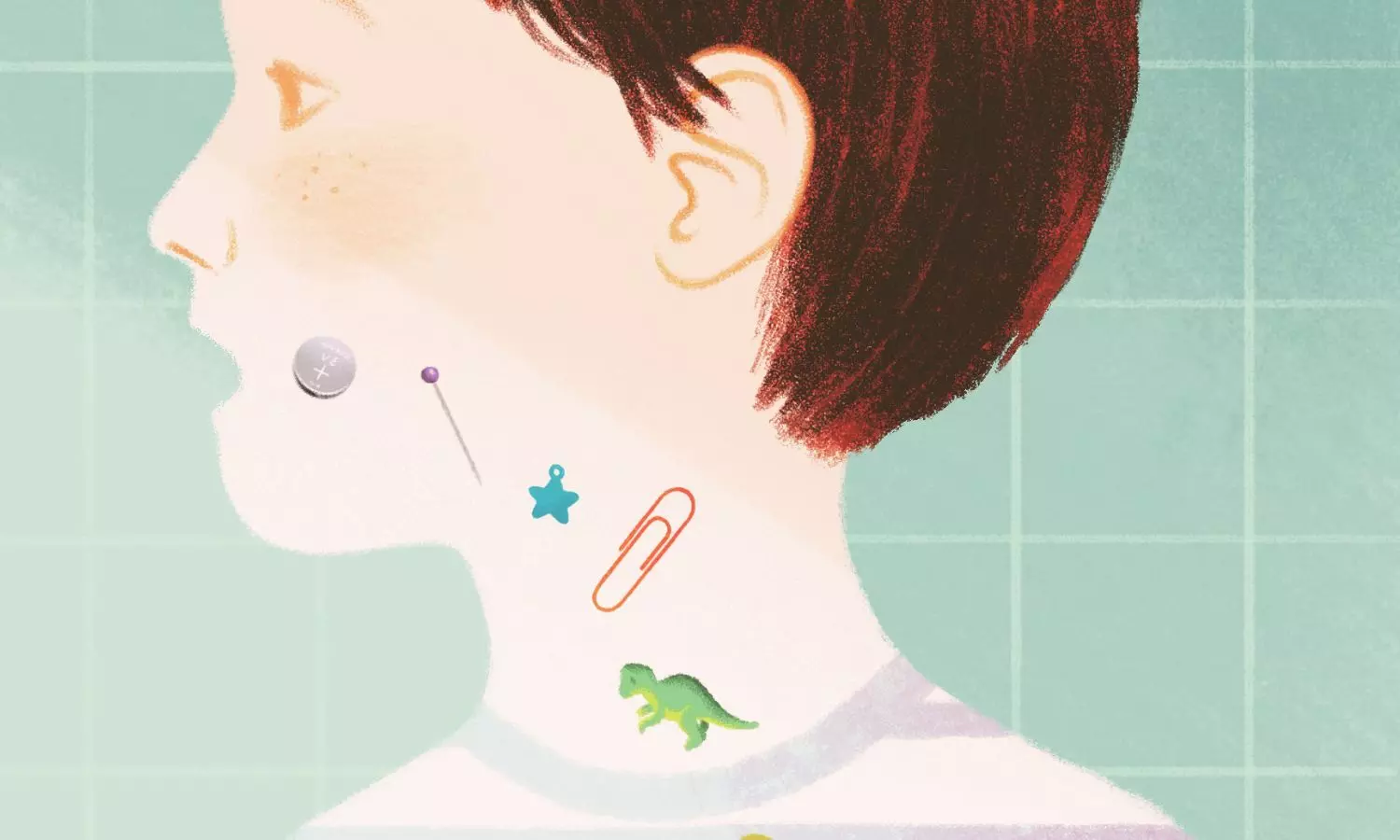


China: A new study published in Frontiers in Pediatrics has found that ingestion of multiple magnetic foreign bodies poses a particularly high risk of serious gastrointestinal injury in children, including perforation and the need for surgery. The findings also suggest that endoscopic removal is highly effective for most high-risk foreign body ingestions, highlighting the importance of early identification and intervention.
The study was conducted by Ning Xue and colleagues from the Department of Gastroenterology at Children’s Hospital Affiliated to Shandong University.
Foreign body ingestion is a common pediatric emergency, but sharp objects, magnets, and button batteries can cause serious gastrointestinal injury. To assess the clinical features and outcomes associated with these high-risk objects, researchers retrospectively reviewed cases of upper gastrointestinal foreign body retention treated at a tertiary pediatric center in China between January 2020 and December 2024.
The study included 155 children, comprising 61 cases of sharp object ingestion, 42 cases of magnetic object ingestion, and 52 cases of button battery ingestion. All patients underwent attempted endoscopic removal, and researchers analyzed clinical presentation, injury patterns, complications, and treatment outcomes.
The researchers reported the following findings:
- The study included 155 children, of whom 39.4% ingested sharp objects, 27.1% ingested magnetic objects, and 33.5% ingested button batteries.
- Button battery ingestion occurred predominantly in children aged 0–3 years.
- Sharp objects were most commonly retained in the esophagus, while magnets and button batteries were more frequently retained in the stomach.
- Children who ingested magnetic foreign bodies had the longest delay between ingestion and hospital presentation, often because they were asymptomatic.
- Multiple magnet ingestion was associated with the most severe complications among the three groups.
- Vomiting was significantly more common in children who swallowed magnetic objects.
- Gastrointestinal perforation rates were highest in the magnetic foreign body group.
- Pain occurred more frequently in children who ingested sharp objects or magnets.
- Dysphagia (difficulty swallowing) was more common among children who swallowed sharp objects or button batteries.
- All patients underwent attempted endoscopic retrieval of the foreign body.
- Esophagogastroduodenoscopy was the first-line treatment and achieved a retrieval success rate of 96.1%.
- Only two cases involving sharp objects required rigid esophagoscopy for successful removal.
- Surgical intervention was needed more frequently in the magnetic foreign body group than in the sharp object or button battery groups.
The authors acknowledged several limitations, including the retrospective single-center design, reliance on caregiver-reported timing of ingestion, limited long-term follow-up, and the absence of multivariable analyses to identify independent predictors of adverse outcomes.
The researchers concluded that high-risk foreign body ingestion remains a serious pediatric concern, with multiple magnet ingestion carrying the highest risk of perforation and surgical intervention. They emphasized the need for urgent assessment and removal, even in asymptomatic children, and highlighted the importance of post-removal follow-up and risk-based management to minimize complications.
Reference:
Xue, N., Wei, X., Xu, J., & Zhu, L. (2026). High-Risk foreign body ingestion in children: Clinical features and endoscopic outcomes. Frontiers in Pediatrics, 14, 1832241. https://doi.org/10.3389/fped.2026.1832241

Next Story