3D-CT Indices Enhance Postoperative Lung Remodeling Assessment, improve risk stratification: Study
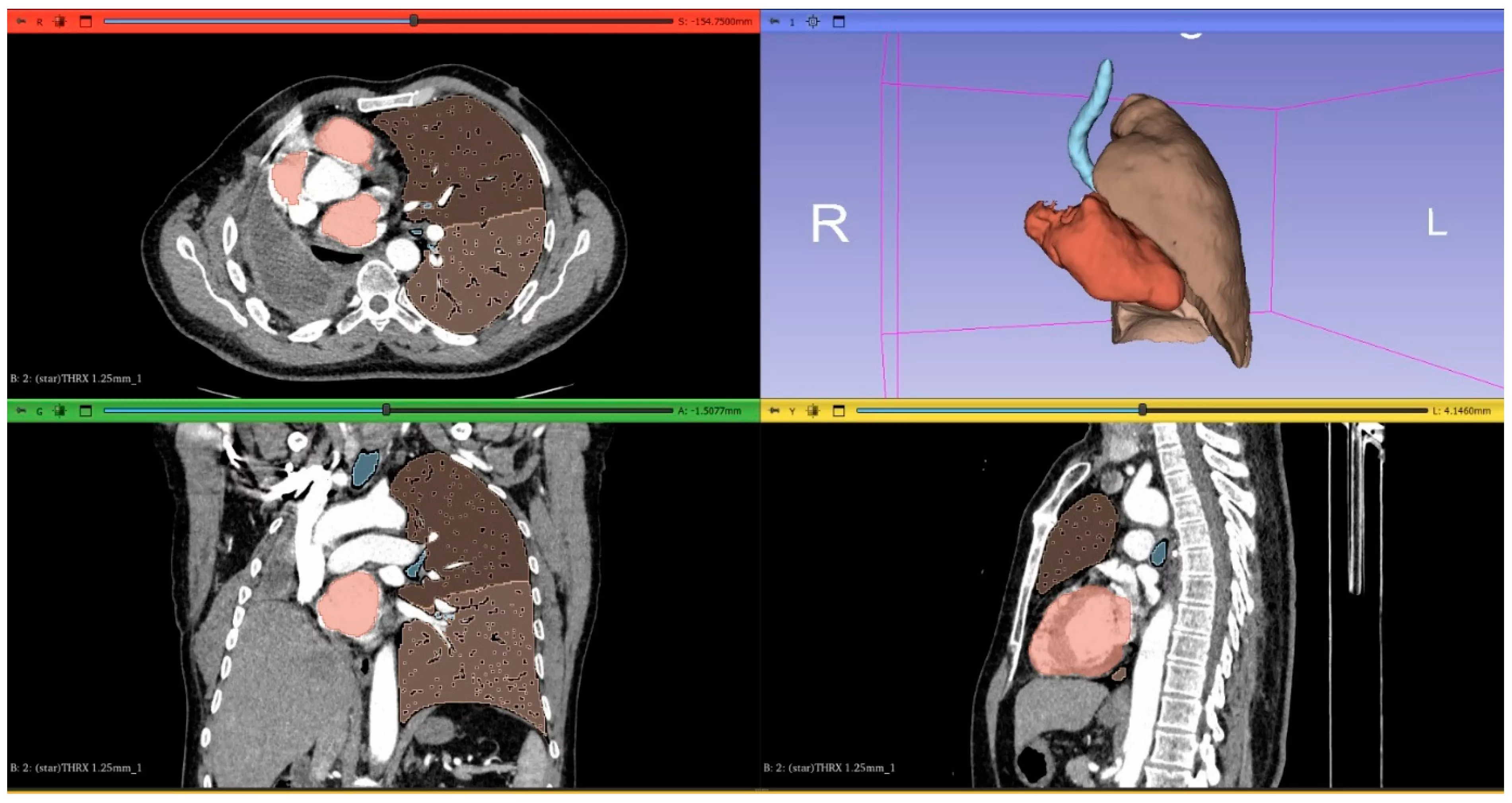


Researchers have found in a new study that patients with chronic obstructive pulmonary disease maintain better-than-predicted postoperative lung function without additional structural lung loss, while patients without chronic obstructive pulmonary disease demonstrate volume-related increases in low-attenuation areas. Integrating functional and structural three-dimensional computed tomography indices — measured-to-predicted forced expiratory volume in one second ratio, D-value, and low-attenuation area — allows for a comprehensive evaluation of postoperative lung remodeling, which may improve risk stratification and optimize surgical planning.
Quantitative assessment of lung structure provides insights beyond conventional postoperative function prediction. This study examined how preoperative chronic obstructive pulmonary disease status and emphysema distribution influence postoperative pulmonary function and structural remodeling using three-dimensional computed tomography cluster analysis.
The investigators retrospectively analyzed 426 lobectomy cases performed between 2018 and 2023. Patients were stratified into chronic obstructive pulmonary disease and non–chronic obstructive pulmonary disease groups. Predicted postoperative forced expiratory volume in one second was estimated using three-dimensional computed tomography volumetry, and the measured-to-predicted forced expiratory volume in one second ratio was calculated. Structural parameters, including D-value, reflecting alveolar complexity, and low-attenuation area, were measured preoperatively and postoperatively using three-dimensional computed tomography. The measured-to-predicted forced expiratory volume in one second ratio, percentage change in D-value, and percentage low-attenuation area were compared between groups using Mann–Whitney U tests. Subgroup analysis was performed based on whether the resected lobe had a higher or lower D-value than the whole lung.
Results showed that patients with chronic obstructive pulmonary disease exhibited a significantly higher measured-to-predicted forced expiratory volume in one second ratio than those without chronic obstructive pulmonary disease (117.9 percent vs 110.7 percent, p < 0.001). Percentage change in D-value did not differ significantly between the groups (99.7 percent vs 98.1 percent, p = 0.476), whereas percentage low-attenuation area was significantly higher in patients without chronic obstructive pulmonary disease. In subgroup analyses according to the presence of emphysematous resected lobes, measured-to-predicted forced expiratory volume in one second ratio and percentage change in D-value did not differ between the groups, and no significant difference in percentage low-attenuation area was observed.
Overall, patients with chronic obstructive pulmonary disease maintain better-than-predicted postoperative function without additional structural loss, whereas patients without chronic obstructive pulmonary disease show volume-driven increases in low-attenuation area. Integrating functional and structural three-dimensional computed tomography indices — measured-to-predicted forced expiratory volume in one second ratio, D-value, and low-attenuation area — enables a comprehensive evaluation of postoperative lung remodeling, potentially improving risk stratification and surgical planning.
Reference:
Kuroda, Sanae, et al. "Postoperative Pulmonary Function and Structural Remodeling After Lobectomy in Patients With and Without Chronic Obstructive Pulmonary Disease." Interdisciplinary Cardiovascular and Thoracic Surgery, 2026.