
Carbocisteine and hypertonic saline associated with side effects in patients with acute respiratory failure: Study
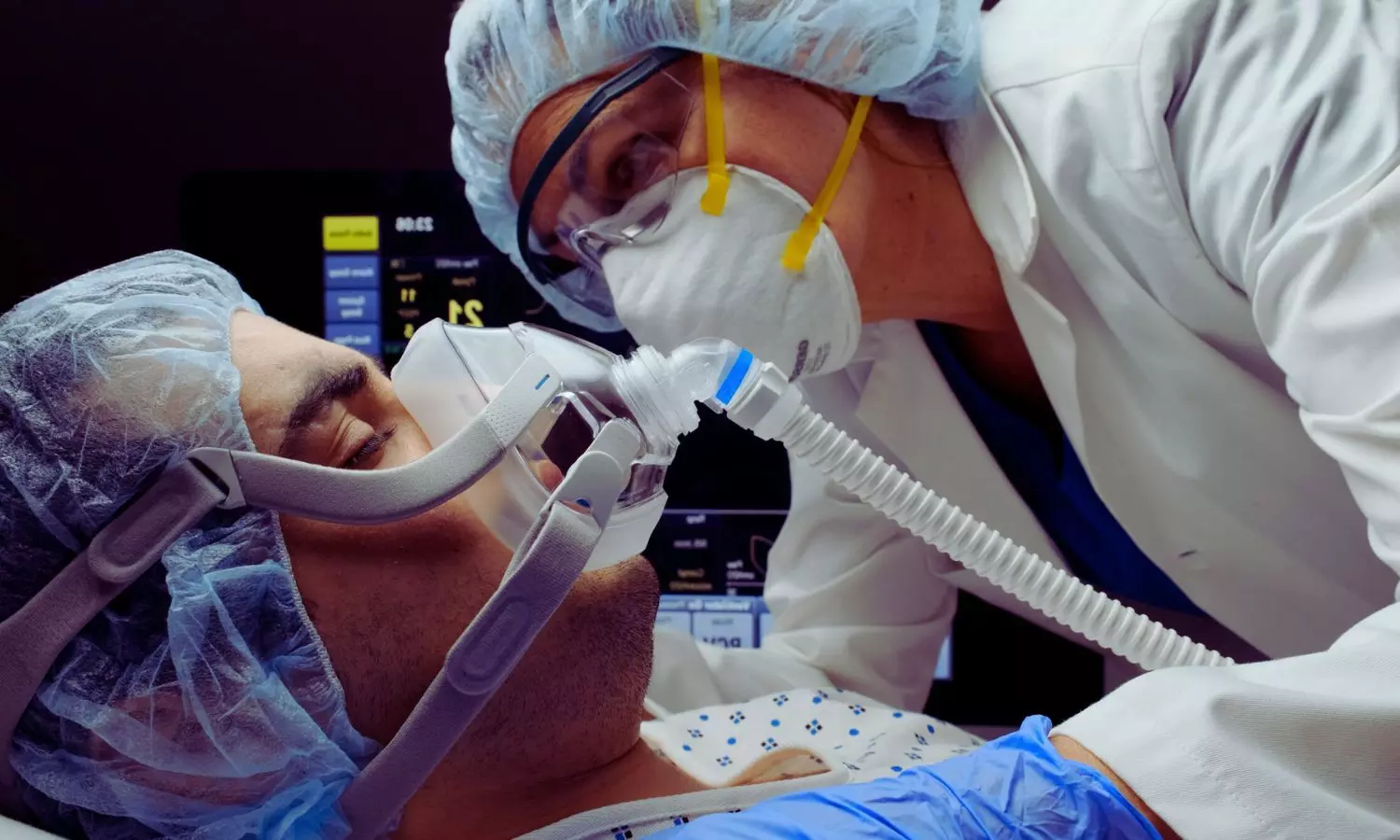


A new study published in The New England Journal of Medicine showed that neither carbocisteine nor hypertonic saline (HTS) substantially shortened the time of mechanical ventilation in critically sick patients with acute respiratory failure, and both were linked to side effects.
Mechanical ventilation for acute respiratory failure frequently reduces airway clearance, resulting in trapped secretions. While mucoactive drugs like carbocisteine and hypertonic saline are commonly used in ICUs to treat this condition, the data is limited. Thus, this research compared the clinical efficacy of carbocisteine and hypertonic saline in conjunction with usual therapy to usual care alone in patients aged 16 and up with acute respiratory failure.
This research used a 2-by-2 factorial design in this study with critically sick, mechanically ventilated individuals 16 years of age or older who had severe respiratory failure and difficult-to-clear secretions.
For a maximum of 28 days, each subject received standard care plus either 6% or 7% nebulized hypertonic saline (4 ml four times daily), carbocisteine (750 mg 3-times daily enterally), or both therapies. The time of artificial ventilation was the main outcome. Two treatment groups were included in each of the two main comparisons: any carbocisteine vs no carbocisteine and any HTS versus no HTS.
A total of 1956 individuals were randomized: 486 received carbocisteine, 485 received HTS, 492 received both therapies, and 493 received just usual care (472, 474, 479, and 478, respectively, were included in the primary analysis).
There was no indication of a treatment interaction (hazard ratio, 1.01, 95% confidence interval [CI], 0.83 to 1.22; P=0.91). 186.1 hours (95% CI, 168.3 to 196.6) alongside carbocisteine and 172.7 hours (95% CI, 165.2 to 190.4) without carbocisteine (adjusted hazard ratio, 0.96; 95% CI, 0.87 to 1.05; P=0.34), 184.5 hours (95% CI, 165.6 to 194.1) with HTS (adjusted hazard ratio, 1.00; 95% CI, 0.91 to 1.10; P=0.98).
Carbocisteine substantially increased the incidence of clinically severe upper gastrointestinal bleeding when compared to no carbocisteine (13 of 965 [1.4%] vs. 2 of 966 [0.2%]; risk ratio, 6.51; 95% CI, 1.47 to 28.76; P=0.01).
Both hypoxemia during nebulization (40 of 967 [4.1%] vs. 3 of 964 [0.3%]; risk ratio, 13.29; 95% CI, 4.12 to 42.83; P<0.001) and bronchoconstriction leading to bronchodilator use (23 of 967 [2.4%] vs. 4 of 964 [0.4%; risk ratio, 5.73; 95% CI, 1.99 to 16.52; P=0.001).
The combination group experienced one significant adverse response. Overall, in critically sick patients with acute respiratory failure, giving carbocisteine or hypertonic saline failed to significantly reduce the time spent on ventilators, and both therapies had negative clinical results.
Source:
Connolly, B., Dickson, N., Campbell, C., Bradley, J. M., O’Neill, B., Agus, A., Barker, M., Bewley, J. S., Blackwood, B., Borthwick, M., Camporota, L., Chikhani, M., Clarke, M., Dark, P., Higgins, L., Lambert, P., Lunn, T., McDowell, C., McFarland, M., … McAuley, D. F. (2026). Carbocisteine or hypertonic saline for acute respiratory failure. The New England Journal of Medicine, NEJMoa2603406. https://doi.org/10.1056/nejmoa2603406

