Depemokimab Demonstrates Sustained Efficacy and Safety Over Two Years among asthma patients, finds study
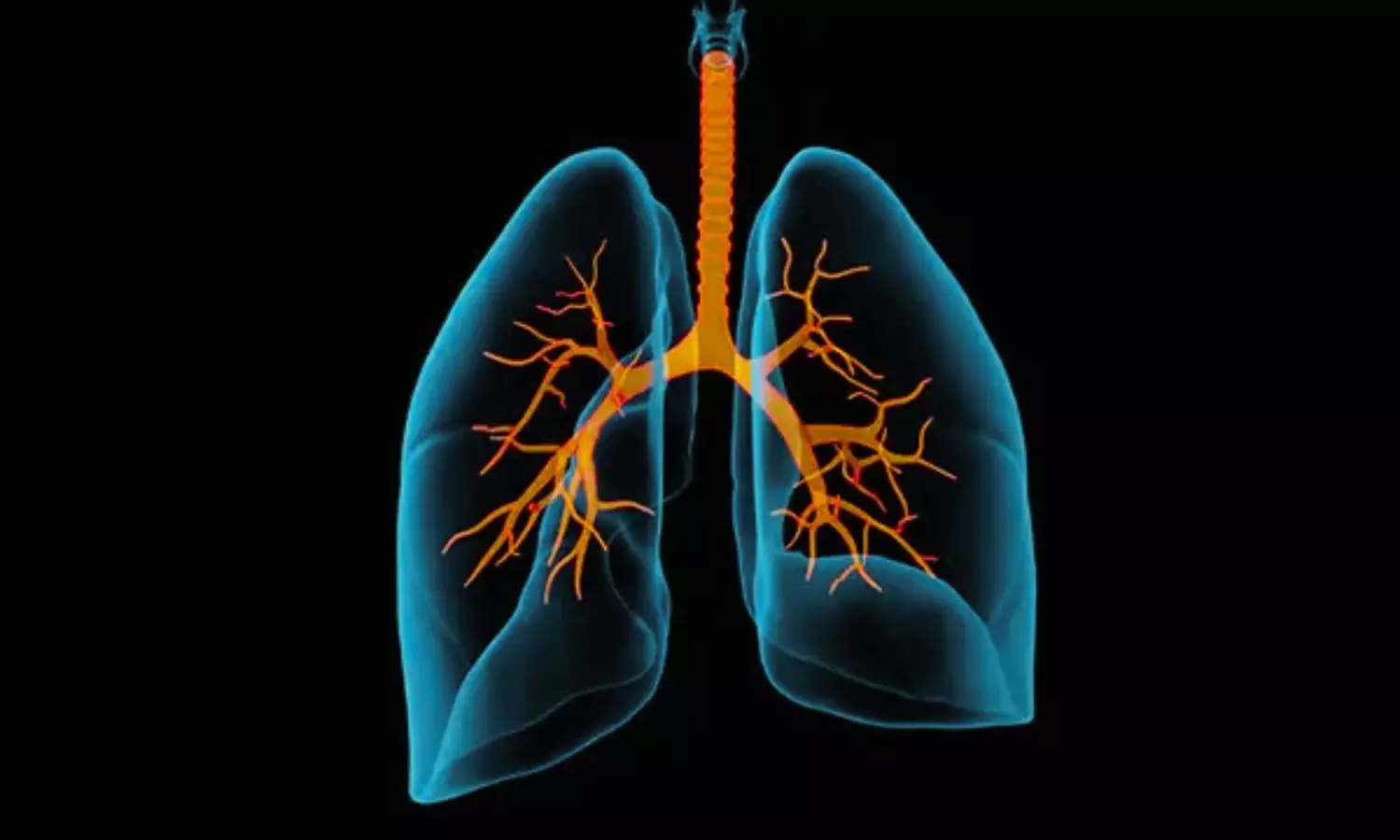


A new study published in the journal of The Lancet Respiratory Medicine showed that Depemokimab administered every six months was generally well tolerated and showed consistent effectiveness throughout the 2-year duration of the SWIFT and AGILE studies, reinforcing its long-term safety and therapeutic advantages in patients with asthma and an eosinophilic phenotype.
Depemokimab is the first biologic with an ultra-long duration of action, featuring improved interleukin-5 binding affinity, strong potency, and a prolonged half-life that allows for dosing twice a year. The double-blind, placebo-controlled phase 3a trials, SWIFT-1 and SWIFT-2, confirmed the efficacy and safety of depemokimab over 52 weeks in patients with asthma characterized by type 2 inflammation and an eosinophilic phenotype.
In the SWIFT-1 and SWIFT-2 studies, individuals aged 12 years and older with eosinophilic asthma, type 2 inflammation, and a history of at least two exacerbations annually despite treatment with medium- or high-dose inhaled corticosteroids were randomly assigned in a 2:1 ratio to receive either 100 mg of subcutaneous depemokimab or placebo every 26 weeks over a 52-week period in addition to standard care. Participants who completed the initial phase and met eligibility criteria could enrol in the AGILE open-label extension (OLE) study conducted at 156 sites across 14 countries, where they either continued depemokimab or switched from placebo to depemokimab.
The primary endpoints were the incidence of adverse events, serious adverse events, and immunogenicity, monitored through the detection of anti-drug and neutralising antibodies. Secondary efficacy measures included rates of exacerbations, total scores on the St George’s Respiratory Questionnaire (SGRQ), scores on the Asthma Control Questionnaire-5 (ACQ-5), and pre-bronchodilator forced expiratory volume in 1 second (FEV₁).
Among the 629 participants in the AGILE OLE study, adverse events were observed in 71% of patients in the depemokimab–depemokimab group and 70% in the placebo–depemokimab group, with serious adverse events occurring in 9% of participants in both groups and no serious adverse events related to treatment or resulting in death.
The depemokimab–depemokimab group maintained a lowered annualized exacerbation rate over a period of two years (0.51 during SWIFT-1/2 and 0.56 during AGILE OLE). Additionally, gains in SGRQ total score, ACQ-5 score, and FEV₁ were preserved. Patients who initially received placebo showed clinical improvements after transitioning to depemokimab. Overall, depemokimab administered biannually exhibited consistent therapeutic effectiveness and was well tolerated throughout the two-year duration of the SWIFT and AGILE studies.
Reference:
Wechsler, MWechsler, M. E., Pfeffer, P. E., Bernstein, D. I., Chen, R., Koya, T., Jackson, D. J., Pavord, I. D., Chanez, P., Bourdin, A., Jarreta, D., Muccino, D., Tacon, C., Vichiendilokkul, A., Zhu, C.-Q., & Jackson, D. J. (2026). Long-term safety and efficacy of twice-yearly depemokimab in type 2 asthma with an eosinophilic phenotype: 2-year integrated analysis of the phase 3a SWIFT-1 and SWIFT-2 studies and AGILE open-label extension. The Lancet. Respiratory Medicine, S2213-2600(26)00259-6. https://doi.org/10.1016/S2213-2600(26)00259-6