
New Diaphragm Index Accurately Predicts Ventilator Weaning Success: Study Shows
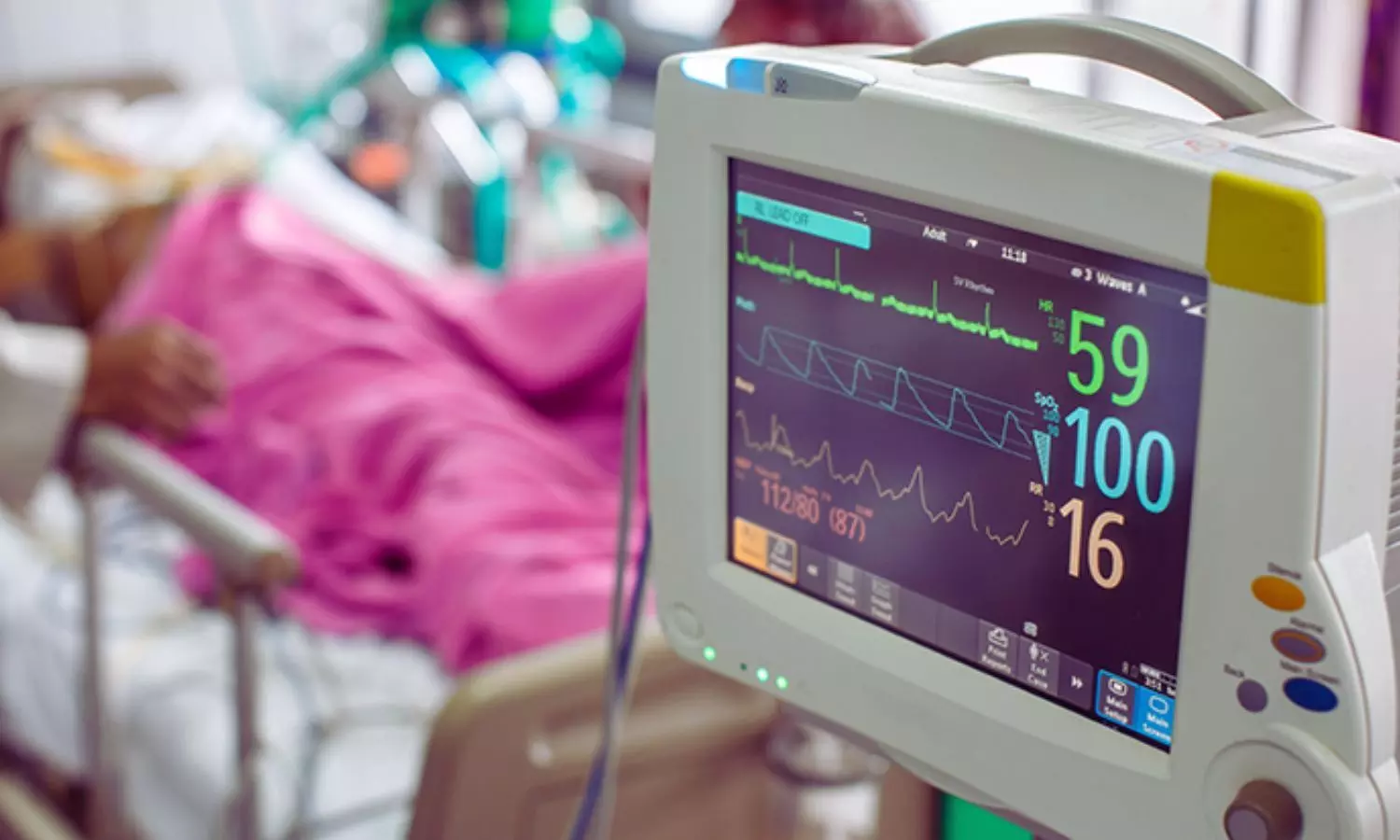


China: A novel ultrasound-based indicator, the diaphragm contraction pressure index (DCPI), may significantly improve the prediction of successful weaning from mechanical ventilation, according to a new study published in the International Journal of General Medicine.
The research was conducted by Peng Zhang from the Department of Critical Care Medicine, Yijishan Hospital, First Affiliated Hospital of Wannan Medical College, Wuhu, Anhui, People’s Republic of China, and colleagues.
Failure to wean patients from mechanical ventilation is a frequent and serious problem in intensive care units, often leading to prolonged hospital stays, a higher risk of ventilator-associated pneumonia, and increased mortality. Although several parameters are currently used to assess readiness for weaning, including diaphragm excursion, diaphragm thickness, and maximal inspiratory pressure, their predictive accuracy remains suboptimal.
The present study sought to determine whether DCPI, a newly developed sonographic parameter reflecting diaphragm contractile function, could provide a more reliable assessment of weaning outcomes.
This prospective observational study enrolled two cohorts of mechanically ventilated patients who completed a spontaneous breathing trial: 286 patients in the derivation cohort and 104 in the validation cohort. During the trial, bedside ultrasound measured right hemidiaphragm excursion, diaphragm thickness during inspiration and expiration, and DCPI, while maximal inspiratory pressure was recorded from the ventilator. The derivation cohort was used to determine the optimal DCPI cut-off and compare it with conventional diaphragm indices, and the validation cohort was used to confirm its predictive accuracy.
The following were the key findings:
- DCPI values were significantly higher in patients who were successfully weaned from mechanical ventilation compared with those who experienced weaning failure.
- In the derivation cohort, DCPI showed excellent predictive accuracy, with an area under the receiver operating characteristic curve of 0.954.
- The predictive performance of DCPI was substantially superior to that of diaphragm excursion, diaphragm thickness fraction, and maximal inspiratory pressure.
- A DCPI cut-off value of ≥30% demonstrated high sensitivity and specificity for predicting successful weaning.
- In the validation cohort, DCPI again showed strong discriminatory ability, confirming its reliability as a predictor of weaning success.
The authors note several limitations. The study was conducted at a single centre with a relatively modest sample size, and ultrasound assessments were limited to the right diaphragm to ensure image quality. In addition, other factors that may influence weaning outcomes, such as cardiac function, level of consciousness, and cough strength, were not comprehensively evaluated. The operator-dependent nature of ultrasound measurements was also acknowledged.
Despite these limitations, the study suggests that DCPI may offer a more accurate and practical tool for assessing diaphragm function and predicting weaning success. A right diaphragm DCPI of 30% or higher appears to outperform traditional parameters, although the authors stress that larger, multicentre studies are needed to confirm these findings and support broader clinical application.
Reference:
Zhang, P., Jiang, H., Li, Z., Zhou, Q., Wu, J., Wang, M., … Jiang, X. (2025). Diaphragm Contraction Pressure Index: A New Forecasting Indicator for Weaning from Mechanical Ventilation. International Journal of General Medicine, 18, 7163–7173. https://doi.org/10.2147/IJGM.S542365

Next Story