
Novel combination therapy improves treatment outcomes in preclinical lung cancer models: Study
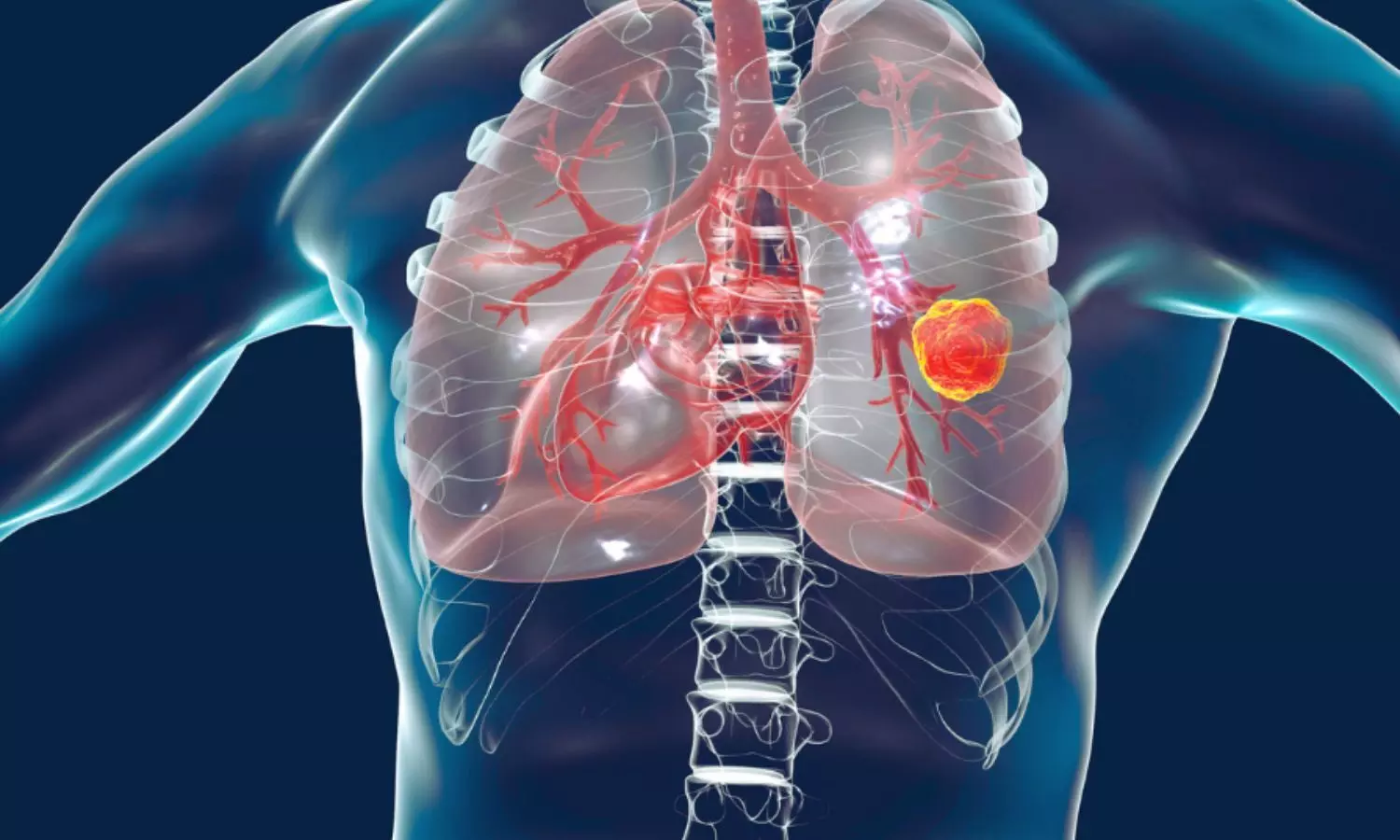


A new preclinical study has demonstrated that combining HER3-DXd with olaparib significantly improves treatment responses in lung cancer models. This combination therapy induces irreparable DNA damage in cancer cells while also stimulating the body’s immune system to combat the disease.
Lung cancer is the most commonly diagnosed cancer and the leading cause of cancer-related deaths worldwide. Although the incidence of lung cancer has declined among men as a result of decreasing smoking rates, it has increased among younger women who do not smoke. While targeted drug therapies have improved treatment outcomes, patients frequently develop resistance to these therapies.
Researchers from Tampere University, the University of Helsinki, Harvard University and the Dana-Farber Cancer Institute have investigated whether the therapeutic efficacy of the antibody-drug conjugate HER3-DXd can be enhanced by combining it with olaparib, a PARP inhibitor. Their research focused on non-small cell lung cancer, which is the most common form of lung cancer, and on tumours carrying EGFR or KRAS mutations.
What do these terms mean
• Olaparib: A targeted cancer drug that hinders cancer cells from repairing damage to their DNA, making it harder for them to survive and multiply.
• Patritumab deruxtecan (HER3-DXd): An antibody-drug conjugate that specifically targets HER3, a protein found on the surface of cancer cells. HER3 is expressed in most non-small cell lung cancers.
• Epidermal Growth Factor Receptor (EGFR): A protein located on the surface of cells that receives growth signals from outside the cell.
• Kirsten rat sarcoma virus oncogene homologue (KRAS): A gene that relays growth signals from EGFR within cells. Mutations in EGFR and KRAS often cause cancer cells to grow uncontrollably.
The new study found that the combination of olaparib and HER3-DXd was significantly more effective against lung cancer than either drug alone. The combination therapy increased DNA damage in cancer cells beyond their ability to repair it, causing the cells to undergo apoptosis, or programmed cell death.
In addition, the combination therapy slowed tumour growth and extended the lifespan of laboratory animals. These effects were observed in lung cancer models with both EGFR and KRAS mutations.
The treatment did more than directly target cancer cells as it also enhanced the body’s immune response against cancer. The drug combination activated the cGAS-STING signalling pathway, which triggers the body’s innate immune response, and improved the ability of natural killer cells, a type of white blood cell involved in the body’s immune defence, to destroy cancer cells.
The findings suggest a promising alternative approach to treating lung cancer in patients who derive limited benefit from existing targeted therapies or whose tumours have developed resistance to treatment.
“A key finding was that the treatment combination was effective across multiple genetically distinct forms of lung cancer and was not dependent on any specific mutation. In fact, the HER3 protein could eventually serve as a biomarker for identifying patients who are likely to benefit from this type of treatment,” says Heidi Haikala, Senior Research Fellow at Tampere University and Assistant Professor at the University of Helsinki.
As the HER3 protein is also commonly present in many other cancers that form solid tumours, this treatment approach could potentially have applications beyond lung cancer.
The findings of the study provide a strong foundation for clinical trials of the combination therapy in human patients.
Reference:
Lin L, Moradi N, Lähdeniemi I ... PARP inhibition enhances the antitumor activity of HER3-DXd in non-small cell lung cancer, Cell Reports Medicine, DOI: 10.1016/j.xcrm.2026.103002
