Ondansetron May Reduce Respiratory Drive in Mechanically Ventilated ARDS Patients: Study
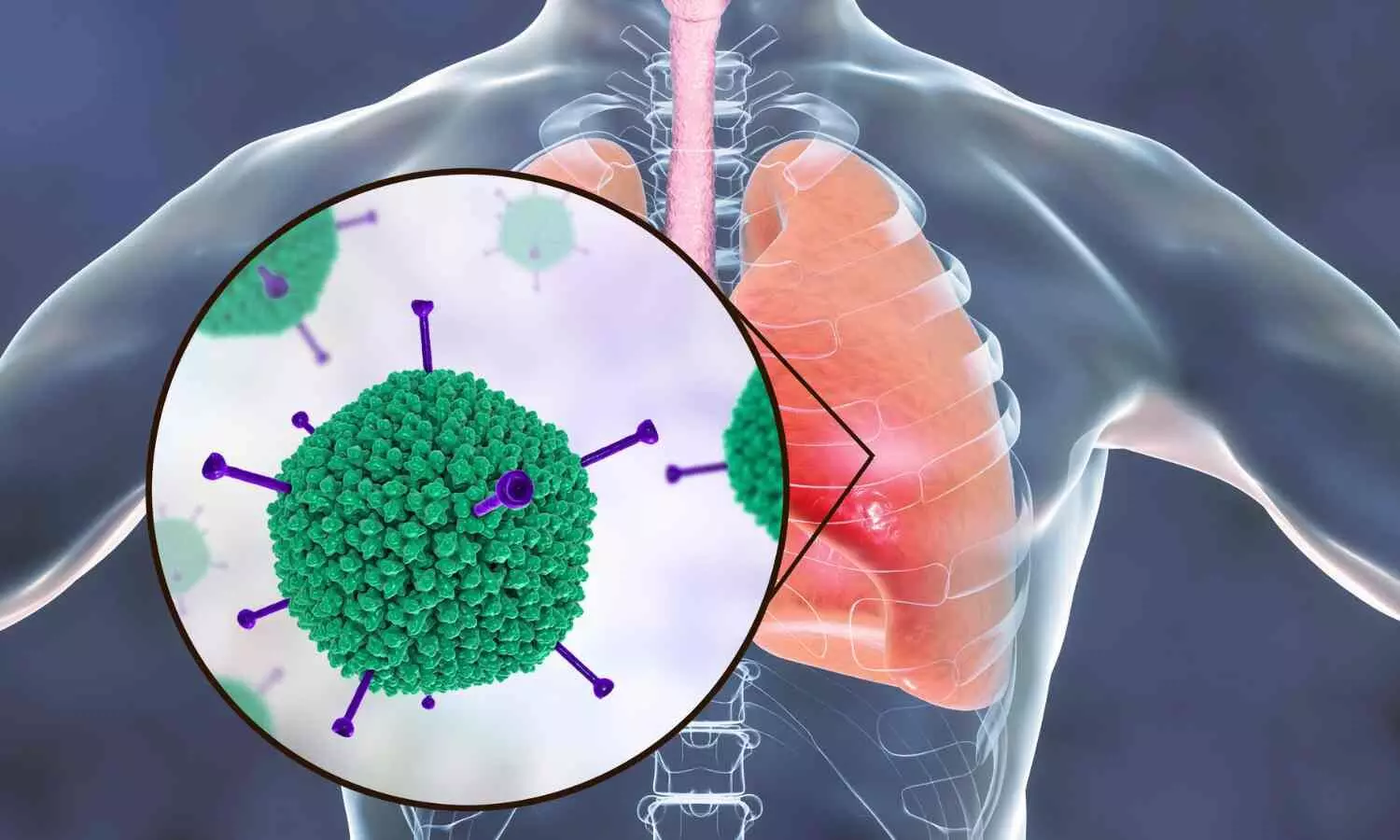


A new study published in the journal of CHEST showed that ondansetron was linked to a decrease in breathing effort in invasively ventilated patients suffering from acute respiratory distress syndrome (ARDS).
ARDS is identified by an abundance of breathing effort and sensitization of pulmonary vagal C-fibers, which can lead to lung injury caused by the patient themselves. Serotonin triggers these C-fibers by activating 5-HT3 receptors. This indicates that ondansetron might lessen breathing effort and help promote safer natural breathing. The research examined how ondansetron impacts esophageal pressure-time product, breathing rate, volume of air per breath, total air exchanged in a minute, and electrical activity in the diaphragm.
This study from a single center involved adults with ARDS (according to the Berlin criteria) who had been ventilated for more than 48 hours in pressure-support mode. The participants experienced two phases sequentially: first receiving an intravenous placebo (10 mL of 0.9% saline) and then, 3 hours later, an intravenous dose of ondansetron (0.15 mg/kg; maximum 16 mg). Throughout the study, researchers continuously monitored airway pressure, flow, Peso, and Edi tracings. They compared respiratory parameters between the two 3-hour phases using mixed effect models that included participant-specific random intercepts and autoregressive-residual-correlation.
10 patients were included in this research, with the ability to conduct the experiment in nine of them. The use of ondansetron led to a decrease in indicators of respiratory impulse. The average inspiratory PTP decreased from 108 to 85 cmH2O·s·min-1, resulting in a calculated average difference of -23 cmH2O·s·min-1 (95 % confidence interval (CI95%) [-28, -18]; p<0.001).
The respiratory rate dropped by -1.7 breaths/min; CI95% [-2.0, -1.3], minute ventilation decreased by -1.0 L/min; CI95% [-1.1, -0.8], and peak Edi reduced by -2.4 μV; CI95% [-2.6, -2.2], with no significant alterations in tidal volume. This was linked to a slight increase in PaCO2 of (+3.2 mmHg; CI95% [+1.4, +5.1]; p<0.001) and a notable enhancement in the PaO2:FiO2 ratio by +23 (CI95% [6, 40] p = 0.009).
Overall, the use of ondansetron led to a notable decrease in the drive to breathe and effort in patients with ARDS who were receiving pressure support ventilation. This effect was accompanied by enhancements in oxygen levels and a small rise in PaCO2. These results propose a new way in which medication could be used to lessen excessive breathing effort and potentially decrease factors involved in patient self-inflicted lung injury (P-SILI).
Source:
Cavayas, Y. A., Caissy, J.-A., St-Pierre, M., Williams, V., Albert, M., Charbonney, E., & Williamson, D. (2026). Effect of ondansetron on respiratory drive in patients with acute respiratory distress syndrome. Chest. https://doi.org/10.1016/j.chest.2026.09.086