
Medical Dialogues
  • Dermatology
Login Register
This site is intended for healthcare professionals only
Login Register
  • MD Brand Connect
  • Webinars
  • Vaccine Hub
  • MDTV
    • Breaking News
    • Medical News Today
    • Health News Today
    • Latest
    • Journal Club
    • Medico Legal Update
    • Latest Webinars
    • MD Shorts
    • Health Dialogues
  • Fact Check
  • Health Dialogues
Medical Dialogues
  • Medical News & Guidelines
      • Anesthesiology
      • Cardiology and CTVS
      • Critical Care
      • Dentistry
      • Dermatology
      • Diabetes and Endocrinology
      • ENT
      • Gastroenterology
      • Medicine
      • Nephrology
      • Neurology
      • Obstretics-Gynaecology
      • Oncology
      • Ophthalmology
      • Orthopaedics
      • Pediatrics-Neonatology
      • Psychiatry
      • Pulmonology
      • Radiology
      • Surgery
      • Urology
      • Laboratory Medicine
      • Diet
      • Nursing
      • Paramedical
      • Physiotherapy
  • Health news
      • Doctor News
      • Government Policies
      • Hospital & Diagnostics
      • International Health News
      • Medical Organization News
      • Medico Legal News
      • NBE News
      • NMC News
  • Fact Check
      • Bone Health Fact Check
      • Brain Health Fact Check
      • Cancer Related Fact Check
      • Child Care Fact Check
      • Dental and oral health fact check
      • Diabetes and metabolic health fact check
      • Diet and Nutrition Fact Check
      • Eye and ENT Care Fact Check
      • Fitness fact check
      • Gut health fact check
      • Heart health fact check
      • Kidney health fact check
      • Medical education fact check
      • Men's health fact check
      • Respiratory fact check
      • Skin and hair care fact check
      • Vaccine and Immunization fact check
      • Women's health fact check
  • AYUSH
    • Ayurveda
    • Homeopathy
    • Siddha
    • Unani
    • Yoga
  • State News
      • Andaman and Nicobar Islands
      • Andhra Pradesh
      • Arunachal Pradesh
      • Assam
      • Bihar
      • Chandigarh
      • Chattisgarh
      • Dadra and Nagar Haveli
      • Daman and Diu
      • Delhi
      • Goa
      • Gujarat
      • Haryana
      • Himachal Pradesh
      • Jammu & Kashmir
      • Jharkhand
      • Karnataka
      • Kerala
      • Ladakh
      • Lakshadweep
      • Madhya Pradesh
      • Maharashtra
      • Manipur
      • Meghalaya
      • Mizoram
      • Nagaland
      • Odisha
      • Puducherry
      • Punjab
      • Rajasthan
      • Sikkim
      • Tamil Nadu
      • Telangana
      • Tripura
      • Uttar Pradesh
      • Uttrakhand
      • West Bengal
  • Medical Education
      • Ayush Education News
      • Dentistry Education News
      • Medical Admission News
      • Medical Colleges News
      • Medical Courses News
      • Medical Universities News
      • Nursing education News
      • Paramedical Education News
      • Study Abroad
  • Industry
      • Health Investment News
      • Health Startup News
      • Medical Devices News
      • Pharma News
      • Pharmacy Education News
      • AI and healthcare
      • Industry Perspective
  • MDTV
      • Health Dialogues MDTV
      • Health News today MDTV
      • Latest Videos MDTV
      • Latest Webinars MDTV
      • MD shorts MDTV
      • Medical News Today MDTV
      • Medico Legal Update MDTV
      • Top Videos MDTV
      • Health Perspectives MDTV
      • Journal Club MDTV
      • Medical Dialogues Show
This site is intended for healthcare professionals only
LoginRegister
Medical Dialogues
LoginRegister
  • Home
  • Medical news & Guidelines
    • Anesthesiology
    • Cardiology and CTVS
    • Critical Care
    • Dentistry
    • Dermatology
    • Diabetes and Endocrinology
    • ENT
    • Gastroenterology
    • Medicine
    • Nephrology
    • Neurology
    • Obstretics-Gynaecology
    • Oncology
    • Ophthalmology
    • Orthopaedics
    • Pediatrics-Neonatology
    • Psychiatry
    • Pulmonology
    • Radiology
    • Surgery
    • Urology
    • Laboratory Medicine
    • Diet
    • Nursing
    • Paramedical
    • Physiotherapy
  • Health news
    • Doctor News
    • Government Policies
    • Hospital & Diagnostics
    • International Health News
    • Medical Organization News
    • Medico Legal News
    • NBE News
    • NMC News
  • Fact Check
    • Bone Health Fact Check
    • Brain Health Fact Check
    • Cancer Related Fact Check
    • Child Care Fact Check
    • Dental and oral health fact check
    • Diabetes and metabolic health fact check
    • Diet and Nutrition Fact Check
    • Eye and ENT Care Fact Check
    • Fitness fact check
    • Gut health fact check
    • Heart health fact check
    • Kidney health fact check
    • Medical education fact check
    • Men's health fact check
    • Respiratory fact check
    • Skin and hair care fact check
    • Vaccine and Immunization fact check
    • Women's health fact check
  • AYUSH
    • Ayurveda
      • Ayurveda Giuidelines
      • Ayurveda News
      • Top Ayurveda News
    • Homeopathy
      • Homeopathy Guidelines
      • Homeopathy News
    • Siddha
      • Siddha Guidelines
      • Siddha News
    • Unani
      • Unani Guidelines
      • Unani News
    • Yoga
      • Yoga Guidelines
      • Yoga News
  • State News
    • Andaman and Nicobar Islands
    • Andhra Pradesh
    • Arunachal Pradesh
    • Assam
    • Bihar
    • Chandigarh
    • Chattisgarh
    • Dadra and Nagar Haveli
    • Daman and Diu
    • Delhi
    • Goa
    • Gujarat
    • Haryana
    • Himachal Pradesh
    • Jammu & Kashmir
    • Jharkhand
    • Karnataka
    • Kerala
    • Ladakh
    • Lakshadweep
    • Madhya Pradesh
    • Maharashtra
    • Manipur
    • Meghalaya
    • Mizoram
    • Nagaland
    • Odisha
    • Puducherry
    • Punjab
    • Rajasthan
    • Sikkim
    • Tamil Nadu
    • Telangana
    • Tripura
    • Uttar Pradesh
    • Uttrakhand
    • West Bengal
  • Medical Education
    • Ayush Education News
    • Dentistry Education News
    • Medical Admission News
    • Medical Colleges News
    • Medical Courses News
    • Medical Universities News
    • Nursing education News
    • Paramedical Education News
    • Study Abroad
  • Industry
    • Health Investment News
    • Health Startup News
    • Medical Devices News
    • Pharma News
      • CDSCO (Central Drugs Standard Control Organisation) News
    • Pharmacy Education News
    • AI and healthcare
    • Industry Perspective
  • Home
  • Pulmonology
  • Pulmonology News
  • Rare inherited EGFR...

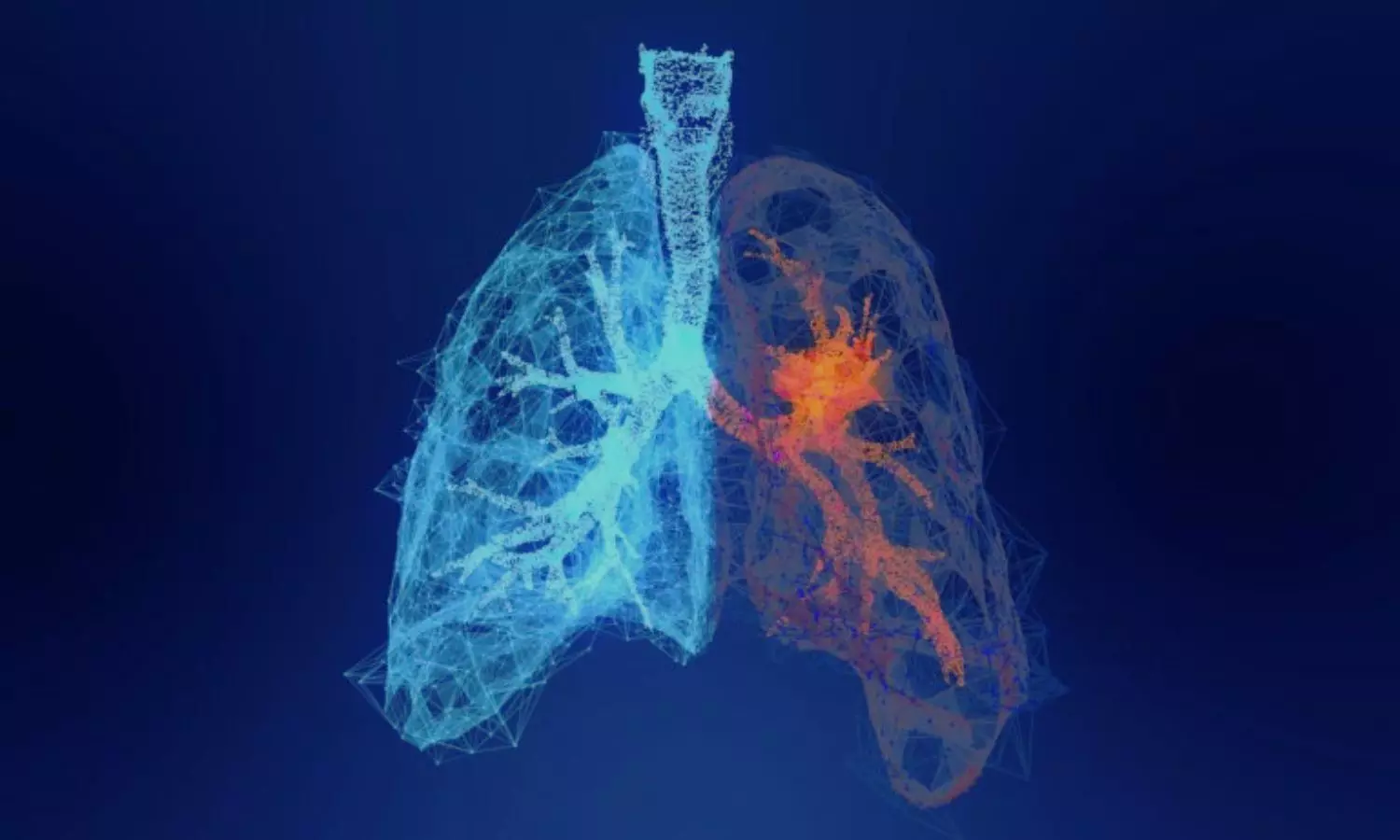
Rare inherited EGFR mutation linked to dramatically increased lung cancer risk: Study
Written By : Dr. Kamal Kant Kohli Published On 2026-09-18T20:30:54+05:30  |  Updated On 19 Sept 2026 11:51 AM IST
Rare inherited EGFR mutation linked to dramatically increased lung cancer risk: Study
  • facebook
  • twitter
  • linkedin
  • whatsapp
  • Telegram
  • Email

A rare inherited mutation in the Epidermal Growth Factor Receptor (EGFR) gene is associated with a 25-fold increased risk of lung cancer, according to a study by investigators at Dana-Farber Cancer Institute and 23andMe Research Institute. The findings included de-identified, aggregated genetic data from more than 3.3 million 23andMeresearch-consented participants.

Among people who never smoked, carriers of the mutation were more than 60 times as likely to develop lung cancer as people without it. Researchers identified EGFR T790M as one of the strongest inherited risk factors for lung cancer discovered to date. This could have important implications for genetic testing and future lung cancer screening strategies for people who carry the mutation.

The findings were published in Science.

"Today, lung cancer screening is driven almost entirely by smoking history,” says Jaclyn LoPiccolo, M.D., Ph.D., attending physician and lung cancer researcher at Dana-Farber Cancer Institute, who co-led the study. “Our findings raise the possibility that, in the future, screening could also be dictated by inherited genetic risk. If further studies confirm the benefit, people with EGFR T790M could be identified through genetic testing and offered personalized CT screening to identify lung cancers when they are at their most curable stage."

Although most lung cancers are associated with tobacco use or exposure, the proportion diagnosed in people who have never smoked has been rising. Yet the genetic factors underlying these cancers, particularly the role of inherited risk, aren’t well understood.

In 2005, researchers identified a rare inherited mutation called EGFR T790M in a European family with multiple cases of lung cancer. Since then, the mutation has been reported in other families with unusually high rates of the disease.

"For years we've known that some families inherit a markedly increased risk of lung cancer, but because this variant is so rare, we've never been able to accurately measure that risk,” said co-senior author Pasi A. Jänne, M.D., Ph.D., Senior Vice President for Translational Research and a lung cancer specialist at Dana-Farber. “By studying more than three million people, we were able to demonstrate just how strongly this inherited mutation is associated with lung cancer."

Comparing people with lung cancer to those without the disease, the researchers examined whether EGFR T790M was more common among those who had developed lung cancer. They also analyzed people who had never smoked separately to determine whether the association persisted in the absence of tobacco use. Additional data supporting the association came from participants in the INHERIT Study (NCT05587439), led at Dana-Farber by Drs. LoPiccolo and Jänne, in partnership with GO2 for Lung Cancer (GO2) and the Addario Lung Cancer Medical Institute (ALCMI).

The researchers expected EGFR T790M to increase lung cancer risk, but they had not anticipated the magnitude of the increased risk.

“One of the remarkable findings here is just how strong an effect a single mutation can have,” said co-senior author Alexander Gusev, Ph.D., a quantitative geneticist at Dana-Farber. Dr. Gusev continued, “To my knowledge it's one of the strongest, if not the strongest, cancer risk increasing mutations that has ever been found.”

Among people who smoked, carriers of the mutation were about 10 times as likely to develop lung cancer as noncarriers. Among people who never smoked, carriers were more than 60 times as likely to develop lung cancer. This relative risk does not mean smoking is protective, the researchers explained. Because smoking already greatly increases lung cancer risk, the mutation’s effect appears smaller by comparison.

“Smoking is bad for lung cancer. This mutation is bad for lung cancer. When you do both, your risk is the sum of those two risks,” Dr. Gusev said. “So, you definitely don't want to smoke.”

The mutation was not linked to any of 17 other common cancers studied, suggesting that its effects may be largely limited to lung cancer.

Dr. LoPiccolo noted that the prevalence of the mutation in the U.S. population is about 1 in 15,000. But in certain areas of the Southeastern U.S., it can be as frequent as 1 in 2,000 people.

“We found that the vast majority of carriers inherited the mutation from the same ancestral lineage,” she said. “We could trace that lineage to British and Irish settlers in the United States and show that the mutation became enriched after a founder event and genetic bottleneck in Southern Appalachia about 200 years ago. It's a fascinating example of how human migration and genealogy can shape disease risk, generations later.”

The researchers recommend that people with several family members who have had lung cancer, multiple lung nodules, multifocal lung cancers, or ancestral roots in areas of the southeastern U.S., where the variant is more common, consult a genetic counselor. A counselor can help determine whether genetic testing and regular lung cancer screening may be appropriate.

23andMe members who participate in research were essential in driving these discoveries. The size and scale of the 23andMe database allowed researchers the opportunity to analyze data from more than 10 million 23andMe research-consented participants. They then focused on 3.3 million participants for whom both genetic and lung cancer data were available.

“We’ve built a research community where millions of people consent to take part and answer questions about their health year after year to accelerate meaningful discoveries,” said Joyce Tung, Ph.D., Vice President of Research at 23andMe. “Finding a variant this rare, measuring what it does, and tracing where it came from are three different scientific challenges, and addressing all three takes genetic and health information in one place, at scale. We're grateful for what our participants made possible here.”

“This groundbreaking discovery builds on a body of research into inherited lung cancer risk that GO2 and ALCMI helped advance,” said David Benson, Chief Executive Officer of GO2. “The more we understand about inherited risk, the more knowledge patients, families, and clinicians have to make informed decisions. For people with a family history of lung cancer, that knowledge can be incredibly powerful. We are excited to see this science continue to grow and open new possibilities for earlier detection and, ultimately, saving lives.”

As next steps, researchers hope to learn why some EGFR T790M carriers develop lung cancer while others do not, why the mutation increases the risk of lung cancer but not other common cancers, and how environmental exposures and additional genetic changes influence risk. Future studies will include more diverse populations and investigate other inherited EGFR mutations that may predispose people to lung cancer. Meanwhile, Drs. LoPiccolo and Jänne are continuing to recruit participants for the INHERIT Study to further understand the genetic risk and predispositions for developing lung cancer.

Separately, the Susan Wojcicki Foundation is also continuing to recruit for the Lung Cancer Genetics Study, funded by the Foundation and powered by 23andMe. The study is investigating how genetics, environment, and other factors impact lung cancer risk and disease progression. Enrollment is open to anyone who has been diagnosed with lung cancer.

Reference:

Jaclyn LoPiccolo et al. ,Germline EGFR T790M mutation and lung cancer risk.Science393,eaec0473(2026).DOI:10.1126/science.aec0473

Sciencelung cancercancerEpidermal Growth Factor Receptorsmoking
Source : Science
Dr. Kamal Kant Kohli

Dr Kamal Kant Kohli-MBBS, DTCD- a chest specialist with more than 30 years of practice and a flair for writing clinical articles, Dr Kamal Kant Kohli joined Medical Dialogues as a Chief Editor of Medical News. Besides writing articles, as an editor, he proofreads and verifies all the medical content published on Medical Dialogues including those coming from journals, studies,medical conferences,guidelines etc. Email: drkohli@medicaldialogues.in. Contact no. 011-43720751

Print Article
Show Full Article
Next Story

Editorial

Blood Test Accurately Detects Alzheimers Amyloid Pathology in Symptomatic Adults: Latest 2026 Study Findings

Blood Test Accurately Detects Alzheimer's Amyloid Pathology in Symptomatic Adults: Latest 2026 Study...

Ten Years to Dapagliflozin Metformin FDC Approval in India - 10 Key Points to Revisit

Ten Years to Dapagliflozin Metformin FDC Approval in India - 10 Key Points to Revisit

Overcoming the Challenge of Maintaining Weight Reduction

Overcoming the Challenge of Maintaining Weight Reduction

Sympathetic Overactivity: The Driver of Hypertension in Young Indians

Sympathetic Overactivity: The Driver of Hypertension in Young Indians

Indias Medical Startups: From Innovation to Impact - Prof. (Dr) Yogendra Kumar Gupta

India's Medical Startups: From Innovation to Impact - Prof. (Dr) Yogendra Kumar Gupta

View All

Journal Club Today

Ultra-Processed Foods May Promote Muscle Fat and Raise Knee Osteoarthritis Risk: Study

Ultra-Processed Foods May Promote Muscle Fat and Raise Knee Osteoarthritis Risk: Study

View All
© 2022 All Rights Reserved.
Powered By: Hocalwire
X
We use cookies for analytics, advertising and to improve our site. You agree to our use of cookies by continuing to use our site. To know more, see our Cookie Policy and Cookie Settings.Ok