
Study Finds 'Face Down, Breath Up': Awake Prone Positioning Reduces Risk of Intubation in COVID-19
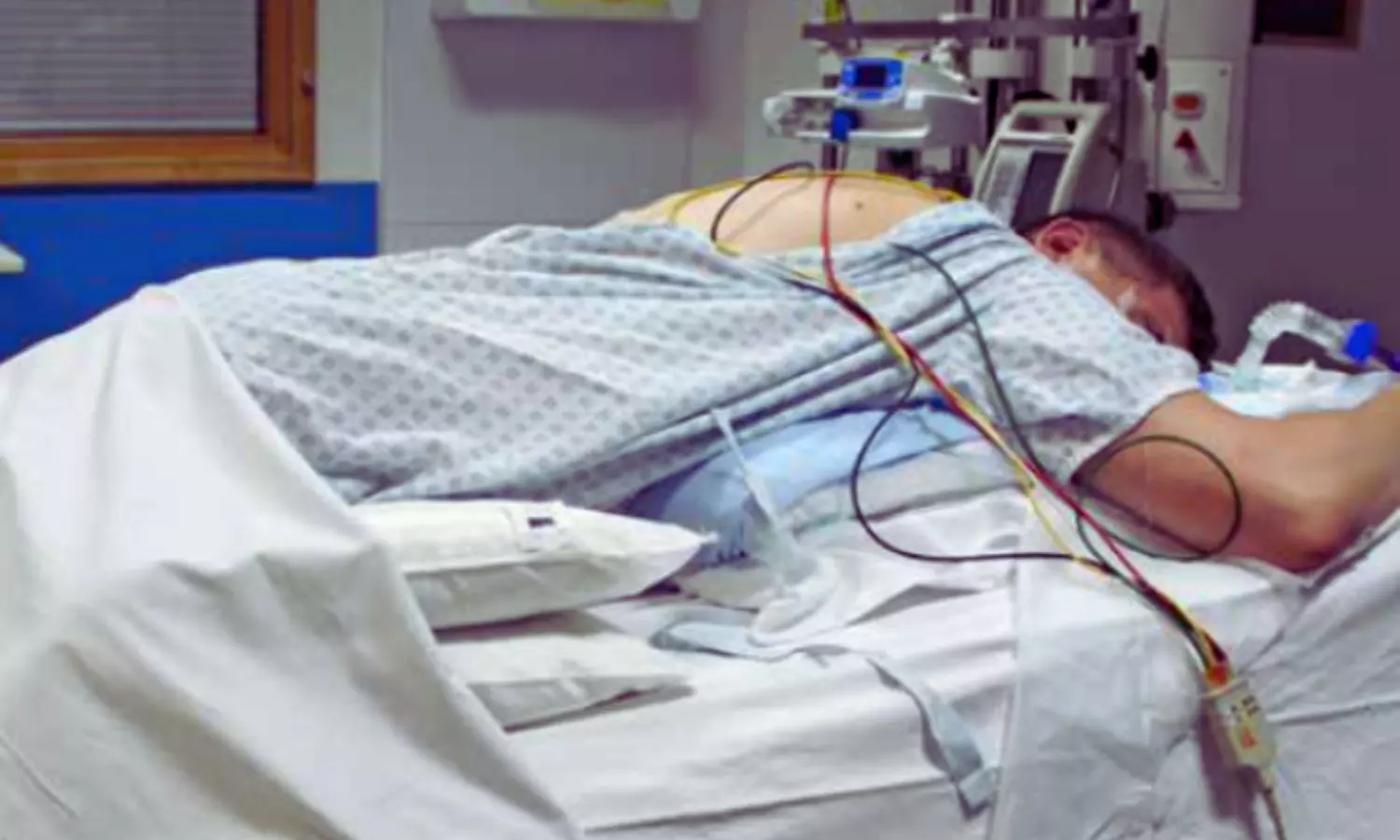


France: A new randomized clinical trial published in JAMA Network Open has found that awake prone positioning (APP) in nonintubated patients with COVID-19–related hypoxemic respiratory failure likely lowers the chances of requiring intubation or dying within the first 28 days of hospital admission.
The study, led by Dr. Anatole Harrois of Hôpital Bicêtre, Assistance Publique–Hôpitaux de Paris (AP-HP), reported a 93.8% posterior probability that APP offers a protective benefit compared with standard care.
The trial sought to address longstanding uncertainty surrounding the effectiveness of APP—a technique where awake patients lie in a prone (face-down) position to improve oxygenation. Earlier observational studies had produced inconsistent results, prompting researchers to conduct a rigorously designed randomized clinical investigation.
Conducted across 21 hospitals in France and Mexico from July 2020 to August 2021, the study enrolled adult patients aged 18 years or older who had confirmed COVID-19 pneumonia and required at least 3 L/min of oxygen. A total of 445 patients were included in the final analysis. Participants were randomly assigned either to the APP group—where they were encouraged to remain prone for at least six hours per day—or to a standard-care group, which received no specific positioning instructions.
Key Findings:
- The primary outcome—intubation and/or death within 28 days—was assessed using a Bayesian framework to estimate the full probability distribution of treatment effects.
- Awake prone positioning showed a potential benefit, with a mean odds ratio of 0.74 for intubation or death and a 95% credible interval ranging from 0.48 to 1.09.
- Secondary measures, such as days alive and free from mechanical ventilation, days outside the ICU, and days alive outside the hospital, showed modest numerical improvements in the APP group.
- However, the credible intervals for these secondary outcomes crossed zero, indicating no definitive difference.
- Overall, the results suggest that while APP may not markedly shift short-term recovery metrics, it still carries a meaningful probability of reducing the need for intubation.
The study had several limitations. Recruitment stopped short of the planned 500 patients, though researchers believe additional enrollment would not have changed the results. Some standard-care patients also self-proned, likely reducing the apparent effect of APP. Including both ward and ICU patients lowered the proportion with severe hypoxemia, and the inability to blind clinicians to patient positioning may have influenced intubation decisions.
Despite these constraints, the study’s findings align with previous evidence suggesting that APP is a low-cost, low-risk intervention with potential clinical value. By demonstrating a high likelihood of reducing the need for intubation or preventing death, the PROVID trial reinforces APP as a useful strategy in managing COVID-19 patients with hypoxemic respiratory failure.
The authors conclude that, given its simplicity and safety profile, APP should be considered a supportive measure for appropriate patients, while future studies continue exploring optimal implementation and patient selection.
Reference:
Harrois A, Jouffroy R, Ayed S, et al. Awake Prone Positioning in Patients With COVID-19 Respiratory Failure: A Randomized Clinical Trial. JAMA Netw Open. 2025;8(12):e2548201. doi:10.1001/jamanetworkopen.2025.48201

Next Story