
AI-Assisted Model Enhances Detection of Brain Metastases on MRI: Study
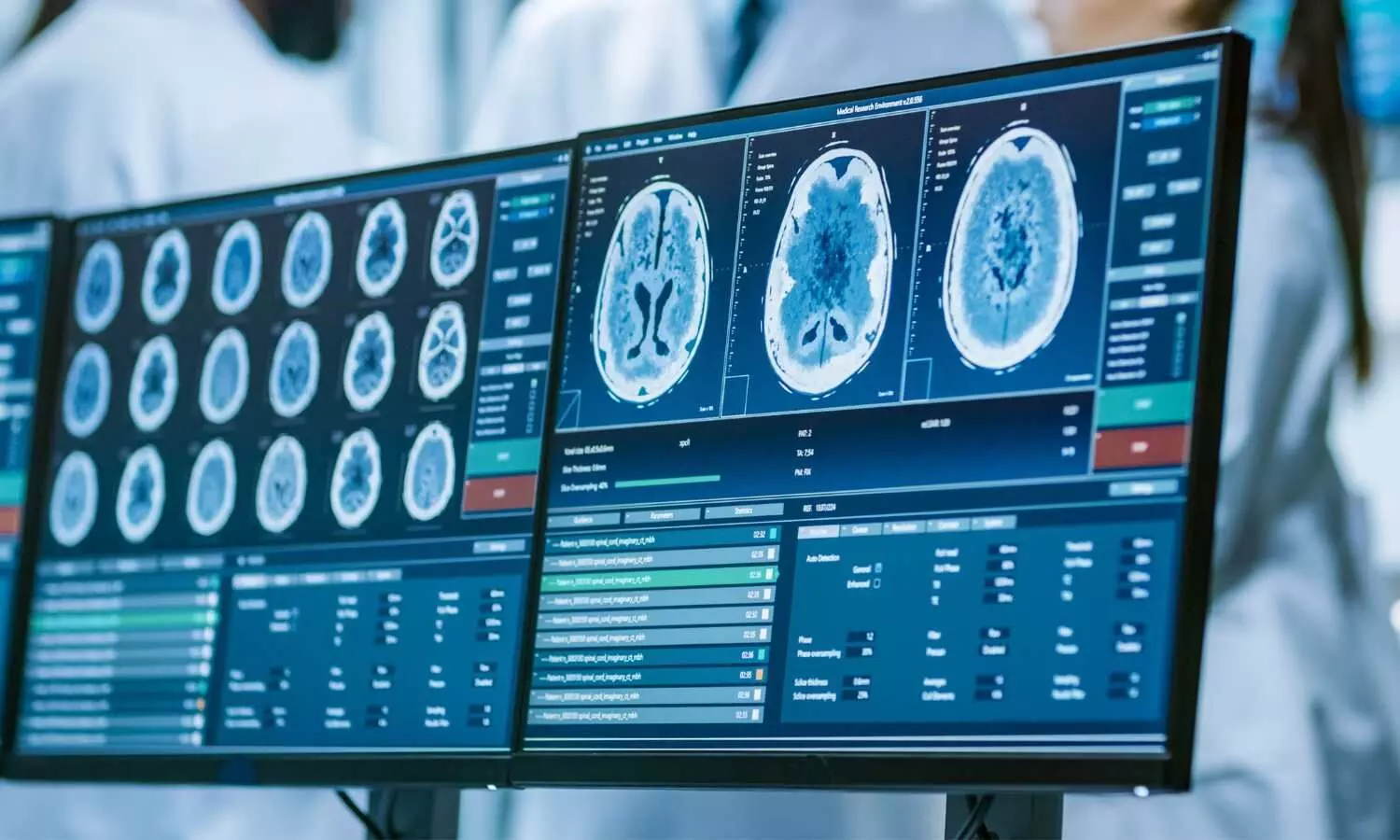


China: A multicenter study published in Academic Radiology has demonstrated that a deep learning-based model can significantly enhance the detection of brain metastases on MRI, improving both diagnostic accuracy and reporting speed for radiologists. The findings highlight the growing role of artificial intelligence in supporting clinical decision-making in neuroimaging.
Brain metastases occur in nearly 20% to 40% of patients with cancer and are associated with poor survival outcomes, often measured in months. Early and precise detection is therefore critical for timely treatment planning and improving patient prognosis. However, interpreting brain MRI scans can be time-intensive and is often influenced by the experience level of the radiologist, creating variability in detection rates.
To address these challenges, Meiqi Hua and colleagues from the Department of Radiology, Affiliated Hospital of Hebei University, developed and validated a deep learning-based brain metastasis detection model (BMDM). The model uses a multiscale feature pyramid network architecture, enabling it to identify lesions of different sizes and in complex anatomical regions of the brain.
For this purpose, the researchers retrospectively analyzed imaging data from 950 patients to train and test the model, followed by validation using an independent cohort of 423 patients. The study compared three diagnostic approaches: radiologists working alone, the deep learning model operating independently, and radiologists assisted by the model. A total of 10 radiologists participated, including both junior and experienced readers.
The study revealed the following findings:
- Use of the deep learning model as a supportive tool significantly improved efficiency in MRI interpretation.
- The average reading time decreased by nearly 31%, from 144 seconds to 100 seconds per case.
- Diagnostic performance improved notably with model assistance.
- The area under the receiver operating characteristic curve (AUROC) increased from 0.84 to 0.95, indicating higher overall accuracy.
- Sensitivity for detecting brain metastases increased from around 68% to over 91% with the model.
- Detection of micrometastases measuring 3 mm or smaller improved by more than 33%.
- Identification of lesions in complex anatomical regions, such as the insular cortex, improved by 43%.
- Both less experienced and experienced radiologists benefited from the model-assisted approach.
- The improvement in sensitivity was greater among less experienced radiologists, though experienced radiologists also showed meaningful gains.
- The findings suggest that deep learning tools may help standardize diagnostic performance and reduce variability in clinical practice.
Overall, the study indicates that integrating deep learning models into radiological workflows can enhance both efficiency and diagnostic accuracy in identifying brain metastases. These advancements may contribute to earlier diagnosis, more informed treatment decisions, and ultimately better outcomes for patients with metastatic cancer.
Reference:
Hua, M., Zhuo, L., Zhang, Y., Xu, Y., Hou, Y., Zhu, F., Yang, L., Wang, T., Ren, C., Yang, Z., Luo, X., Zhou, R., Yin, X., & Wang, J. (2026). A Multicenter Study on Deep Learning Model-Assisted Detection of Brain Metastases in MR Images. Academic Radiology. https://doi.org/10.1016/j.acra.2026.01.002

Next Story