
CT-Based Trabecular Bone Analysis: An Opportunistic Tool for Osteoporosis Screening, Study Shows
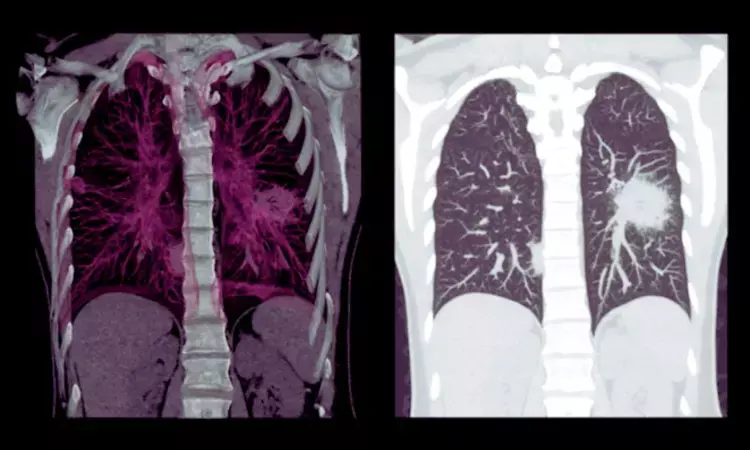


USA: CT-based trabecular bone analysis (CT-TBA) shows strong potential for diagnosing osteoporosis using low-dose CT (LDCT) scans already obtained during lung cancer screening. It can be applied with minimal training and requires no additional software, hardware, cost, or extra radiation exposure, making it a practical and accessible screening approach.
In a retrospective study published in Chest, Muhammad O. Awiwi from the Department of Radiology at Rutgers University–New Jersey Medical School and colleagues evaluated whether LDCT scans performed for lung cancer screening could also be leveraged to identify osteoporosis. Given that osteoporosis remains widely underdiagnosed and existing screening programs are often underused, the investigators explored an opportunistic strategy that could improve detection without adding burden to patients or healthcare systems.
The study included 1,336 patients who underwent both LDCT and dual-energy X-ray absorptiometry (DXA) within a four-month interval. Vertebral trabecular bone attenuation was manually measured on LDCT images at vertebral levels T7 through L1. These CT-TBA values were then compared with DXA-derived T-scores and FRAX scores, which served as the reference standards for diagnosing osteoporosis. The presence of vertebral fractures visible on CT images was also recorded.
The key findings were as follows:
- The median age of the study population was 68 years.
- Osteoporosis was diagnosed in 33% of patients based on DXA T-scores and FRAX criteria.
- Vertebral fractures were identified in nearly 12% of individuals.
- Mean CT-based trabecular bone attenuation showed a moderate correlation with DXA T-scores, with lower CT-TBA values indicating poorer bone density.
- CT-TBA demonstrated good diagnostic accuracy for osteoporosis, with an area under the curve of 0.77 across T7–L1 vertebrae.
- A CT-TBA threshold of ≤130 Hounsfield units provided high sensitivity for detecting osteoporosis.
- A lower CT-TBA cutoff of ≤80 Hounsfield units yielded high specificity for osteoporosis diagnosis.
- A CT-TBA threshold of ≤110 Hounsfield units identified a vertebral fracture prevalence comparable to that seen at a DXA T-score of −2.5.
- DXA T-scores alone failed to detect more than half of patients with vertebral fractures.
- CT-based assessment identified fracture risk more effectively in some patients, suggesting added value when integrated into routine imaging.
The authors acknowledge several limitations, including the retrospective design and a higher-than-expected prevalence of osteoporosis compared with the general US population. This may be partly explained by higher smoking rates and referral bias, as individuals with known risk factors were more likely to undergo DXA. Additionally, non-spinal fractures were not assessed, and FRAX scores could not be calculated for a subset of patients with osteopenia.
Despite these limitations, the findings support CT-TBA as a promising opportunistic screening tool. The researchers emphasize the need for prospective studies and external validation to define optimal cutoff values and assess whether CT-based screening can improve long-term fracture outcomes. If validated, this approach could significantly expand osteoporosis detection using imaging already embedded in routine lung cancer screening programs.
Reference:
Awiwi MO, Zhang X, Kandemirli VB, Duran C, Hanna MF, Aburadi M, Chaudhry H, Gjoni E, Rianon NJ, Evaluation for Osteoporosis Using Low-Dose Chest CT (LDCT) Obtained for Lung Cancer Screening: A Retrospective Study of 1336 Patients, Chest (2026), doi: https:// doi.org/10.1016/j.chest.2025.12.031.

Next Story